


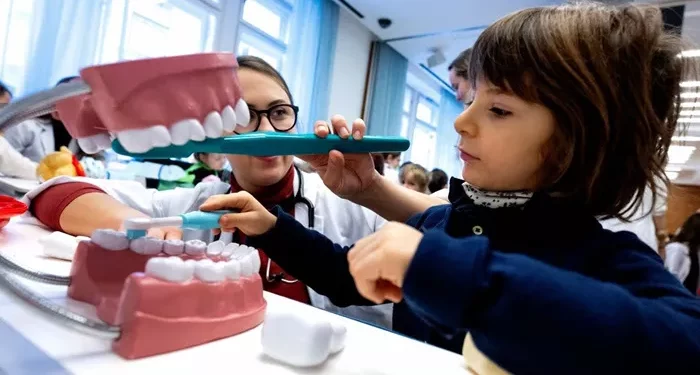
Brushing your teeth not only ensures optimal results during dental checkups but also helps prevent painful cavities. However, many people don’t truly learn how to brush their teeth from a young age.
Dutch dental hygienist Dagmar Else Slot told NBC News: “While everyone brushes their teeth, most people just learn a habitual brushing technique from their parents, and few truly master the correct technique. Almost everyone can improve their brushing technique.”
Proper brushing requires patience and meticulousness, requiring at least two minutes per session, if not longer. Use gentle, circular motions to avoid damaging the gums. Brush evenly across both upper and lower teeth, brushing each area for at least 30 seconds, ensuring every tooth and every side is brushed.
Brushing angle is also crucial. Dr. Jiang Tian, a restorative specialist at the Harvard School of Dental Medicine, notes, “The bristles should be directed toward the gum-teeth junction, where plaque and tartar accumulate. The bristles should not be held perpendicular to the teeth, but at a 45-degree angle.”
In addition, flossing between teeth while brushing twice daily can thoroughly remove debris. A pea-sized amount of fluoride toothpaste is sufficient; it’s not necessary to use a large amount.
Choosing the right toothbrush is equally important, and the bristle hardness should be determined by the health of your gums. Dr. Sasha Ross warns that hard-bristled toothbrushes can damage tooth structure, and that electric or battery-powered toothbrushes are more convenient for those with arthritis.
Professor Jiang emphasizes, “The key isn’t the toothbrush itself, but the brushing technique. Even with the most advanced electric toothbrush, if you brush incorrectly, you can miss plaque.”