


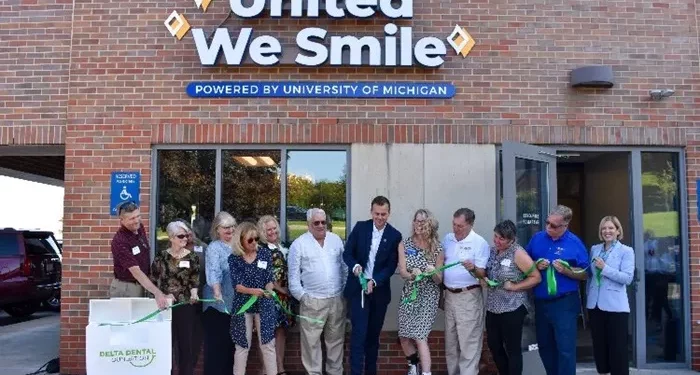
Growing up in India, Dr. Faiyaz Syed witnessed firsthand the tragedy of lack of access to healthcare—his grandmother died because she could not get timely care.
This experience deeply influenced him and led to a lifelong commitment to advancing health equity. He has continued this mission from opening free clinics in India to serving as Chief Medical Officer of the Michigan Primary Care Association (MPCA).
“Access to care is the biggest barrier to healthy living,” Syed said. “My grandmother’s death was so meaningful to me and inspired me to become a physician and give back to the community.”
Today, Syed focuses on the deep inequities in oral health. He firmly believes that oral health is an integral part of overall health and, if not addressed, it will exacerbate disparities among vulnerable groups.
“Without a healthy mouth, there is no healthy body. Oral health issues are more than just toothaches; they impact chronic disease and mental health.”
As a member of the board of directors of the Delta Dental Foundation (DDF) in Michigan, Syed is involved in program development and funding to address oral health inequities.
Last year, the foundation awarded $7.3 million in grants in Michigan, Ohio, and Indiana, and is advancing related work nationwide.
The report will also be published in multiple regional media outlets, focusing on the education of physicians and hygienists who provide oral care to vulnerable populations.
Syed’s passion for health equity began early in his career. While running a free clinic in India, he provided medication and treatment to people who could not afford it, and he deeply understood the importance of integrated care.
“Patients not only have toothaches, but also mouth ulcers and other problems. You can’t treat one part of care in isolation, you have to integrate it.”
This concept has become the core of his work at MPCA. MPCA represents more than 40 federally qualified health centers in Michigan, serving more than 730,000 people each year regardless of insurance status.
Syed emphasized: “I am committed to building an integrated model that allows services such as oral health, behavioral health and mental health to be seamlessly connected in one location.”
This holistic care concept is highly consistent with the mission of Delta Dental Foundation. DDF is focused on improving oral health equity, with a special focus on underserved groups and people with disabilities.
“DDF’s work on health equity, access and education is very much in line with my philosophy,” Syed said.
The foundation is committed to removing systemic barriers by funding training, supporting rural health services and promoting dentists to adapt to the needs of different communities.
Syed is particularly concerned about the huge challenges faced by people with disabilities: “In many rural areas, it takes hours to drive to the dentist, and if you have a disability, it is even more difficult.”
To this end, DDF invests in training programs to ensure that medical teams can provide high-quality care for patients with disabilities.
Syed believes this is both a moral responsibility and an inevitable value transformation of the health system. “This is in line with value-based care, which emphasizes better treatment results at a lower cost.”
Despite the progress, Syed admits that there is still a lot of work to be done, “The inequality faced by people with disabilities is still severe.”
Holli Seabury, executive director of the foundation, has also witnessed positive changes in the dental industry, especially breakthroughs in disability education and fair compensation policies.
She pointed out: “Although Medicaid is seen as a solution, it is still difficult to make an appointment with a Medicaid dentist, the waiting time is long, and some institutions do not accept Medicaid.”
DDF Senior Communications and Strategy Officer Jen Anderson introduced that the foundation adopts a comprehensive strategy, focusing on care access, publicity, education, innovative projects and workforce development, with a particular focus on oral health equity for people with disabilities.
“We have maintained a long-term partnership with recipient organizations to jointly promote change,” said Anderson. They all agreed that improving the level of care for people with disabilities has also led to the improvement of overall medical standards.
Seabury emphasized that raising public awareness is crucial, “Only when people see the impact will they realize the seriousness of the problem.” She firmly believes that by telling real stories, more people can be inspired to take action.
Syed concluded: “Health care must be comprehensive, fair and accessible. Working with MPCA and DDF is an important example of cooperation to achieve this goal. Our mission is to ensure that everyone has access to health services regardless of their background.”
Seabury added: “The progress so far is just the beginning. When a model that truly solves the problem is created, people are willing to participate and support it. This is the key to achieving lasting change.”