


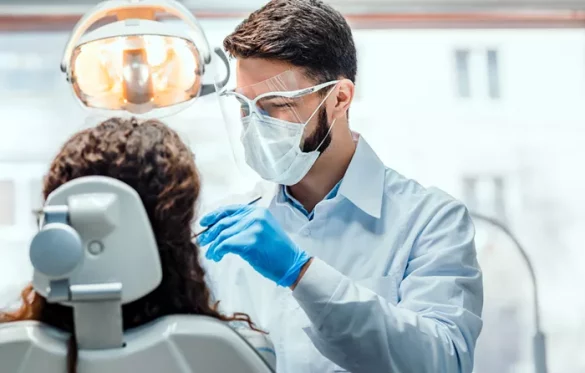
If you are looking for a career in dentistry, now may be the right time. Many dentists in San Diego are actively seeking well-trained dental assistants to join their teams.
To meet this demand, a new pilot program in San Diego aims to train more dental assistants while removing barriers that make education expensive or inaccessible.
About the Pilot Program
The program is run by the San Diego County Dental Society’s Academy of Learning. It is funded by the society itself, grants from the California Dental Association, and support from San Diego County Supervisor Joel Anderson’s office.
This pilot offers a low-cost dental assistant certificate program. Its curriculum is state-approved and designed to meet the specific needs of local dentists.
The course is part-time and lasts 15 weeks. Students attend in-person classes on weekends and complete some online homework. This flexible schedule allows participants to keep working or stay in college while training.
What Dental Assistants Do
Dental assistants play a key role in patient care. They help with procedures, schedule appointments, take X-rays, and support dentists in their daily work. Unlike dental hygienists, assistants do not provide preventive care or perform full patient examinations.
Curriculum Highlights
Early in the program, students learn basic clinical skills such as handling instruments, positioning patients, and understanding local anesthetics. Later, the curriculum covers CPR, billing, front desk duties, and other clinical concepts.
At the program’s conclusion, students receive guidance on job applications and salary negotiation. Graduates earn a dental assistant certificate, Basic Life Support certification, and an eight-hour infection control certification. They can also take a state exam to become registered dental assistants, which may lead to higher pay.
Program Goals and Benefits
“This program was a direct response to what our members told us they needed,” said Joanne Young, a dentist in private practice who oversees instruction. She emphasized the program offers “lots of hands-on, personal attention” from instructors who are invested in students’ success.
Angela Landsberg, executive director of the San Diego County Dental Society, said the initiative is also about workforce development and inclusion. “We want to diversify the field and ensure that people from all economic backgrounds have opportunities to join this rewarding profession,” she said.
The total cost of running the year-long pilot is estimated between $80,000 and $100,000.
Training Requirements Across States
Requirements for dental assistants vary by state. Some states, like Alaska and Utah, do not require registration or licensing. Others, such as Vermont, require registration with a state board. In California, certain tasks can be performed with training alone, while others, like applying sealants, require a license. Training can occur in vocational schools, community colleges, technical schools, or on the job.
Even at the program’s full cost of $2,500, which includes instruction, uniform, and materials, it is more affordable than many alternatives. For comparison, San Diego Mesa College charges around $1,700 for a 37-unit dental assisting certificate, while Pima Medical Institute’s program in Chula Vista costs nearly $20,000 for a nine- to ten-month course.
Student Experiences
On a recent Sunday, students practiced taking X-rays on one another at a dental office on Adams Avenue.
Phennapha “Pow” Rozelle, 33, recently moved to San Diego from Portland. After her husband accepted a job in the area, Rozelle decided to switch careers from restaurant work. She said the program offers a strong introduction to the dental field.
“I’m here, in a new city, and I want to try something else,” Rozelle said. “Dental assisting is a good start in the dental field.” She is paying half of the tuition and will shadow dental professionals at a Solana Beach practice.
Another student, Lindsey Matthews, has faced homelessness and a disability, making it difficult to secure long-term employment despite her education and professional experience. Matthews is enrolled on a full scholarship and praised the program for recognizing students’ effort and potential.
“The instructors don’t treat me like a product. They’ve helped me realize that I deserve fair treatment just like everyone else,” she said.
Matthews found learning about dental anatomy particularly eye-opening. “Root canals were a revelation,” she said. “I learned a lot about the structure of teeth, and it was fascinating—even if a bit squeamish to think about.”
A Stepping Stone to Career Growth
Program leaders hope that the training will help students overcome financial barriers, gain valuable skills, and advance in the dental field. By offering affordable, hands-on education, the pilot program is helping to strengthen San Diego’s dental workforce while providing students with opportunities for meaningful, rewarding careers.