


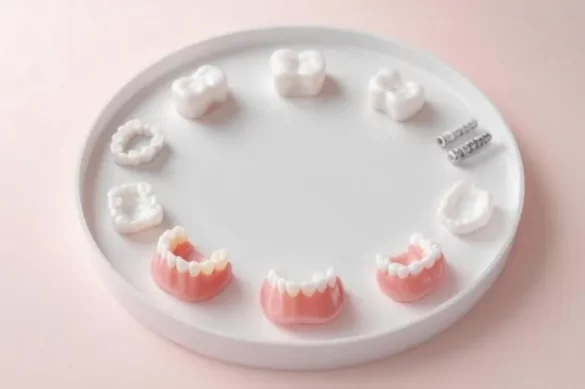
Losing just one tooth may seem minor, but even a single gap can make chewing difficult, affect speech, and reduce your confidence when smiling. Replacing a single missing tooth is important for oral health and the appearance of your smile. Fortunately, modern prosthodontics offers various effective solutions specifically designed for single tooth replacement. In this article, we describe the six best single tooth denture options, highlighting their advantages, limitations, and ideal use cases to help you make an informed decision.
Why Replace a Single Missing Tooth?
When a single tooth is lost, the problem is not only cosmetic. The space left behind can cause neighboring teeth to shift out of place. Over time, this can result in bite problems, jaw joint discomfort, and even bone loss in the jaw due to lack of stimulation. Timely replacement of the missing tooth helps maintain mouth structure, function, and general oral health.
1. Dental Implant (Single Tooth Implant)
Dental implants are the gold standard for single tooth replacement. The process involves placing a small, biocompatible titanium post directly into the jawbone. After the area heals, a lifelike crown is attached to the post, giving a natural look and feel. This treatment does not require changes to adjacent teeth. With proper care, implants can last for decades.
Advantages
- Mimics a natural tooth in appearance and function
- Preserves bone in the jaw
- Does not affect healthy neighboring teeth
- Long-lasting (often 20+ years)
Limitations
- Requires surgery and healing time (several months)
- Higher cost compared to other options
- Not ideal for patients with certain medical conditions or insufficient bone
Dental implants are recommended for most patients in good oral and general health who want a permanent and natural single tooth solution.
2. Fixed Dental Bridge
A fixed dental bridge has been used for decades to replace a single missing tooth. It works by anchoring a replacement tooth (pontic) to the adjacent teeth (abutment teeth), which are fitted with crowns. The bridge is permanently cemented, meaning it cannot be removed by the patient.
Advantages
- Restores function and aesthetics quickly
- No surgery required
- Cost is less than an implant in most cases
Limitations
- Adjacent healthy teeth must be reshaped
- Bridges may last 10–15 years, then need replacement
- Does not stop bone loss beneath the pontic
Bridges are best for patients whose neighboring teeth are already damaged or need crowns, and for those who cannot or prefer not to undergo surgery.
3. Removable Partial Denture (Single Tooth Flipper)
A removable partial denture for a single tooth, often called a “flipper,” consists of an artificial tooth attached to a gum-colored plastic base. Some designs include a thin metal or flexible framework for strength. It is held in place by small clasps or by closely fitting between the surrounding teeth.
Advantages
- Affordable and fast to make
- Non-surgical
- Easy to repair or replace
- Can serve as a temporary solution while waiting for permanent treatment
Limitations
- Less stable than fixed options
- May feel bulky in the mouth
- Can put pressure on adjacent teeth and gums
- Needs to be removed for cleaning and overnight
Flippers are ideal as short-term solutions, after an extraction, or for patients who need a low-cost remedy while considering more permanent treatments.
4. Resin-Bonded Bridge (Maryland Bridge)
A resin-bonded bridge, commonly called a Maryland bridge, is a conservative option for replacing a single tooth, especially a front tooth. The fake tooth (pontic) is attached to thin “wings” made of metal or ceramic, which are bonded to the backs of the neighboring teeth.
Advantages
- Preserves the surface of surrounding teeth (minimal reshaping)
- Fixed in place – no need for removal
- Quick and minimally invasive
- Good aesthetics for front teeth
Limitations
- Not as strong as traditional bridges or implants
- Mainly suitable for areas with low biting force (e.g., front teeth)
- Some risk of debonding over time
Maryland bridges are recommended for healthy young patients, and as an interim solution until a more definitive replacement can be provided.
5. Mini Dental Implant (MDI)
Mini dental implants are smaller and less invasive than traditional implants. MDIs can be a great solution for replacing a single small tooth, especially in the lower front area where space is tight. The procedure usually involves minimal surgery and shorter healing time than standard implants.
Advantages
- Minimally invasive procedure
- Can be placed where bone volume is limited
- Lower cost compared to traditional implants
- Faster healing and less discomfort
Limitations
- Less strong than standard implants
- Not suitable for molars or areas with strong chewing pressure
- Not as long-lasting as traditional implants
Mini dental implants are suitable for select cases, especially small anterior teeth, patients with limited bone, or those seeking a less complex surgery.
6. Snap-On Denture (Implant-Retained Denture)
A snap-on denture for a single tooth, sometimes called an implant-retained overdenture, is a removable replacement that attaches securely to a small dental implant. While this technique is more common for several missing teeth, it can also be adapted for single tooth spaces, especially when retention or cost is an issue.
Advantages
- Good stability compared to traditional removable dentures
- Easier to clean than fixed options
- Removable for comfort and hygiene
Limitations
- Requires at least one implant
- Denture and implant attachments may need regular maintenance
- Not as natural in feel as a fully fixed implant crown
Snap-on single tooth dentures can be a useful alternative when other fixed options are not possible, or for patients who wish to avoid reshaping healthy teeth.
How to Choose the Right Single Tooth Denture Option
Selecting the best single tooth denture depends on your oral health, bone volume, cosmetic expectations, and budget. Factors to consider include:
- Jawbone condition and density
- Health of surrounding teeth
- Gum health
- Aesthetic demands (front vs. back tooth)
- Need for a temporary vs. permanent solution
- Financial considerations
A prosthodontist or dental specialist can help match these factors to the ideal treatment for you, creating a personalized plan that restores your smile and function with reliability.
Conclusion
Replacing a single missing tooth is a crucial investment in your oral health, appearance, and lifestyle. Dental implants are generally the top choice for most patients due to their durability, aesthetics, and bone-preserving properties. For others, alternatives like bridges, flippers, mini implants, Maryland bridges, or snap-on dentures may serve better based on individual needs. Each option has unique benefits and limitations—consulting with a skilled dental professional ensures the best match for your situation. Restoring your smile with a suitable single tooth denture brings back confidence and helps protect your overall dental health for years to come.
Frequently Asked Questions (FAQs)
Which single tooth denture option is most natural-looking?
Dental implants with a crown closely mimic a natural tooth in appearance and function due to their integration with the jawbone and custom shading.
How long can a single tooth partial denture (flipper) last?
A flipper is usually a temporary solution designed to last a few months to a couple of years with careful use. It is not a permanent fix.
Is surgery always necessary for single tooth replacement?
Not always. Bridges and removable dentures can restore single teeth without surgery, while implants and mini implants require minor surgical procedures.
Can I eat normally with a single tooth denture?
Fixed options like implants and bridges allow normal eating. Removable solutions may require avoiding certain hard or sticky foods.
Does replacing a single tooth prevent bone loss?
Only an implant (traditional or mini) will help maintain bone in the area of a missing tooth. Other solutions do not prevent underlying bone loss.