


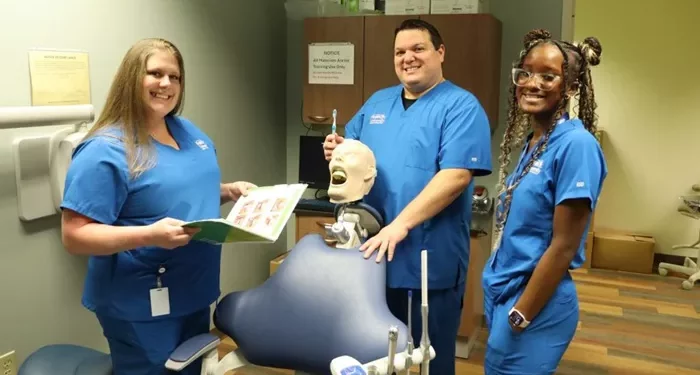
VALPARAISO, IN — HealthLinc, a federally qualified health center in Valparaiso, Indiana, has launched an innovative solution to address ongoing dental care staffing shortages. By creating its own dental assistant training program, HealthLinc aims to fill the critical gap in its workforce and ensure better access to dental services for patients in Northwest Indiana.
The health center, which operates multiple dental clinics in the region, faced a severe shortage of dental assistants, making it difficult to meet patient demand. According to Dr. Isaac Zeckel, HealthLinc’s dental director, dental assistants are essential for smooth clinic operations. They prepare patients, assist in procedures, manage sterilization, and ensure the clinic runs efficiently.
Before the pandemic, staffing issues were already challenging, but the situation worsened due to a lack of qualified assistants. Private dental offices, which often offer higher wages, further complicated recruitment efforts.
In response, HealthLinc created a four-month training program in 2021, developed by dental educator Lita Gamez. The program, which combines classroom learning with hands-on experience, trains participants to become dental assistants.
HealthLinc covers tuition, exams, licensure, and supplies, while students are paid during their training. The initiative is supported by grants from the Delta Dental Foundation and Indiana’s Next Level Jobs program.
HealthLinc’s program has proven successful. Out of the 17 dental assistants currently employed, 12 were trained in-house. The program not only replenishes staff but also creates opportunities for career advancement. Three assistants have been trained to become expanded function assistants, enabling them to place fillings, freeing up dentists to perform other procedures.
The additional staff allows HealthLinc’s dentists to serve more patients annually. Dr. Zeckel explained that with adequate staffing, the capacity for patient care doubles.
HealthLinc’s model is now being shared with other health centers facing similar workforce shortages. Zeckel emphasizes that developing in-house training programs is a practical solution for health systems struggling with staffing challenges. “If we didn’t have this program, I don’t think we could see the number of patients we’re seeing,” he said.
This innovative approach to workforce development is proving essential for maintaining dental care services in the region and can serve as a blueprint for other health centers across the country.