


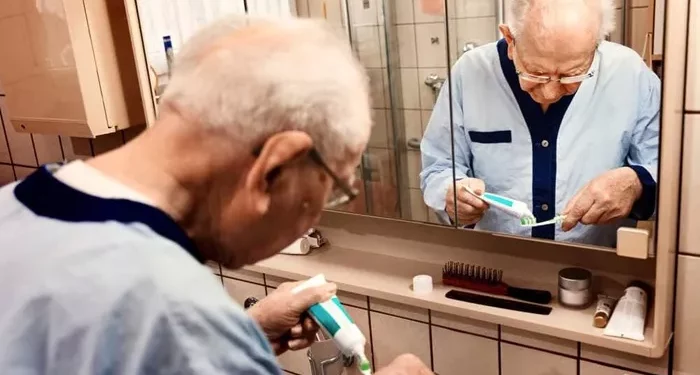
A briefing released by Justice in Aging warns that nursing home residents in the United States face serious oral health issues due to disparities in Medicaid coverage, the lack of dental benefits in traditional Medicare, staff shortages, and limited access to care.
The briefing notes that federal law requires nursing homes to conduct oral health assessments upon admission and at least quarterly, and that facilities should also provide basic oral hygiene support.
However, in practice, many nursing home staff lack professional dental training, and facilities lack the resources to conduct basic oral health training.
Insufficient staffing makes it difficult for residents with limited mobility to receive assistance with daily tasks like brushing and flossing, and staff often lack the time to assist with appointments or provide transportation to appointments.
Both facility and staff shortages exist. Many nursing homes lack space for dental examinations and treatments, and the shortage of dentists in both urban and rural areas makes office-based care unviable for many nursing home residents, especially in rural areas.
Coverage gaps are a core issue. Although the Centers for Medicare & Medicaid Services (CMS) has recently expanded coverage for some medically relevant dental services, and low-income seniors can now receive dental benefits through Medicaid, states are not federally mandated to provide dental insurance for adults.
State dental benefits for adults vary significantly: eight states provide only emergency dental services, 14 states offer limited coverage, and about half offer broader, but varying, adult dental benefits. The briefing also warns that state coverage may fluctuate as certain federal Medicaid funding adjustments occur.
The data reveals significant disparities. The briefing cites research showing that approximately 30% of nursing home residents have untreated tooth decay, compared to 18% of community-dwelling elderly residents; and approximately 27% of nursing home residents have no natural teeth, compared to 11% of community-dwelling elderly residents.
Geographic and racial disparities are also significant: rural residents have a 13% higher risk of tooth decay than urban residents and are 70% more likely to suffer from multiple oral diseases.
By ethnicity, the prevalence of no natural teeth among Black residents is 16% higher than that among white residents, while that among American Indians or Alaska Natives is 34% higher. Furthermore, residents with three or more chronic conditions have the poorest oral health, and those with Alzheimer’s disease are particularly vulnerable.
To address these disparities, the briefing reviewed several proven initiatives: teledentistry, which allows caregivers to diagnose and address issues more quickly via video; expanding the scope of practice for dental hygienists and encouraging collaboration with dental therapists and community health workers to improve access to services in rural areas; and integrated dental models (combining dental and general practice services in the same community clinic, or having primary care providers perform basic oral preventive measures) are also considered viable pathways. California’s pilot program is cited as a successful example of improving access to services.
However, aging justice emphasizes that these services would be difficult to achieve widely without the support of dental benefits under Medicare Part B. Two related bills have been introduced in Congress: House H.R. 2045 (Medicare Dental, Vision, and Hearing Benefits Act of 2025) and Senate S. 939 (Medicare Dental, Hearing, and Vision Expansion Act of 2025). As of the time of the briefing’s publication, the House version had been defeated, while the Senate version was still under committee review.
Aging Justice calls on policymakers, state governments, and nursing homes to work together to address barriers to coverage, including training caregivers, improving transportation and access processes, expanding facility capacity, and promoting remote and integrated services to reduce inequities in oral health access and outcomes.