


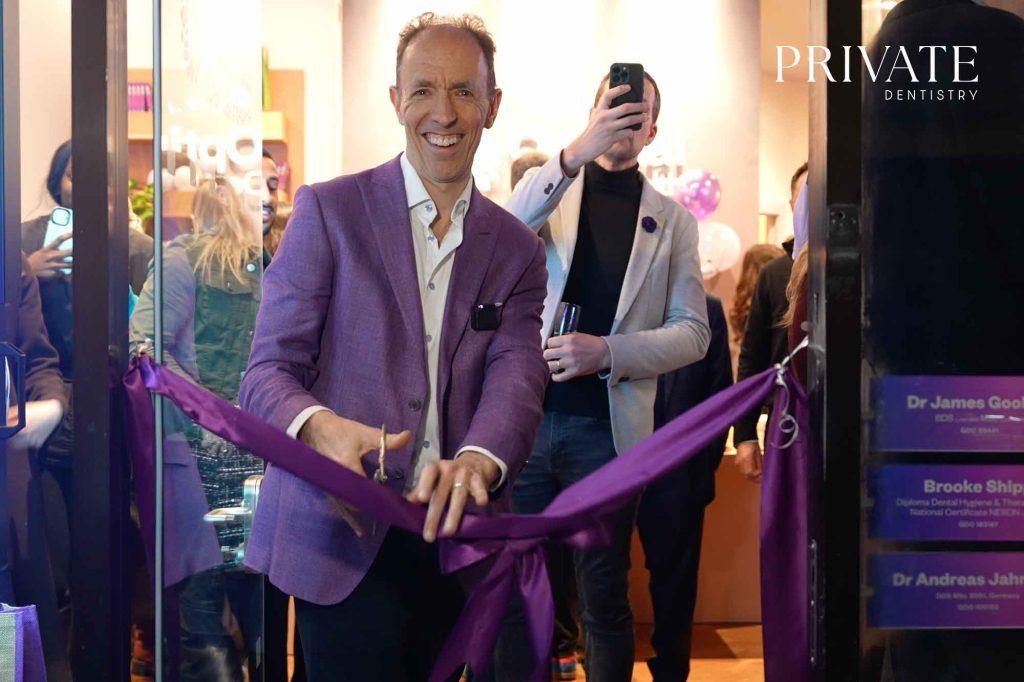
James Goolnik shares his journey to setting up a holistic dental practice – and why viewing the mouth as a gateway to the body is essential in dentistry.
My journey into holistic dentistry started not in the surgery, but as a frustrated father. As a parent of three, I couldn’t ignore the flood of sugary ‘rewards’ my children were receiving at school. It felt completely at odds with everything I believed about health.
Then I read a paper by Bartolotto (2015) that changed my thinking. It explored how sugar alters our taste buds and condition us to crave more. I realised this wasn’t just about teeth it was about long-term health and addiction. In 2020, it spurred me to write a cookbook called Kick Sugar, aimed at helping families reduce sugar intake without sacrificing flavour or taste. The project sparked a deeper exploration into the relationship between diet, oral health and systemic disease.
I came across the work of Canadian dentist Weston A Price, whose book Nutrition and Physical Degeneration deeply influenced my thinking.
To me, holistic dentistry means looking at whether the mouth could be the root cause of a patient’s symptoms, and delivering minimally invasive treatment when the body is ready to receive it
His research into traditional diets and their impact on facial structure, dental health and chronic disease provided a historical foundation for the modern link between nutrition and oral wellbeing. I was surprised to discover how few dental practices integrated this perspective. That is when I decided it was time to create one.
Healing support
While there is currently no qualification in ‘holistic dentistry’, terms like biological, functional and holistic all share a similar principle: support the body’s natural ability to heal. It means removing toxins, reducing inflammation and making space for the body to return to balance. I realised that dental treatment, if not approached thoughtfully, can contribute to systemic issues. For example, extractions or orthodontics might unintentionally narrow the airway, contributing to sleep apnoea.
To me, holistic dentistry means looking at whether the mouth could be the root cause of a patient’s symptoms, and delivering minimally invasive treatment when the body is ready to receive it. Working with alternative healthcare providers can help achieve this.
I became an accredited member of the International Academy of Oral Medicine and Toxicology (IAOMT) and received SMART certification. This is where I saw the alternate view on fluoride and how, with a balanced diet, it is not needed in preventive care.
I travelled to America to study the healing power of ozone therapy and enrolled on Dr Dominik Nischwitz’s course on biological dentistry. Learning about myofunctional therapy with Myobrace taught me how to screen for airway disease. Now I’m studying for a diploma in functional nutrition with the Institute for Optimum Nutrition, twinned with the University of Portsmouth.
A natural approach
When I set up Optimal Dental Health, I carefully selected materials and products that were effective but also biocompatible, preservative-free, colourant-free, and as natural as possible. Our eco-conscious oral hygiene products aren’t just sustainable, they actually work. Because being ‘green’ means nothing if your toothbrush disintegrates after two weeks.
A seismic shift
Having qualified more than 30 years ago, I’ve witnessed a seismic shift in our understanding of oral-systemic links. We now know that periodontal disease is not just about the gums. it’s intricately tied to systemic diseases like diabetes (Preshaw, 2012), cardiovascular disease (Paizan and Vilela-Martin, 2014), and cognitive decline (Beydoun et al, 2020). Our focus is preventive, early interceptive and food-focused care.
I see my role as actively listening to my patients and identifying potential antecedents, triggers and mediators, so I can develop a personalised care plan for my team to support their overall health and wellbeing. We have a health coach who works with patients to create long-lasting behavioural change. We collaborate with physicians to track blood markers like HbA1c, vitamin D, and omega 3:6 ratio before performing surgical procedures. These help us optimise healing and reduce complications. Ideally, patients work with our in-house nutritionist for two weeks prior to and four weeks after implant surgery, to ensure their body is in a low-inflammatory state and give the best chance of success.
I believe the future of dentistry is collaborative. It is about listening to patients, co-education rather than instructing, and giving them real choices.
Holistic care is not a trend, it is a necessary shift. By viewing the mouth as a gateway to the body, we offer care that heals, not just fixes.
For the references for this article, email siobhan.hiscott@fmc.co.uk.

Interested in finding out more about integrative dentistry and holistic care? Dive in to a different way of thinking with our essential guide to holistic dentistry, curated by Dr James Goolnik.
Holistic care