


Abstract
Objectives:
To compare trends in teaching and placement of composite resin versus amalgam in posterior restorations in Canadian dental schools with those in the United States.
Methods
Secondary descriptive and statistical analyses were performed on data from 2 previous studies. The data consisted of responses to questionnaires on teaching policies and the proportion of posterior restorations (amalgam and composite resin) performed in Canadian and US dental schools. Fisher’s exact test and 2-sample z-test were used to compare the proportions.
Results:
Canadian dental schools allocated less time than US schools to teaching composite resin restorations (p = 0.006): 22.2% of Canadian schools versus 76.4% of US schools devoted more than 50% of preclinical teaching time to such restorations. Canadian dental schools also dedicated more time to teaching amalgam restorations (p = 0.041): 33.3% of Canadian schools versus 8.8% of US schools devoted 50–75% of preclinical teaching time to amalgam restorations. Between 2008 and 2018, a significantly higher proportion of composite resin restorations were performed in US dental schools than in Canadian schools (p < 0.001).
Conclusions:
In Canadian dental schools, teaching of posterior composite resin restorations was more conservative than in US schools. There was no consensus among Canadian and US dental schools on composite resin preparation techniques or contraindications. Clear, standardized guidelines pertaining to composite resin teaching policies are suggested.
Introduction
In the use of restorative material, a clear shift has occurred from dental amalgam to composite resin, representing a switch from the “extension for prevention” concept to a non-invasive or minimally invasive approach. Amalgam has been the material of choice for over 150 years because of its strength, durability, resistance to heavy occlusal load and effectiveness in challenging scenarios. However, its use in restorative dentistry has been reduced worldwide for many reasons. Apprehension about mercury in the population contributed to this trend, particularly after the Minamata Convention of 2013.1 In addition, preparing cavities for use of amalgam requires unnecessary removal of sound tooth structure to ensure sufficient resistance and retention, which can be avoided to an extent when using composite resin.2
Composite resins have become extremely popular over the years. Their esthetic properties and the advantage of conservative cavity preparation have made them preferred over other restorative materials.3 When directions for use are followed meticulously during placement, composite resins can exhibit excellent clinical performance.4,5 Thus, this has become the material of choice for restoring posterior cavities in private practice and dental schools worldwide.6-8 For instance, a 2021 survey among German dentists indicated that younger dentists frequently and increasingly offered composite resin restorations to their patients.9 In dental schools around the world the teaching of posterior composites has increased and surveys 10,11 have revealed institutions that have adopted an amalgam-free curriculum. At the same time, many schools still favour teaching amalgam placement.10
Our group recently investigated the latest teaching policies regarding the use of composite resin and amalgam in Canadian and United States (US) dental schools.10,11 We also determined the numbers of composite resin and amalgam posterior restorations placed in Canadian and US dental school clinics. In examining that data, we found a misalignment between the amount of time devoted to teaching each restorative material and the number of corresponding posterior restorations placed by students.10,11 Our investigation also revealed that in the US, the percentage of dental schools teaching posterior composite resin placement is higher than in Canada, and a higher percentage of dental schools mandate a competency test for class II composite restorations. In Canada, most schools teach amalgam placement techniques before composite resin placement, while fewer schools teach amalgam before composite resin in the US.10,11 On the other hand, Canadian dental schools are more comfortable teaching students to perform complex restorations using composite resin.10,11
Other teaching inconsistencies were also noted in both countries and are highlighted in the present study. An important factor to be considered is that graduates from Canada may practise dentistry in the US and vice versa. Thus, teaching and understanding the nuances surrounding different restorative techniques in both countries may raise North American dentists’ awareness of patients’ expectations and clinical decision-making. Hence, the objective of the current study was to compare policies on teaching placement of composite resin versus amalgam in Canadian and US dental schools; to compare the proportion of composite resin and amalgam restorations placed in Canadian and US dental schools over 10 years from 2008 to 2018; and to present general teaching trends in posterior restoration. The null hypotheses were: There are no differences in teaching policies between Canadian and US dental schools and There is no difference in the proportion of composite resin and amalgam posterior restorations being taught in Canadian and US dental schools.
Materials and Methods
Secondary descriptive and statistical analyses were performed on data from 2 previous studies.10,11 These data fall into 2 categories. The first are questionnaire responses received from Canadian and US dental schools.10,11 All responses were analyzed descriptively and using Fisher’s exact test to reveal differences. They include the following information: percentage of teaching time devoted to each type of restoration and the technique taught first (composite resin or amalgam) in preclinical teaching; competency tests conducted for each type of restoration in preclinical and clinical courses; contraindications considered and taught for each type of restoration; and features of cavity design taught for class II composite resin and amalgam preparations. In addition, the matrix system, light curing units and adhesive system used for bonding posterior composites, teaching techniques and resin materials used in Canadian and US dental schools were also assessed.
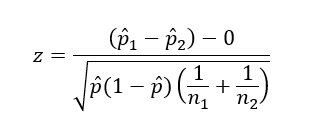
The second set of data included the number of posterior restorations of each type placed in Canadian and US dental schools.10,11 Secondary data analyses were performed descriptively and using a 2-sample z-test for proportions. Descriptive analysis was used to compare the proportions of composite resin and amalgam posterior restorations in dental schools of both countries. It also compares the turning point in each country, i.e., the year in which the number of composite restorations exceeded amalgam restorations. Also, annual growth rates among Canadian and US dental schools were compared. The 2-sample z-test for proportions was used to reveal in which country composite resin restorations were placed at higher numbers.
Statistical Analysis
Descriptive analysis was used to compare questionnaire responses; however, statistical analysis (Fisher’s exact test) was used to examine the differences between questionnaire responses. A level of significance of 5% was used for all inferential analyses, with p < 0.05 considered statistically significant.
In addition, descriptive analysis was used to compare the proportions of composite resin and amalgam posterior restorations in Canadian and US dental schools. A 2-sample z-test for proportions was performed for each year to assess when the proportion was significantly higher.
Data were organized in an Excel 2016 spreadsheet (Microsoft, Redmond, Wash., USA). Inferential statistical analyses were performed using SPSS v. 27 (IBM Corp., Armonk, NY, USA).
Ethics approval
The University of Toronto Research Ethics Board granted an exemption to the current study.
Results
Questionnaire Responses from Canadian and US Dental Schools
Preclinical Teaching of Posterior Restorations
In Canada, 78% of dental schools devoted 25–50% of their preclinical restorative teaching time to placement of composite resins (Table 1). In contrast, 76% of US dental schools devoted over 50% of time to posterior placement of resins. Looking to the future, 44% of Canadian dental schools reported that more time would be allocated to teaching composite resins; 41% of US dental schools predicted that more time would be assigned to the same subject. In regard to amalgam teaching, 56% of Canadian dental schools assigned 25–50% of their restorative teaching time to this technique, while 50% of US dental schools devoted ≤ 25% of teaching time. In the future, 11% of Canadian schools indicated that less time would be allocated to teaching amalgam in preclinical courses. At the same time, 44% of US schools anticipated less time spent on the same subject.10,11
|
Questionnaire |
US schools |
Canadian schools |
Fisher’s exact test, p |
|---|---|---|---|
| % time allocated to teaching posterior composite resins in preclinical courses | 0.006 | ||
| 25–50% | 8 (23.5%) | 7 (77.8%) | |
| 50–75% | 13 (38.2%) | 2 (22.2%) | |
| > 75% | 13 (38.2%) | 0 (0%) | |
| % time allocated to teaching amalgam in preclinical courses | 0.041 | ||
| < 25% | 17 (50.0%) | 1 (11.1%) | |
| 25-50% | 14 (41.2%) | 5 (55.6%) | |
| 50-75% | 3 (8.8%) | 3 (33.3%) | |
| Mandate for clinical competency test for class II composite resin | 0.024 | ||
| No | 1 (2.9%) | 3 (33.3%) | |
| Yes | 33 (97.1%) | 6 (66.7%) | |
| Teaching beveled gingival margin of proximal box technique for amalgam | 0.024 | ||
| No | 33 (97.1%) | 6 (66.7%) | |
| Yes | 1 (2.9%) | 3 (33.3%) |
Fisher’s exact test revealed that Canadian dental schools dedicated less time to teaching composite resin placement than their US counterparts (p = 0.006); 22.2% of Canadian schools versus 76.4% of US schools spent more than 50% of preclinical teaching on composite resin. Correspondingly, Canadian dental schools allocated more time to teaching amalgam than US dental schools (p = 0.041); 33.3% of Canadian schools versus 8.8% of US schools spent 50–75% of teaching time on amalgam (Table 1).
Competency Tests for Posterior Composite and Amalgam Restorations in Preclinical and Clinical Teaching
In preclinical courses, competency tests were indicated for class II restorations with both composite resin and amalgam equally in 89% of Canadian dental schools and 91% of US schools. In clinical courses, competency tests were indicated for composite resin and amalgam equally in 67% of Canadian dental schools, whereas in the US, tests for composite resin restorations were required in 97% of schools, compared with 53% for amalgam restorations.10,11 Fisher’s exact test showed that a significantly greater proportion of US schools mandated a clinical competency test for class II composite resin restorations compared with Canadian schools (97.1% vs. 66.7%, p = 0.024; Table 1).
Order of Teaching
Teaching amalgam placement techniques before composite resin techniques in preclinical courses was the practice in 89% of Canadian dental schools versus 62% of US dental schools.10,11 However, Fisher’s exact test showed that this difference was not significant (p > 0.05).
Contraindications for Posterior Placement of Composite Resin and Amalgam
We found no significant differences between Canadian and US dental schools in the teaching of contraindications to placement of composite resins (Table 2) and amalgams (Table 3).10,11
|
Contraindications |
% of respondent schools |
Fisher’s exact test, p |
|
|---|---|---|---|
|
Canada |
US (n = 34) |
||
| Poor oral hygiene/high caries risk | 89 | 56 | 0.121 |
| Cavity gingival margin on root surface | 56 | 41 | 0.477 |
| Inability to place a rubber dam | 89 | 71 | 0.407 |
| Parafunctional activity (bruxism) | 22 | 32 | 0.699 |
| Tooth acting as removable partial denture abutment | 33 | 41 | 1.00 |
|
Contraindications |
% of respondent schools |
Fisher’s exact test, p |
|
|---|---|---|---|
|
Canada |
US (n = 34) |
||
| Parafunctional activity (bruxism) | 11 | 12 | 1.00 |
| Tooth acting as removable partial denture abutment | 11 | 15 | 1.00 |
| Patient mercury concerns | 89 | 79 | 1.00 |
| Contact with dissimilar metal | 67 | 50 | 0.467 |
| Pregnant patient | 11 | 29 | 0.407 |
Cavity Design Features
In terms of cavity design, teaching of the use of composite resins (Table 4) or amalgams (Table 5) in Canadian and US schools was similar except for 1 feature.10,11 Fisher’s exact test showed a statistically significant difference (p = 0.024) in teaching beveling of the gingival margin of the proximal box in amalgam preparations between Canadian (33.3%) and US schools (2.9%).
|
Technique |
% of respondent schools |
Fisher’s exact test, p |
|
|---|---|---|---|
|
Canada |
US (n = 34) |
||
| Beveled occlusal margins | 11 | 18 | 1.00 |
| Beveled gingival margin of proximal box | 44 | 27 | 0.417 |
| Slot-type cavities (i.e., no occlusal component) | 89 | 85 | 1.00 |
| Reverse curve | 22 | 15 | 0.624 |
|
Technique |
% of respondent schools |
Fisher’s exact test, p |
|
|---|---|---|---|
|
Canada |
US (n = 34) |
||
| Beveled gingival margin of proximal box | 33 | 3 | 0.024 |
| Slot-type cavities (i.e., no occlusal component) | 22 | 35 | 0.693 |
| Retention grooves in full scale class II | 78 | 59 | 0.446 |
| Retention grooves in slot–type class II | 44 | 59 | 0.477 |
| Reverse curve | 89 | 79 | 1.00 |
Matrix Systems and Light Curing
All Canadian dental schools preferred to teach the “sectional matrix and separating ring” technique for class II composite resin restorations. Likewise, 97% of US schools chose to teach the same technique.10,11 In 78% of Canadian dental schools, LED curing is the system of choice in their faculty clinics when curing posterior composite resin restorations, compared with 97% of US dental schools that reported exact information.10,11 We found no significant differences between Canadian and US dental schools (p > 0.05).
Adhesive Systems and Composite Materials
In Canada, 56% of respondent schools taught students to use only the 3-step adhesive system (etch-prime-bond), and 44% of schools used the 2-step adhesive system only for bonding composite resin in posterior restorations. Although US dental schools taught variable types of systems, combined or alone, for bonding posterior composite resins, 56% taught students to use the 3-step adhesive system and 50% of schools used self-etching with selective etching. Moreover, 29% of surveyed US schools taught students to use self-etching (2-step system), and 24% used self-etching (1-step system) for posterior composite resin bonding.10,11 Fisher’s exact test showed no significant differences between Canadian and US dental schools (p > 0.05) in this regard.
Bulk-fill composite material was included in posterior restoration teaching in 44% of Canadian dental schools, compared with 41% of US schools. In Canada, 67% of surveyed schools indicated that they teach cusp build-up techniques using composite resins, compared with 56% of US schools.10,11 Fisher’s exact test revealed no significant differences between Canadian and US dental schools (p > 0.05).
Proportion of Composite Resin and Amalgam Restorations Performed in Canadian and US Dental Schools Clinics
We collected the numbers of posterior composite resin and amalgam restorations performed between 2008 and 2018 in most of the schools that participated in the study. In Canadian dental schools, there was an increase in the placement of posterior composite resin restorations over these years.10,11 However, composite resin was not used significantly more than amalgam until 2013.10,11 US dental schools also witnessed an increase in the placement of posterior composites resin restorations, and the number of these restorations became significantly greater than amalgam restorations in 2009.10,11
In Canadian dental schools, the proportion of posterior restorations performed using composite resin increased from 46% in 2008 to 69% in 2018, representing an average annual increase of 2.5%. That of restorations using amalgam decreased from 54% to 31% in the same period10,11 (Figure 1). In US dental schools, the proportion of composite resin restorations increased from 50% to 84% (an average annual increase of 3.7%), and that of amalgam restorations decreased from 50% to 16% in that period.10,11
A 2-sample z-test showed a significantly higher proportion of posterior restorations performed with composite resin in US schools than in Canadian schools each year from 2008 to 2018 (all p values < 0.001; Figure 1).
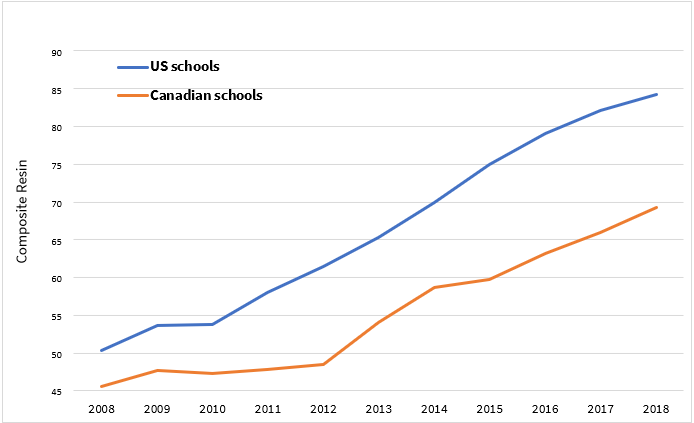
Figure 1: Proportion of posterior resin composite restorations performed in Canadian (n = 9) and United States (n = 34) dental schools.
Discussion
All of the 90% of Canadian and 52% of US dental schools that participated in this study are members of the American Dental Education Association (ADEA) and share a similar teaching system. However, their questionnaire responses revealed differences but also some similarities between the 2 countries. Therefore, our first null hypothesis was rejected.
The main significant difference between countries was in the time allocated to teaching composite resin and amalgam placement in preclinical courses, with Canadian dental schools dedicating less time to composite resin placement and more time to amalgam placement in preclinical courses compared with US schools (Table 1). This may explain the significantly higher proportion of posterior restorations performed using composite resin in US versus Canadian schools from 2008 to 2018.
In 2006, Lynch and colleagues12 showed that Canadian dental schools placed more composite resin (49% vs. 31%) and fewer amalgam restorations (51% vs. 62%) than US schools. However, those were estimates, not actual numbers. In dental schools in the United Kingdom, posterior composite resin placement techniques accounted for 36% of preclinical program in operative dentistry teaching time (range: 10–75%), and amalgam placement techniques accounted for 25% (range: 10–45%).13 In Austria, Germany and Switzerland, 76% of dental schools still teach amalgam placement, although it accounts for only 8% of the preclinical teaching.14 No information was reported about the time allocated to teaching composite resin placement.
Students who graduated in 2018 from North American dental schools are expected to practise dentistry for many decades. The procedures that novice students learn and the amount of training they receive during undergraduate years shape and influence their careers and clinical decision-making. As mentioned, most Canadian dental schools allocate up to 50% of their curriculum to amalgam teaching. However, in faculty clinics, students placed more composite resin in posterior teeth, nearly 70% of the total number of posterior restorations in 2018.10 These same students who received less instruction in composite resin placement will likely practise in a climate where this material is the first (and eventually only) treatment choice for most patients. Hence, schools and educators should ensure that dental students receive rigorous training to master the necessary procedures.
The other difference between Canadian and US dental schools was in competency tests mandated for class II composite resin restorations in clinics, with 97.1% of US schools versus 66.7% of Canadian schools mandating such a test (p = 0.024) (Table 1). A competency examination is an assessment tool that has a critical role in evaluating the efficiency of provided education and whether students have achieved the expected learning objectives. Berrong et al.15 investigated the effectiveness of a traditional daily grading system versus performance on 26 clinical competency tests where students would work without supervision. They concluded that competency tests provided a more reliable assessment of students’ capacity to perform core skills.
It was interesting to note that 89% of Canadian dental schools taught amalgam placement t…