Healthcare is not just about treatment; it is about people—and the words we use have the power to change lives. In fact, the language we use has far-reaching effects, including influencing treatment decisions and shaping pain perceptions. In orthodontics, the phrase “early treatment” typically refers to interceptive treatment provided between the ages of 6 and 10, often after the mixed-dentition phase has begun. However, this term can sometimes give rise to unintended associations, namely, that such interventions may be too soon, unnecessary or overly aggressive. As orthodontists, paediatric dentists and general dental practitioners, we have all likely encountered parents who react with concern or hesitation when early orthodontic treatment is proposed.
These reactions are often not based on resistance to treatment itself but rather on confusion about whether such treatment is genuinely needed at that time. Parents might fear pressure to decide before their child’s development warrants it. This hesitation usually reflects a gap in how we as clinicians explain the rationale behind treatment timing. What we call “early treatment” is not the initiation of treatment prematurely. The term refers to carefully planned interventions that align with a child’s biological development and capitalise on periods of high growth potential.
What is often overlooked is that, by the age of 8, the jaws have already reached approximately 80%–90% of their adult size.1 This means that beginning so-called early treatment at age 7 or 8 is in biological terms already delayed with regard to many clinical objectives. Maxillary expansion, for instance, is most effective when initiated much earlier, between ages 4 and 7, when the primary arches are still intact and the anterior teeth remain unresorbed.2 The most successful outcomes are achieved during this window of accelerated growth, when skeletal structures are still highly responsive to change. At age 7 or 8, Dr Shereen Lim, expert in airway health in children, advises that “if you are looking at doing palate expansion of any sort, you are too late!”3 The word “early” can therefore be misleading, since it implies a beginning stage when in reality skeletal growth is already well underway, and waiting until age 7 or 8 to begin evaluating growth patterns might miss a crucial period when function, structure and development are deeply intertwined.4 Although the American Academy of Pediatrics has endorsed guidelines recommending that screening for oral health begin within the first year of life, these recommendations are still too often overlooked in daily practice.4 Indeed, this idea, although perhaps underemphasised in current discourse, is not new. In 1923, the dental surgeon Pierre Robin, the first to use a functional orthodontic appliance, was asked when we should begin treating patients and his reply was simple: when they are born.5
For that reason, I believe that a more appropriate and accurate term is “timely treatment”. This concept emphasises that intervention is not based solely on a child’s age but on the specific stage of dental and skeletal development when treatment will be most effective. Accordingly, we define “timely treatment” as orthodontic procedures initiated during the primary or early mixed-dentition phase, when the biological conditions are ideal for correcting malocclusion. Treatment at this stage typically offers several important advantages, including being less invasive and more affordable and proceeding more quickly and efficiently.6 The appliances used during this phase are also usually straightforward to apply and well tolerated over extended periods and do not interfere significantly with a child’s daily life.7 Perhaps most importantly, intervening at this point can reduce, or even completely eliminate, the need for more complex comprehensive treatment late in adolescence.

Figs. 1a–c: Pre-treatment records. Extra-oral photographs.

Fig. 1b

Fig. 1c

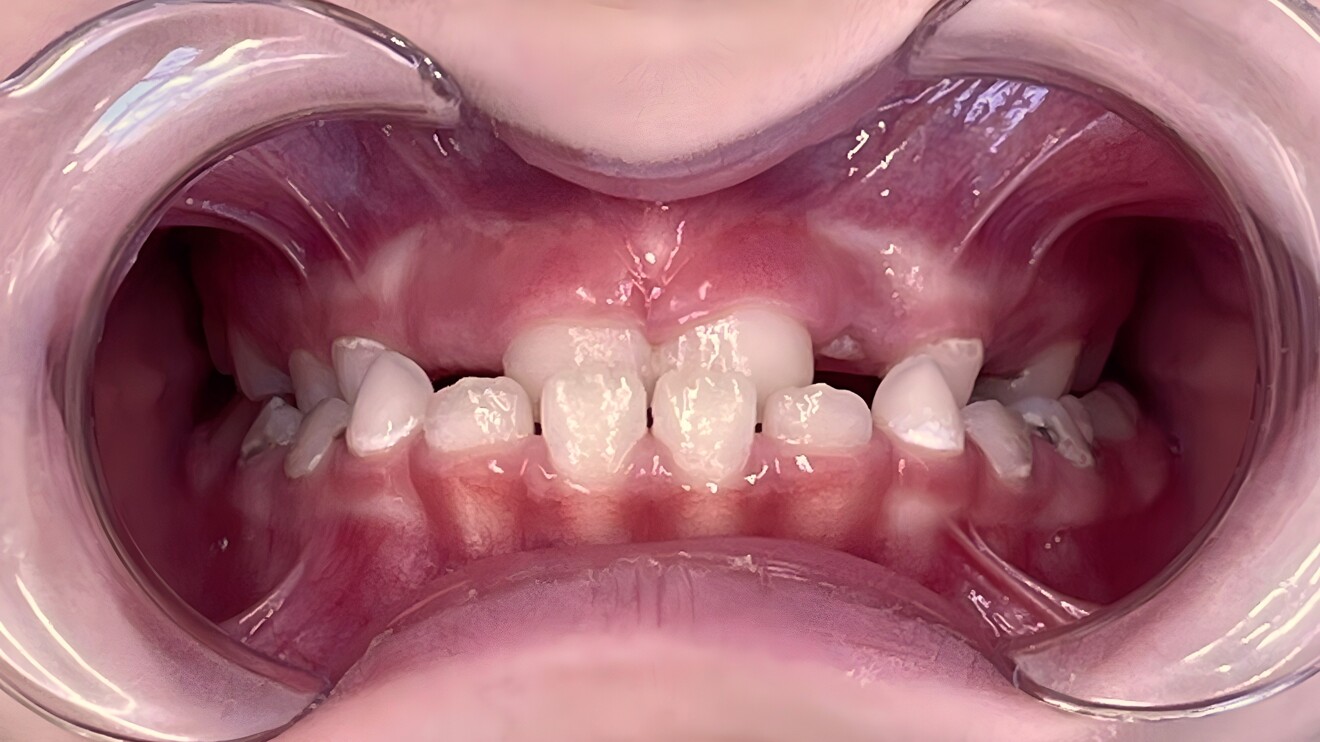
Figs. 1d–h: Pre-treatment records. Intra-oral photographs.