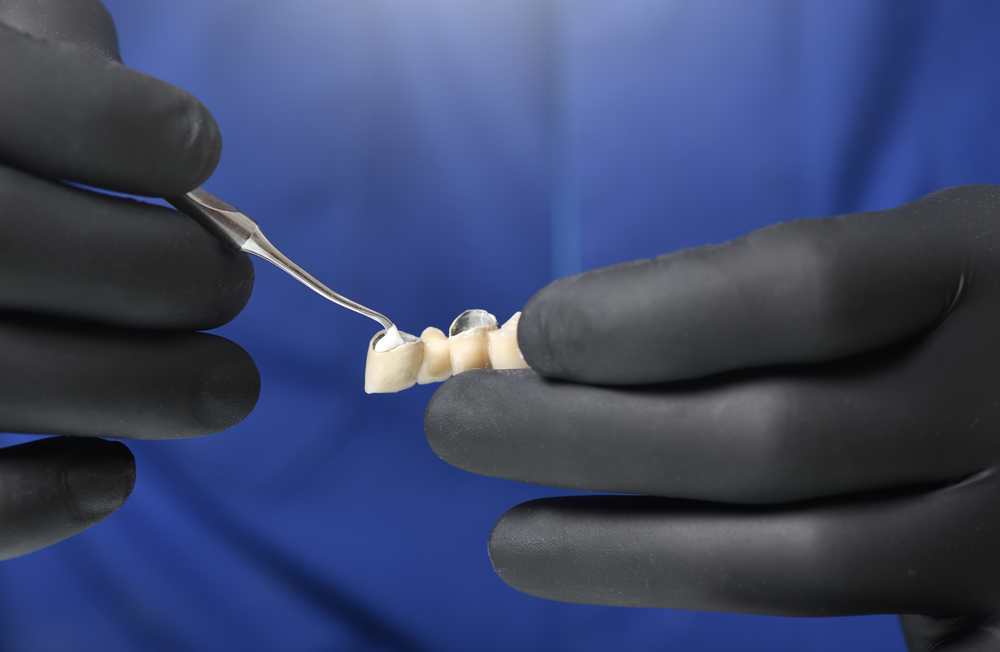
 Temporary cements serve a pivotal role, primarily in the provisional placement of crowns, bridges, or orthodontic brackets. These cements allow for a secure yet temporary holding of restorations until the permanent placement a few weeks later.
Factors to consider in a temporary cement include ease of removal, marginal integrity, and strength. It should maintain the restoration’s stability while ensuring it can be easily dislodged from the tooth and restoration without causing damage or stress to the prepared area.
Additionally, the temporary cement must preserve oral health with proper sealing at the margins, preventing bacterial ingress and subsequent decay during its interim placement. The strength of the temporary cement also allows it to withstand functional stresses during the time it is in place. This keeps the restoration firmly affixed until the permanent cementation.
Adhesion and biocompatibility are also crucial elements, ensuring the temporary cement doesn’t negatively affect the underlying tooth structure. Clinicians choosing a temporary cement needs to confirm that the material aligns with the specific requirements of each restoration as well. In the end, the right temporary cement ensures both excellent function and comfort for the patient.


