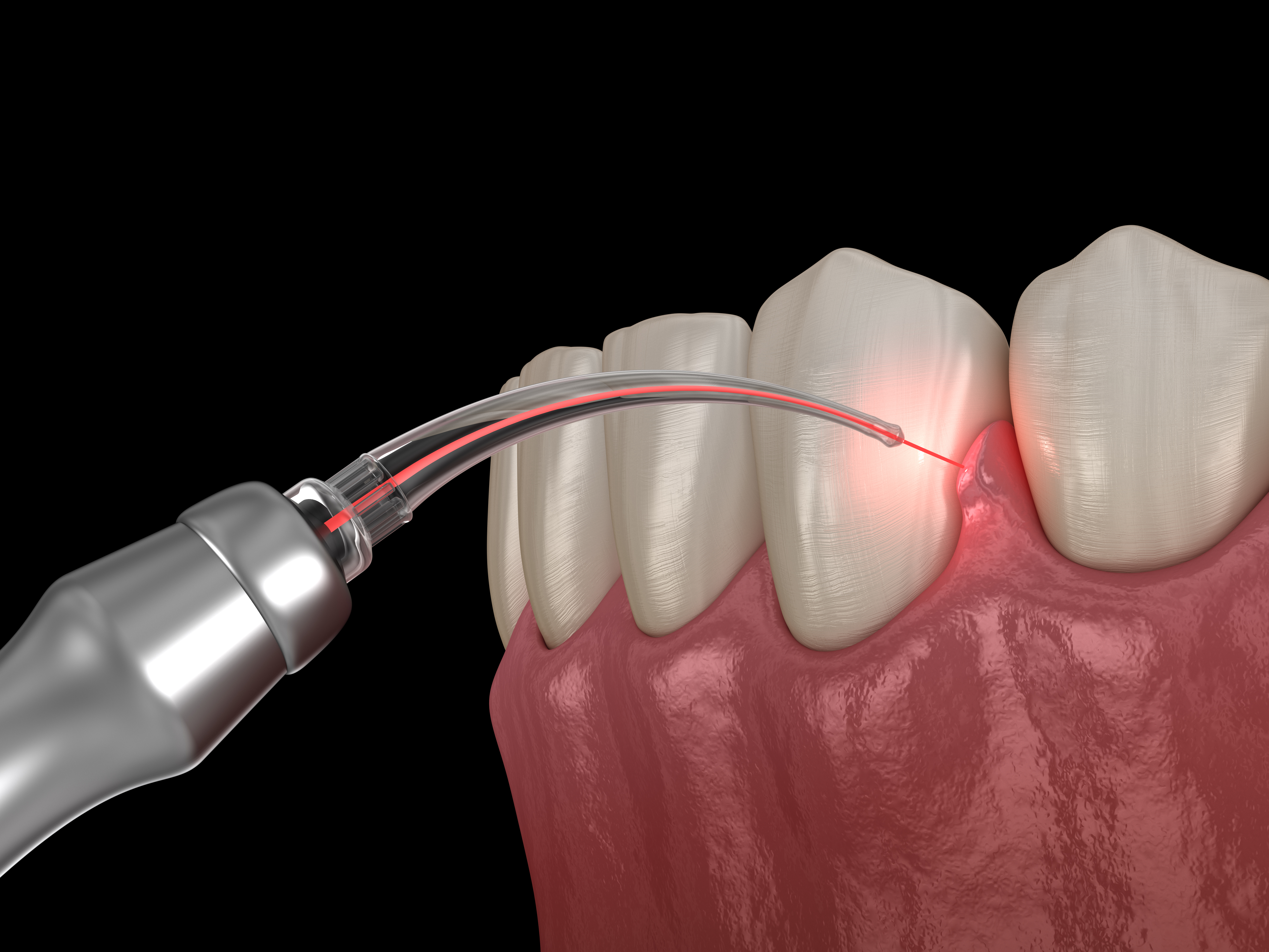
 The development of the dental diode laser marked a significant advancement in soft-tissue treatment. Emerging in the early 1990s from semiconductor technology, diode lasers offered a new approach to soft-tissue procedures by utilizing wavelengths typically between 800 and 980 nanometers. These wavelengths allowed the laser to selectively target pigmented tissue with precision, while limiting collateral damage to surrounding areas., ,Dentists quickly embraced diode lasers due to their ability to perform soft-tissue surgeries like gingivectomies, frenectomies, and crown lengthening with enhanced accuracy. The laser’s energy cuts and coagulates soft tissue simultaneously, which minimizes bleeding and reduces post-operative discomfort for patients. This has the added benefit of a quicker healing process and a more pleasant experience overall, often with reduced reliance on anesthesia., ,What set the diode laser apart from other technologies like CO2 or Nd lasers was its portability and affordability. The compact design made it an accessible option for a variety of dental practices, from general dentists to specialists, without the high maintenance costs associated with larger, more complex systems. It quickly became a go-to tool for periodontal treatment, bacterial reduction, and other soft-tissue management procedures., ,Over the years, continuous innovations have led to improved diode laser models with enhanced functionality, offering more user-friendly controls and expanded clinical applications. Today, the diode laser remains a key tool in modern dentistry for its versatility, allowing for cleaner, faster, and more precise soft-tissue procedures. As technology advances, diode lasers continue to shape the future of soft-tissue management in dental practices worldwide, offering more predictable results and greater patient satisfaction.


