

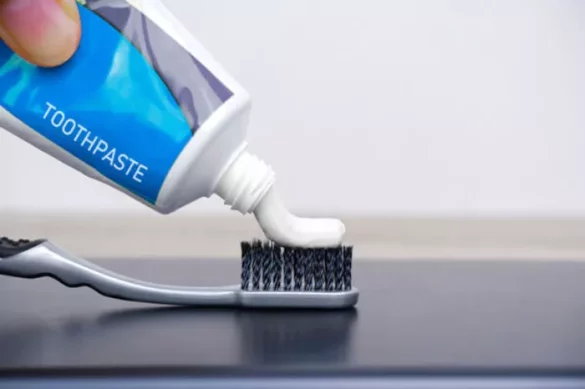
New research suggests that toothpaste containing the amino acid arginine may reduce cavities in children more effectively than traditional fluoride-based products. The findings were reported by the International Association for Dental, Oral, and Craniofacial Research (IADR).
A randomized clinical trial conducted by researchers at Sichuan University in China followed 6,000 children aged 10 to 14 who had two or more active cavities. The study ran from April 2019 to March 2022 and compared the effectiveness of toothpastes containing 8% arginine, 1.5% arginine, or 0.32% sodium fluoride.
The researchers measured outcomes using standard dental indices: DMFS (decayed, missing, and filled surfaces) and DMFT (decayed, missing, and filled teeth) scores over a two-year period.
After two years, toothpaste containing 8% arginine reduced DMFS scores by 26% and DMFT scores by approximately 25% compared to the sodium fluoride dentifrice. In contrast, the 1.5% arginine toothpaste showed no significant difference from the fluoride product.
“This clinical study confirms that, depending on concentration, arginine dentifrices are as effective—or even more effective—than sodium fluoride in preventing cavities in children with active decay,” the IADR stated in a press release.
The study highlights the potential of arginine-based dental products as an alternative or complement to fluoride, particularly for children at higher risk of caries. Researchers suggest that the amino acid’s ability to neutralize acids in the mouth may play a key role in reducing cavity formation.
