

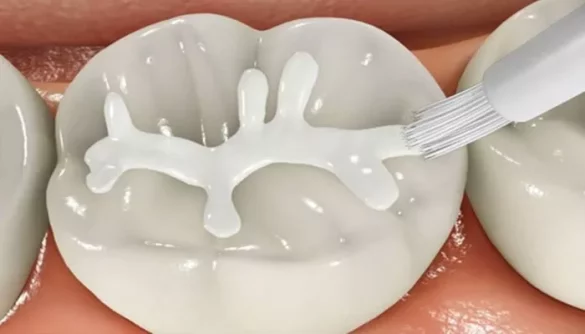
Dental sealants are protective coatings applied to the chewing surfaces of teeth. They are most commonly used on children’s molars to prevent decay. These sealants create a barrier that protects enamel from plaque and acids.
Concerns have been raised about the safety of dental sealants, especially because some contain small amounts of chemicals such as bisphenol A (BPA). This has led many parents and patients to ask: are dental sealants toxic?
What Are Dental Sealants Made Of?
Most dental sealants are made of resin-based materials. These materials can be either:
Bisphenol A-glycidyl methacrylate (Bis-GMA) – a common resin derived from BPA.
Urethane dimethacrylate (UDMA) – a resin that is often used to reduce BPA exposure.
The main role of these resins is to harden quickly and form a smooth protective layer over the tooth. Some sealants also contain fluoride to further prevent decay.
BPA and Health Concerns
What is BPA?
BPA is a chemical used in some plastics and resins. Studies have suggested that high levels of BPA may act as an endocrine disruptor. This means it can mimic estrogen and potentially affect hormone function.
Exposure Levels in Dental Sealants
When dental sealants are applied, very small amounts of BPA may be present. However, multiple studies have shown that the BPA exposure from sealants is minimal and far below the levels considered harmful by health authorities.
Duration of BPA Release
BPA from sealants may be detected in saliva immediately after application. However, it is quickly diluted and eliminated from the mouth. Studies show that BPA levels drop to near zero within a few hours.
Are Dental Sealants Toxic to Children?
Children are the primary recipients of dental sealants. Safety studies have shown that:
- The risk of toxicity from dental sealants is extremely low.
- No significant hormonal or developmental effects have been observed in children following sealant application.
- The benefits of preventing dental decay outweigh the minimal risk of chemical exposure.
Endocrine System Concerns
Although BPA is known to affect hormones in large amounts, the tiny exposure from sealants does not produce measurable endocrine disruption. Health organizations such as the American Dental Association (ADA) and the Food and Drug Administration (FDA) consider dental sealants safe for children.
Are Dental Sealants Toxic to Adults?
Adults may also benefit from dental sealants, especially on molars and premolars that are prone to decay. Studies indicate that adults experience the same minimal exposure to BPA as children.
For adults, the risk of systemic toxicity is negligible. Sealants are widely recommended for high-risk individuals to prevent cavities and costly dental procedures.
Potential Allergic Reactions
While dental sealants are generally safe, rare allergic reactions can occur. These may include:
- Oral irritation
- Swelling of the gums
- Redness in the mouth
These reactions are uncommon and usually resolve once the sealant is removed. Dentists often perform allergy assessments if a patient has a history of sensitivity to resin materials.
Long-Term Safety Studies
Several long-term studies have evaluated the safety of dental sealants:
A 2017 review found no evidence linking sealants to systemic health problems.
The ADA and CDC recommend sealants for children and adults based on over 40 years of safe use.
Research continues to monitor BPA and resin exposure, but results consistently show minimal risk.
Benefits of Dental Sealants
The benefits of dental sealants significantly outweigh any potential risk:
- Reduce the risk of cavities by up to 80% in molars.
- Protect vulnerable chewing surfaces that are hard to clean.
- Provide a cost-effective preventive dental solution.
Alternatives to Resin-Based Sealants
For patients concerned about BPA, dentists can offer:
- Glass ionomer sealants: These release fluoride and do not contain BPA.
- Modified resin sealants: Low-BPA formulations are available and provide similar protection.
How to Minimize Risk When Getting Sealants
Patients can take steps to reduce exposure to BPA:
- Ensure the dentist removes excess material after application.
- Ask for BPA-free or low-BPA sealants.
- Maintain good oral hygiene to prolong sealant effectiveness and reduce chemical breakdown.
Regulatory Oversight
Dental sealants are regulated by the FDA as medical devices. Manufacturers must meet strict safety standards. The ADA provides clinical guidelines for safe application and use. These regulations ensure that sealants are not toxic under normal use.
Myths About Sealant Toxicity
Some common myths include:
- Sealants cause cancer: There is no scientific evidence supporting this claim.
- Sealants contain dangerous BPA: The exposure is extremely low and transient.
- Sealants are unnecessary if you brush well: Sealants protect areas that brushing alone cannot reach.
Conclusion
Dental sealants are a safe and effective preventive treatment for both children and adults. The small amount of BPA that may be present is not enough to cause harm. Health organizations support their use due to their ability to significantly reduce dental decay.
Choosing low-BPA or BPA-free options, practicing good oral hygiene, and regular dental visits help maximize the benefits while minimizing risks. Overall, the evidence shows that dental sealants are not toxic when used as recommended.
