


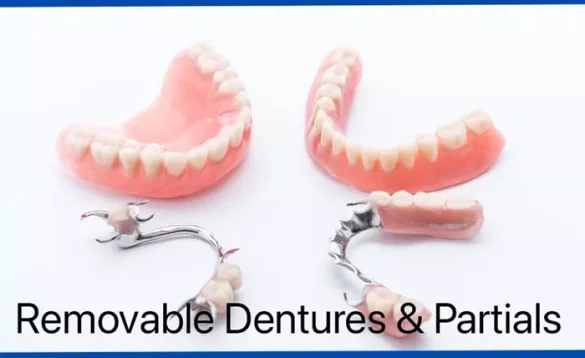
For individuals with missing teeth, dentures provide a practical solution for restoring function and appearance. Full dentures and partial dentures are the two primary types. While both restore the ability to chew and speak, comfort levels can vary significantly between them. Understanding these differences is crucial for maintaining oral health, including preventing gum disease and protecting sensitive teeth.
Understanding Full Dentures
Definition and Purpose
Full dentures, also known as complete dentures, replace all teeth in either the upper or lower jaw. They are typically recommended when natural teeth are missing or need extraction due to severe decay or advanced gum disease. Full dentures restore the facial structure and improve the ability to chew and speak.
Construction of Full Dentures
Full dentures are usually made from acrylic or a combination of acrylic and metal. The base is designed to fit snugly against the gums, while the artificial teeth are shaped to mimic natural teeth. Proper fit is essential to avoid sore spots, gum irritation, and discomfort.
Benefits of Full Dentures
Full dentures provide uniform support across the gums, which can reduce pressure points when chewing. They help maintain facial aesthetics and can improve self-confidence. Additionally, they distribute chewing forces evenly, which can reduce the risk of further gum recession and support oral health in patients with no remaining natural teeth.
Understanding Partial Dentures
Definition and Purpose
Partial dentures are used when some natural teeth remain. They fill gaps caused by missing teeth and help prevent remaining teeth from shifting. Partial dentures can be removable or fixed and are often supported by clasps that attach to natural teeth.
Construction of Partial Dentures
Partial dentures typically consist of a metal or acrylic framework with artificial teeth attached. Clasps or precision attachments secure the denture to adjacent natural teeth. The fit must be precise to avoid irritation and pressure on the supporting teeth and gums.
Benefits of Partial Dentures
Partial dentures preserve remaining natural teeth and prevent them from moving. They are generally easier to adapt to initially than full dentures for patients with some natural teeth. They can be designed to minimize visibility of the clasps, maintaining an aesthetic appearance.
Comfort Comparison Between Full and Partial Dentures
Initial Comfort and Adaptation
Full dentures require an adaptation period, especially for first-time users. The entire oral cavity must adjust to the new appliance. Some patients experience increased salivation, minor soreness, and difficulty speaking or eating initially. Partial dentures may feel more comfortable at first because they integrate with existing teeth, but they can also cause pressure on the natural teeth they attach to.
Fit and Stability
Full dentures rely on suction and careful shaping to remain stable. Well-fitted full dentures often feel more uniform across the mouth. Partial dentures, however, depend on clasps for support. This can create uneven pressure points and sometimes lead to gum irritation or discomfort around supporting teeth. For individuals with sensitive teeth, this may exacerbate discomfort.
Impact on Gums
Full dentures cover the gums entirely, which can sometimes cause sore spots or irritation if the denture is ill-fitting. Regular adjustments and proper cleaning help prevent these issues. Partial dentures, while leaving more gum tissue exposed, can contribute to localized gum inflammation around the clasped teeth. Poor oral hygiene can increase the risk of gum disease.
Chewing and Speech
Full dentures may feel bulky at first, affecting speech and chewing efficiency. Over time, patients often adapt and regain functional ability. Partial dentures can offer more natural chewing efficiency because they work alongside remaining teeth. However, the pressure on certain natural teeth may lead to discomfort during eating.
Oral Health Considerations
Gum Disease Prevention
Both full and partial dentures require careful cleaning to prevent gum disease. Plaque and food debris can accumulate under the denture base or around clasps. Regular brushing, rinsing, and professional check-ups are necessary to maintain healthy gums and prevent infections.
Sensitive Teeth Management
Partial dentures can put pressure on remaining teeth, especially if they are already sensitive. Full dentures avoid this by resting entirely on the gums. However, patients with thin or receding gums may experience discomfort, which requires denture relining or cushioning materials to improve comfort.
Bone Health
After tooth loss, the jawbone can shrink over time. Full dentures can accelerate bone resorption because they exert pressure across the entire gum ridge. Partial dentures, by preserving natural teeth, help maintain bone in those areas. Dental implants are sometimes used to support dentures and reduce bone loss, enhancing both comfort and oral health.
Maintenance and Cleaning
Cleaning Full Dentures
Full dentures must be removed daily for cleaning. Use a soft brush and non-abrasive denture cleanser to remove plaque and debris. Soaking overnight in a denture solution helps maintain their shape and prevents bacterial buildup. Proper cleaning reduces the risk of gum irritation and infection.
Cleaning Partial Dentures
Partial dentures also need daily cleaning. Special attention must be given to the clasps and the areas around natural teeth. Avoid harsh toothpaste, which can scratch the surface. Regular cleaning prevents plaque accumulation that can lead to gum disease and damage sensitive teeth.
Regular Dental Check-ups
Both full and partial dentures require periodic dental visits for adjustments and professional cleaning. Dentists check for pressure points, fit issues, and signs of gum disease. Early intervention can prevent long-term discomfort and protect sensitive teeth and gums.
Factors Affecting Comfort
Material Quality
The material used for dentures can influence comfort. Modern acrylic and flexible resins offer improved fit and less irritation compared to older, rigid designs. Metal clasps on partial dentures may sometimes cause discomfort if they rub against gums or teeth.
Individual Oral Anatomy
Jaw shape, gum thickness, and remaining teeth impact comfort. Patients with a high palate or uneven gum ridge may find full dentures less stable initially. Similarly, partial dentures must be tailored to fit the contours of remaining teeth precisely.
Oral Hygiene Habits
Consistent cleaning and care improve comfort for both denture types. Accumulated plaque, food particles, and poor-fitting dentures can increase discomfort and the risk of gum disease. Maintaining oral hygiene is essential for long-term denture comfort.
Adjustments and Relines
Relining Full Dentures
Full dentures may require periodic relining to maintain a snug fit as the gums and jawbone change over time. Relines reduce sore spots, improve suction, and enhance overall comfort.
Adjusting Partial Dentures
Partial dentures often need adjustments when clasps loosen or if they put too much pressure on certain teeth. Regular adjustments prevent irritation, protect sensitive teeth, and maintain chewing efficiency.
Psychological and Social Factors
Self-Confidence
Comfort is not only physical. Full dentures can affect self-esteem initially due to bulkiness or difficulty speaking. Partial dentures may provide a more natural appearance for those retaining some natural teeth, positively affecting confidence and social interactions.
Adaptation Period
The period of adaptation varies for each individual. Full denture users may need several weeks to adjust, whereas partial denture users often adapt faster due to the presence of remaining teeth. Patience and guidance from a dental professional enhance the adaptation process.
Conclusion
Choosing between full and partial dentures depends on oral health, number of remaining teeth, and personal comfort preferences. Full dentures provide uniform pressure and avoid stress on natural teeth, which can be beneficial for sensitive teeth and overall gum health. Partial dentures preserve natural teeth and bone structure but may cause pressure points and localized discomfort. Both options require proper cleaning, regular dental check-ups, and attention to oral hygiene to prevent gum disease and maintain long-term comfort. Consulting a dentist helps determine the most suitable denture type for each individual.