


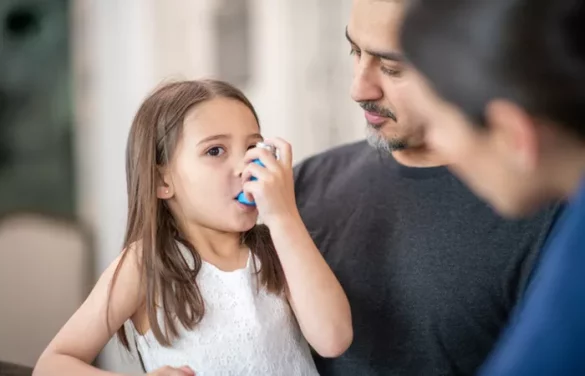
Children and adolescents with asthma who use inhalers may face significantly higher levels of tooth wear, particularly on the buccal and labial surfaces of their teeth. The findings were published on November 18 in Scientific Reports.
The study found that tooth wear was most strongly associated with dry powder inhalers, higher doses of inhaled corticosteroids, and longer treatment durations.
“Dentists should routinely screen asthmatic patients for early signs of tooth wear and consider preventive measures such as topical fluorides or sealants,” wrote the study’s lead author, Dr. Dorota Olczak-Kowalczyk of the Medical University of Warsaw, Poland.
While previous research has hinted at a link between asthma and dental hard tissue loss, evidence has been inconsistent.
This new study aimed to clarify the relationship between inhaled asthma treatments and tooth wear in young patients.
Researchers conducted a case-control study of 129 children and adolescents aged 3 to 17. The study included 70 patients with asthma who were treated with inhaled corticosteroids (ICS) or a combination of ICS and long-acting beta-agonists.
The control group included 59 children without asthma.
Tooth wear was measured using the Smith and Knight Tooth Wear Index (TWI), followed by statistical analysis to compare the two groups.
Results showed that children with asthma had significantly greater tooth wear than their peers in the control group (p = 0.0025), particularly in permanent teeth (p = 0.0177). Tooth wear was most severe in the anterior segments of primary teeth and the posterior segments of permanent teeth, with buccal and labial surfaces being most affected in both types.
Further analysis revealed that combination therapy with inhaled corticosteroids and long-acting β₂ agonists substantially increased the likelihood of buccal and labial surface wear (odds ratio [OR] = 2.41, p = 0.042). Use of dry powder inhalers (OR = 1.84, p = 0.048) and higher ICS doses (OR = 1.96, p = 0.046) also raised the risk.
The authors noted several limitations to the study. The control group was recruited from a dental clinic, which may have introduced selection bias since these children could have better oral hygiene habits or access to care.
“These findings underline the need for closer collaboration between medical and dental professionals to reduce oral health risks in children with asthma,” Olczak-Kowalczyk and her colleagues concluded.