
Are Dental Veneers Right for You? Cost, Risks, and Benefits
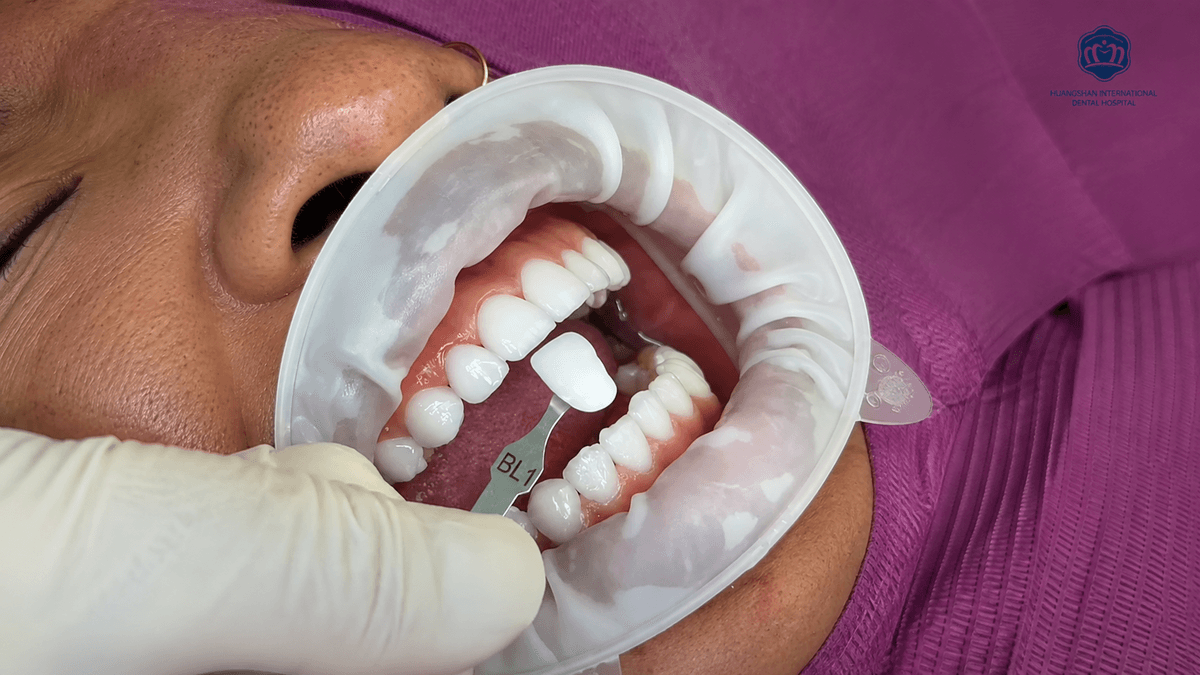
On this page~7 min read
Key Takeaway
- Veneers can improve tooth color, minor chips, small gaps, uneven shape, and mild cosmetic misalignment, but they are not a shortcut for every smile problem.
- Some people regret veneers because the shade is too white, the edge fit is poor, the bite is not adjusted well, or the original teeth were not suitable for veneers.
- Traditional porcelain veneers usually require enamel preparation, so the decision should be made carefully with a qualified dentist.
- A natural-looking result depends on diagnosis, smile design, tooth color selection, material choice, bite evaluation, and precise bonding.
Featured Answer: Why Do Some Veneers Look Fake?
Some veneers look fake because the color is too bright, the teeth are made too long or too uniform, the translucency does not match natural enamel, or the edges do not blend smoothly with the gums. Veneers may also look bulky when teeth are crowded or protruded but are restored without enough planning. A natural veneer result should match facial features, lip line, gum shape, tooth proportions, and bite, rather than simply copying a celebrity smile.
What Are Dental Veneers?
Dental veneers are thin shells bonded to the front surface of teeth to improve the visible smile. They are commonly used for teeth with mild discoloration, small chips, worn edges, minor gaps, uneven shape, or limited cosmetic misalignment. Porcelain veneers and ceramic veneers are popular because they can offer good color stability and a natural enamel-like appearance when designed properly.
However, veneers are cosmetic restorations, not a universal solution. If a tooth has active decay, gum disease, severe structural damage, an unstable bite, or very heavy crowding, other treatments may be safer or more predictable. The American Dental Association notes that dental issues such as decay or gum disease should be treated before veneers, and that placing veneers over unhealthy teeth may worsen existing problems.
Why Some People Regret Veneers
1. The Smile Looks Too White, Flat, or Artificial
One common regret is choosing a shade that looks dramatic online but unnatural in real life. Some patients ask for an extremely white shade because they want a fast transformation. The final smile may lose natural translucency, look opaque, or appear disconnected from the patient's skin tone and facial features. This is why a good veneer plan should not chase the whitest possible shade; it should choose a color that looks bright but believable.
Natural teeth are not one flat color. They have layers, slight transparency near the edge, and subtle changes in brightness. When every tooth is identical in size, shade, and surface texture, the result can look like a single block rather than individual teeth.
2. Gum Inflammation or Bad Margins
Veneers require both good materials and precise clinical technique. If the edge of the veneer does not fit closely against the tooth, a small gap or overhanging margin may trap food and plaque. Over time, this can irritate the gums, causing redness, bleeding, swelling, gum recession, or bad breath. Poor margins can also make the smile look less clean even when the veneer color itself is attractive.
This is one reason patients should avoid extremely fast or unlicensed cosmetic treatment. The ADA has warned that dental procedures that alter teeth, gums, or jaws without a dentist's supervision may cause irreversible harm. For veneers, diagnosis, tooth preparation, temporary evaluation, lab communication, and bonding all matter.
3. Chipping, Debonding, or Bite Problems
Some people feel their veneers become fragile after treatment because one or more veneers chip, crack, or come loose. This is not always a material problem. It may be related to bite design, night grinding, deep overbite, edge-to-edge bite, poor bonding, or eating hard foods too soon. Cleveland Clinic notes that veneers can become dislodged and that many types are not reversible.
Before veneers, the dentist should evaluate how the upper and lower teeth meet. Patients with heavy bruxism, an abnormal bite, or a deep overbite may need bite adjustment, a night guard, orthodontic treatment, or a different restoration plan before cosmetic veneers are considered.
4. Veneers Were Used for the Wrong Case
Veneers are best for mild to moderate cosmetic problems. They are not meant to forcibly correct severe crowding, major protrusion, serious bite problems, or heavily damaged teeth. If crowded teeth are covered with veneers without enough space planning, the dentist may need to remove too much tooth structure, or the final veneers may look bulky.
For severe discoloration, large defects, or teeth with major shape loss, a full ceramic crown may sometimes be a better option than a veneer because it can provide stronger coverage and more complete color masking. The correct choice depends on remaining enamel, tooth position, bite, gum health, and the patient's cosmetic goals.
What You Should Know Before Choosing Veneers
Traditional porcelain veneers usually require a small amount of enamel reduction, often around the visible front surface, so the veneer has space to fit naturally and bond securely. The exact amount varies by case and material. Once enamel is removed, it does not grow back, which is why veneers should be treated as a long-term decision rather than a temporary beauty trend.
At Huangshan Dental, veneer consultations are often guided by dentists who understand both oral function and smile aesthetics. Dr. Jinhao Li, a licensed dentist at Huangshan International Dental Hospital, has clinical experience in general dentistry, anterior esthetic design, and all-ceramic restorations. For veneer patients, his role is not simply to choose a brighter shade, but to evaluate gum health, bite comfort, tooth proportions, facial balance, and material suitability before treatment begins.
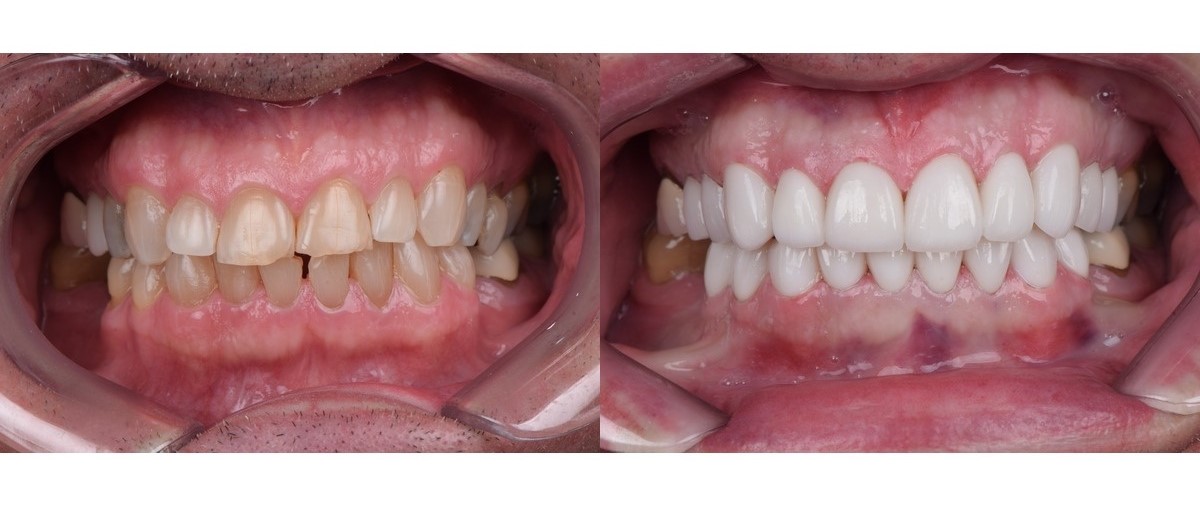
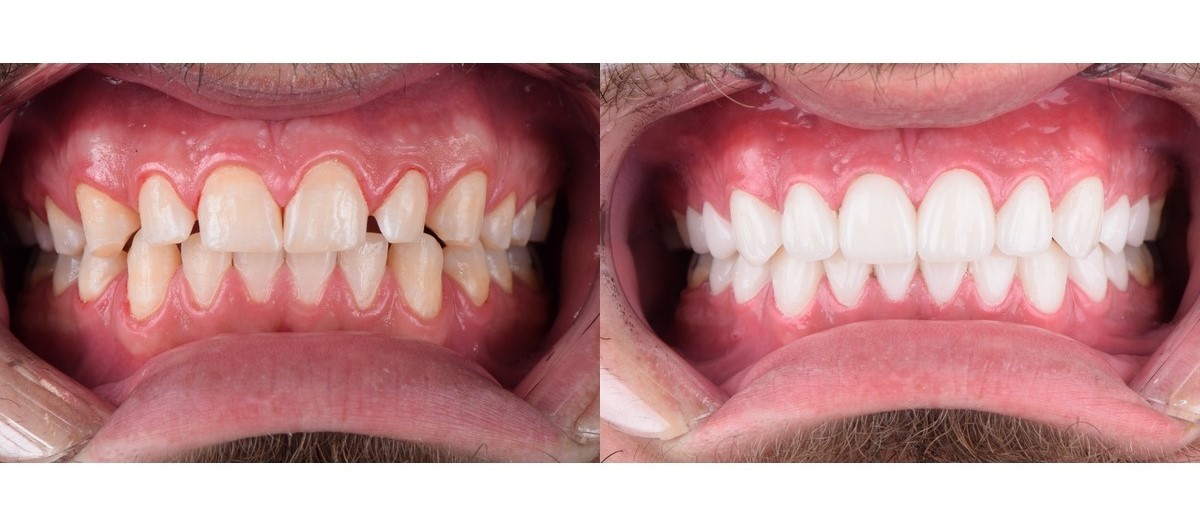
This is why real case photos are helpful. They allow patients to see how a veneer plan moves from diagnosis and smile design to the final result, rather than judging veneers only by online "before and after" trends. The following case image shows how a carefully planned veneer restoration can improve color, shape, and smile harmony while still aiming for a natural appearance.
Case 1
Case 2
Huangshan Dental Veneers Cost vs Other Countries
The following table shows selected veneer examples only, not the full price list. Final cost depends on tooth condition, material choice, number of teeth, bite design, and the dentist's clinical plan.
| Country / Region | Selected veneer option | Reference cost |
|---|---|---|
| Huangshan Dental, China | Typical veneer range | USD 250-577 per tooth |
| United States | Typical single veneer range | USD 1,020-2,506 per tooth |
| Turkey | Typical porcelain veneer range | USD 300-650 per tooth |
| Thailand | Typical porcelain veneer range | USD 300-550 per tooth |
Benefits of Veneers
- They can improve the appearance of stained, chipped, worn, short, or uneven front teeth.
- Porcelain and ceramic veneers can look highly natural when shade, translucency, shape, and surface texture are customized.
- They can close small gaps and improve mild cosmetic alignment without full orthodontic treatment in selected cases.
- Compared with crowns, veneers usually preserve more tooth structure when the case is suitable.
Risks and Limitations
- Enamel preparation is usually irreversible, so teeth may need veneers or another restoration long term.
- Teeth may become temporarily or permanently sensitive to heat and cold after preparation.
- Veneers can chip, crack, loosen, or need replacement over time, especially with grinding or bite stress.
- If decay, gum disease, or poor hygiene is ignored, veneers may hide problems while the underlying tooth or gum worsens.
- A poorly designed veneer can look too white, too thick, too long, or unnatural against the face.
FAQ
Are veneers bad for your teeth?
Veneers are not automatically bad for your teeth when they are planned and placed by a qualified dentist on healthy teeth. The risk is that traditional veneers usually require enamel removal, which is not reversible. Veneers may be a poor choice if you have untreated decay, gum disease, severe grinding, or an unstable bite.
Are teeth rotting under veneers?
Teeth should not rot under well-fitted veneers if decay is treated first and the patient maintains good oral hygiene. Problems can happen when veneers are placed over unhealthy teeth, when margins are poorly sealed, or when plaque builds up around the gumline. Regular checkups are important.
Conclusion
Veneers can be a beautiful and conservative cosmetic option for the right patient, but they are not suitable for everyone. The people who regret veneers often regret rushed shade choices, poor edge fit, bite problems, excessive tooth reduction, or using veneers for cases that needed orthodontics, whitening, crowns, or gum treatment first. If you are considering veneers, choose a dentist who evaluates your oral health, bite, facial features, material options, and long-term maintenance before designing your smile.