
Black Triangles After Braces: Will They Go Away?
On this page~8 min read
Featured Answer: Is It Normal to Get Black Triangles With Braces?
Yes. It can be normal to notice black triangles with braces, especially after crowded teeth are aligned and the gum tissue is no longer squeezed between overlapping teeth. A black triangle is not automatically a sign that orthodontic treatment failed. It usually means the interdental gum papilla does not fully fill the space near the gumline. In some mild cases, the space may look smaller as the gums settle and inflammation improves. If the triangle remains visible, orthodontic adjustment, interproximal reduction, composite bonding, veneers, or periodontal care may help, depending on the cause.
What Are Black Triangles After Braces?
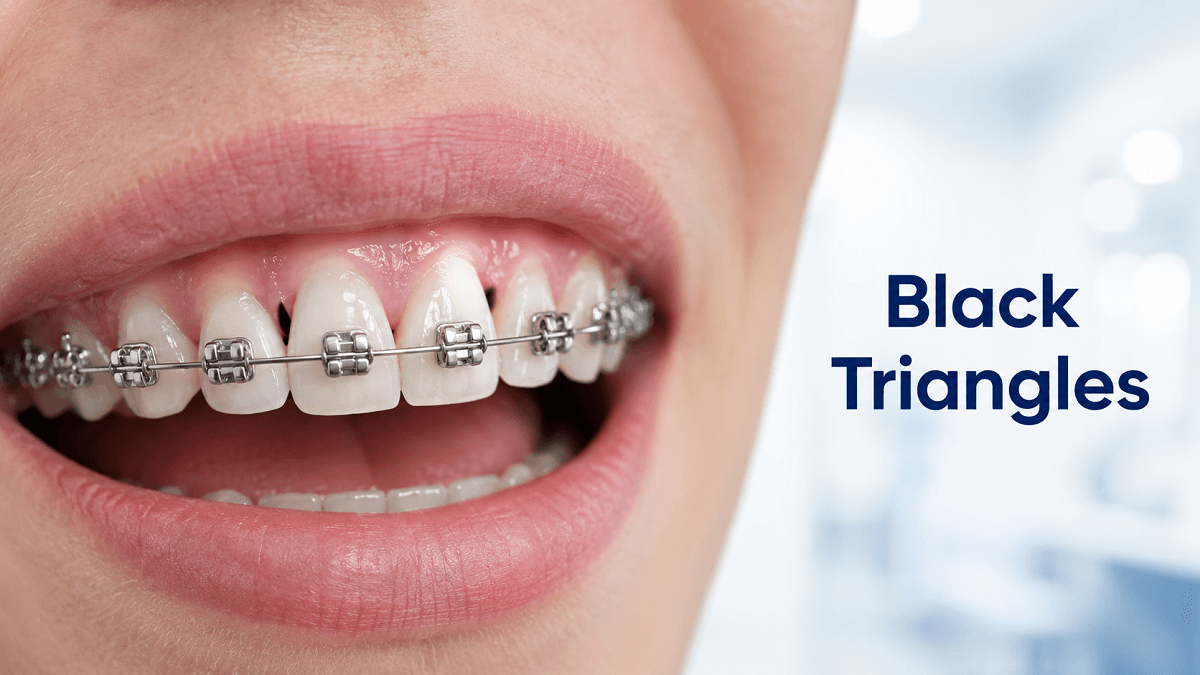
Black triangles after braces are small, dark, triangular spaces that appear between teeth near the gumline. Dentists often describe them as open gingival embrasures. They look dark because the space is empty and light does not reflect from tooth or gum tissue inside it.
Many patients first notice this around the front teeth, especially the lower front teeth, because these teeth are highly visible when speaking or smiling. The teeth may look straighter than before, but the gumline area can appear less full. That contrast is why black triangles can feel frustrating during or after orthodontic treatment.
At Huangshan Dental, patients who are considering braces or clear aligners are usually evaluated not only for tooth alignment, but also for gum health, tooth shape, crowding level, bite relationship, and smile appearance. These details help the orthodontic team explain whether black triangles are likely and what can be done if they appear.
Why Do Black Triangles Appear During Orthodontic Treatment?
Crowded Teeth Become Straight
The most common reason is simple: before braces, crowded teeth may overlap and hide the real shape of the gum between teeth. As braces or aligners gradually move the teeth into a straighter position, the teeth are no longer pressed tightly together in the same irregular way. The gum papilla may not be tall enough to fill the newly visible space.
This does not mean the braces created damage. In many cases, the space was hidden by crowding before treatment. Once the teeth line up, the natural tooth shape and gum height become easier to see.
Tooth Shape Can Increase the Risk
Some teeth are more triangular than square. If the biting edge of the tooth is wider and the neck of the tooth near the gum is narrower, the contact point between teeth may sit higher. After alignment, this can leave a triangular space near the gumline. Square-shaped teeth usually have broader contact areas and are less likely to show this type of opening.
Gum Health Matters
Gum inflammation, periodontal disease, recession, calculus buildup, or poor oral hygiene can all increase the chance of black triangles. During braces, cleaning is more difficult, so plaque around brackets or between teeth can irritate the gums. If gum tissue shrinks after inflammation improves, spaces may become more visible. This is why professional cleaning and daily home care are important throughout orthodontic treatment.
Bone Level and Contact Point Position
The height of the gum papilla is closely related to the bone level between teeth and the distance from the tooth contact point to the bone crest. A classic periodontal study by Tarnow, Magner, and Fletcher found that papilla presence is strongly influenced by this distance. In everyday terms, if the contact point is too far from the supporting bone, the gum is less likely to fill the space completely.
Can Black Triangles After Braces Be Prevented?
Black triangles cannot always be completely prevented because some risk factors are anatomical. Tooth shape, gum thickness, age, previous gum recession, and the level of pretreatment crowding are not fully controllable. However, the risk can often be reduced with good planning and gum care.
- Have gum inflammation, bleeding, tartar, or periodontal problems treated before orthodontics begins.
- Keep braces and aligners clean with careful brushing, flossing, interdental brushes, or a water flosser when recommended.
- Choose an orthodontic plan that considers tooth shape, root position, gum health, and smile aesthetics, not only straightness.
- Attend regular review visits so the dentist can monitor tooth movement and soft-tissue response.
Research on open gingival embrasures after orthodontic treatment has linked black triangles with factors such as age, pretreatment crowding, triangular tooth form, and periodontal conditions. That is why a personalized examination is more useful than a one-size-fits-all answer.
Will Black Triangles Go Away on Their Own?
Sometimes they become less noticeable, especially if they appear early while the teeth and gums are still adapting. Mild spaces may improve over several months as inflammation settles, oral hygiene improves, and the gum tissue stabilizes. It is reasonable to observe the area for a period of time if the dentist confirms there is no active gum disease or food-trapping problem.
However, a true black triangle caused by triangular tooth shape, loss of gum support, or a high contact point usually does not fully close by itself. Waiting can help the gums settle, but it cannot change tooth shape or rebuild lost papilla height predictably. If the appearance bothers the patient, treatment can be planned after the orthodontic situation becomes stable.
How Huangshan Dental May Treat Black Triangles
Treatment depends on the cause. At Huangshan Dental, the dentist or orthodontist may first check oral hygiene, gum condition, tooth shape, bite, and whether the space traps food. The goal is to protect periodontal health while improving smile appearance in a conservative way.
Observation and Gum Care
If the black triangle is mild or appears during active tooth movement, the dentist may recommend observation, improved cleaning, and professional maintenance. Healthy gums have a better chance of adapting after orthodontic movement.
Interproximal Reduction and Space Closure
For mild black triangles caused by triangular tooth shape, the orthodontist may use careful interproximal reduction, also called IPR. This means polishing a very small amount of enamel between selected teeth to create a broader contact area, then closing the space orthodontically. This must be planned precisely and is not suitable for every patient.
Composite Bonding or Veneers
If orthodontic movement alone cannot solve the problem, tooth-colored composite resin may be used to reshape the side of the tooth and visually close the triangle. For larger aesthetic cases, porcelain veneers may be considered, especially when tooth color, shape, and smile design also need improvement. These options should be discussed carefully because they involve restorative maintenance and material choices.
Periodontal Treatment
When gum disease, recession, or inflammation is part of the problem, periodontal treatment comes first. Gum surgery or papilla reconstruction may be discussed in severe aesthetic cases, but the result can be less predictable than patients expect. For many people, orthodontic and restorative solutions are more practical.
When Should You Ask a Dentist?
You should ask your dentist or orthodontist if a black triangle is getting larger, traps food, causes gum bleeding, affects speech, or makes you unhappy with your smile. You should also ask for an evaluation if you notice gum recession, loose teeth, bad breath, or persistent inflammation.
If you are planning braces, clear aligners, veneers, or smile design at Huangshan Dental, the consultation can include a discussion of black triangle risk. A careful plan may help you understand whether the issue is related to crowding, tooth shape, gum health, or the orthodontic movement itself.
FAQ
Do black triangles after braces go away?
Mild black triangles may look smaller after the gums settle and oral hygiene improves. Larger spaces caused by triangular tooth shape, gum recession, or bone level usually need dental treatment if the patient wants them closed.
Are black triangles a sign that braces failed?
No. Black triangles do not automatically mean braces failed. They often appear when crowded teeth are straightened and the gum papilla cannot fully fill the newly visible space near the gumline.
Can black triangles be fixed after orthodontics?
Yes, many cases can be improved. Options may include better gum care, interproximal reduction with orthodontic space closure, composite bonding, veneers, or periodontal treatment. The best option depends on the cause.
Can I prevent black triangles during braces?
You cannot control every risk factor, but you can reduce risk by treating gum problems before braces, keeping excellent oral hygiene, attending reviews, and choosing a plan that considers tooth shape and gum condition.
Conclusion
Black triangles after braces are common enough that patients should understand them before orthodontic treatment begins. They may appear because crowded teeth have been aligned, the teeth are naturally triangular, the gum papilla is short, or previous gum inflammation has affected the tissue. The good news is that black triangles are not always harmful and they do not always mean treatment went wrong.
For patients who care about both oral health and smile aesthetics, the best approach is early assessment, strong hygiene, and a treatment plan that considers gums, tooth shape, and bite together. Huangshan Dental can evaluate whether black triangles after braces are likely to improve naturally or whether orthodontic, restorative, or periodontal care would be more suitable.
Disclaimer
This Huangshan Dental article is for informational purposes only and does not constitute medical advice, diagnosis, or a guaranteed treatment result. Always consult a qualified dentist or orthodontist for a personalized evaluation and follow your dental team’s specific instructions before and after treatment.