
Butterfly Teeth: What They Are and How to Fix Them
On this page~7 min read
What Are Butterfly Teeth?
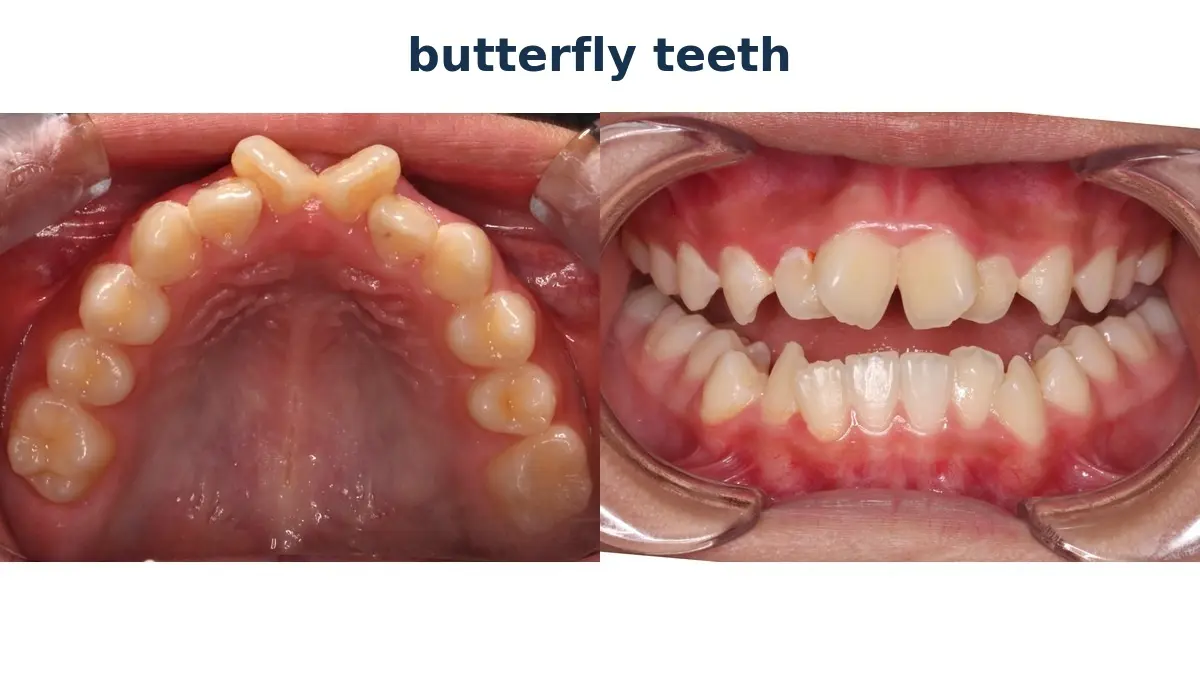
Butterfly teeth is a casual term used by many parents to describe front teeth that look spread, tilted, or wing-like during childhood. It often appears when a child is losing baby teeth and permanent teeth are growing in. The upper front teeth may look angled, spaced, or uneven. Because the shape can look like open butterfly wings, people sometimes call it “butterfly teeth.”
This is not a formal dental diagnosis. In English dental language, dentists may describe it as spacing, flared incisors, crowding, mixed dentition changes, or early orthodontic alignment concerns. In some children, this appearance is part of normal development. In others, it may suggest that the jaw does not have enough space, a tooth is erupting in the wrong direction, or a bite problem is developing.
Most importantly, parents should not panic when they notice this look. Children’s teeth often pass through an awkward stage before the bite becomes stable. However, it is also not wise to ignore obvious crowding, blocked teeth, or a bite that looks abnormal. A dental or orthodontic evaluation can help decide whether observation is enough.
Why Butterfly Teeth Happen
Butterfly teeth often happen during the mixed dentition stage. This is the period when a child has both baby teeth and permanent teeth. It usually occurs between ages 6 and 12. During this time, the jaw is still growing, and permanent teeth may not erupt in a perfectly straight line at first.
A common cause is limited space in the dental arch. If the jaw is too narrow or the permanent teeth are relatively large, the teeth may erupt at an angle. As a result, the front teeth can look crowded, rotated, or pushed outward. Sometimes, a gap between the upper front teeth may also appear.
Other causes may include early loss of baby teeth, delayed loss of baby teeth, genetics, and oral habits. For example, thumb sucking, mouth breathing, or tongue thrusting may affect tooth position over time. However, habits do not cause every case. Each child needs an individual assessment because tooth eruption patterns can vary widely.
Common reasons include:
- Early loss or delayed loss of baby teeth
- Not enough space in the dental arch
- Family history of crowded or spaced teeth
- Thumb sucking, mouth breathing, or tongue thrusting
- Permanent teeth erupting at an angle
Is It Normal in Children?
In many children, butterfly teeth can be a temporary stage. Dentists often see gaps and uneven front teeth during normal tooth replacement. The smile may look unbalanced for a few years, especially before the side teeth and canines finish erupting. As the jaw grows, some spaces may close naturally.
However, “normal” does not mean every child should wait without a checkup. Some children have mild spacing that improves with growth. Others have teeth that are blocked, severely crowded, or erupting in the wrong path. These cases may not correct themselves without treatment.
The American Association of Orthodontists recommends that children have an orthodontic checkup by age 7. This does not mean every child needs braces at age 7. Instead, the goal is to find developing problems early. Early evaluation can also help parents avoid missing the best treatment window.
When Observation May Be Enough
Observation may be enough when the teeth are only slightly tilted and the child’s bite looks healthy. If there is enough space for the permanent teeth, the dentist may suggest regular monitoring. In this case, the child may only need dental checkups, X-rays when appropriate, and good home care.
For example, a small gap between the upper front teeth can be normal in young children. It may close as more permanent teeth erupt. Mild unevenness can also improve as the dental arch develops. Because of this, immediate braces are not always necessary.
Still, observation should be active, not passive. Parents should bring the child for regular dental visits. The dentist can watch eruption timing, spacing, jaw growth, and oral habits. If the situation changes, the child can be referred to an orthodontist at the right time.
Observation may be suitable when:
- The child has mild spacing only
- There is no serious crowding
- The bite looks generally balanced
- Teeth are erupting in a reasonable direction
- The dentist sees no sign of impacted teeth
Treatment Options
Treatment depends on the cause. Some children only need monitoring. Others may need early orthodontic treatment to guide jaw growth or create space. If a baby tooth is blocking eruption, the dentist may consider removing it at the right time. However, this should only happen after a proper examination.
For space problems, an orthodontist may recommend an expansion appliance. This can help widen a narrow upper arch in selected children. In other cases, braces or clear aligners may be used later, when more permanent teeth have erupted. The timing matters because starting too early is not always better.
If oral habits are contributing to the problem, habit correction is important. For example, mouth breathing may need evaluation because it can relate to airway or nasal issues. Tongue thrusting or thumb sucking may also require guidance. Treating the habit can help support better orthodontic results.
What Happens If It Is Ignored?
If butterfly teeth are part of normal development, ignoring them may not cause harm. Many mild cases improve as the child grows. However, if the problem is caused by severe crowding, poor eruption direction, or a bite issue, waiting too long may make treatment harder.
Crowded teeth are often harder to clean. Food and plaque can collect in tight areas. As a result, the child may have a higher risk of cavities and gum inflammation. In addition, uneven teeth may affect chewing efficiency or speech clarity in some cases.
There can also be emotional effects. Children may feel embarrassed if their front teeth look very different from their peers. However, appearance alone should not create pressure for treatment. The better approach is to combine health, function, growth, and confidence when making a decision.
How Parents Can Help
Parents can help by watching tooth development without becoming overly anxious. Taking photos every few months can make changes easier to notice. If the teeth appear to improve, that may be reassuring. If the problem gets worse, the photos can help the dentist understand the pattern.
Good daily cleaning is also important. Children with uneven front teeth may miss plaque around crowded areas. Parents should help younger children brush and floss until they can do it well alone. Regular professional cleanings also help reduce cavity and gum risks.
If you notice butterfly teeth in your child’s smile, the safest first step is not to guess. A dental evaluation can tell whether the teeth are developing normally or whether early guidance may help. At Huangshan Dental, the team can assess tooth alignment, eruption, and bite development before recommending a treatment plan.
Helpful steps include:
- Schedule routine dental exams every six months
- Ask about an orthodontic checkup around age 7
- Help children brush crowded areas carefully
- Correct thumb sucking or tongue thrusting early
- Watch for mouth breathing or snoring
Huangshan Dental Orthodontics Prices
The following are selected public reference prices for orthodontic treatment at Huangshan Dental. Final cost may vary depending on tooth alignment, bite condition, treatment complexity, and the dentist's final plan.
| Orthodontic Treatment | Approx. USD | Best Suited For |
|---|---|---|
| Self-Ligating Metal Braces | USD 1,637 | Patients with crowding, spacing, or bite correction needs |
| Angelalign Comfos Clear Aligners | USD 2,827 | Mild to moderate alignment needs with clear aligner preference |
| Angelalign Standard Clear Aligners | USD 3,720 | More comprehensive clear-aligner treatment planning |
| Invisalign Comprehensive | USD 5,476 | International clear-aligner system for wider orthodontic needs |
FAQ
Can adults fix butterfly teeth?
Yes. Adults can often improve spacing, flaring, or crowding with braces or clear aligners. The best option depends on gum health, bone support, bite condition, and treatment goals.
Are butterfly teeth the same as crooked teeth?
Are butterfly teeth the same as crooked teeth?
Not exactly. Butterfly teeth is a casual term for front teeth that look spread, tilted, or wing-like. Crooked teeth is a broader term for teeth that are rotated, crowded, or misaligned.
Summary
Butterfly teeth usually describe front teeth that look spread, tilted, or wing-like during childhood tooth replacement. In many children, this can be a temporary stage. As the jaw grows and permanent teeth continue to erupt, mild spacing or unevenness may improve without major treatment.
However, some cases need professional care. Severe crowding, blocked teeth, retained baby teeth, and bite problems should be checked early. Regular dental visits, good cleaning habits, and early orthodontic evaluation can help parents choose the right timing.