
Common Dental Wear: Attrition vs Abfraction, Causes and Treatment?
On this page~6 min read
Featured Answer: What Is Dental Wear?
Dental wear is the gradual loss of tooth surface that is not caused by tooth decay. It may happen from tooth-to-tooth contact, aggressive brushing or other outside friction, acid exposure, or a combination of forces. Mild wear can be part of normal aging, but fast, uneven, painful, or visibly flat teeth should be checked by a dentist because enamel does not grow back once it is lost.
Dental Wear Seen in Huangshan Dental Patients
Among patients who visit Huangshan Dental, dentists often see teeth that look shorter, flatter, thinner, or notched near the gumline. Some patients first notice cosmetic changes, such as a smile that looks older or uneven. Others come because of sensitivity to cold water, sour fruit, sweet foods, or brushing. These signs may point to dental wear, especially when the chewing surfaces have become flat or the tooth neck has a wedge-shaped groove.
Healthy teeth are not perfectly smooth blocks. Cusps and grooves help crush food efficiently, support a stable bite, and spread chewing force across the teeth. A small amount of wear over many years is normal. The problem begins when the tooth surface disappears too quickly, appears during young or middle adulthood, exposes yellow dentin, or changes the way the upper and lower teeth meet.
Common Types of Dental Wear
The most common forms of dental wear include attrition, abrasion, erosion, and sometimes abfraction. FDI World Dental Federation describes tooth wear as cumulative surface loss of mineralized tooth substance from physical or chemo-physical processes that are not related to dental caries. In clinical terminology, attrition refers to tooth wear caused by tooth-to-tooth contact. Abrasion refers to mechanical wear caused by external objects or habits, while erosion refers to chemical-mechanical tooth surface loss associated with non-bacterial acids. Abfraction is a proposed explanation for cervical lesions associated with chronic occlusal stress, although its role as an independent cause remains debated.
This article focuses on attrition vs abfraction because these two patterns are especially easy to confuse. Both can create sensitivity, visible defects, and a higher risk of fracture if they continue. However, the cause and treatment plan are not the same, so identifying the pattern correctly matters.
What Is Attrition?
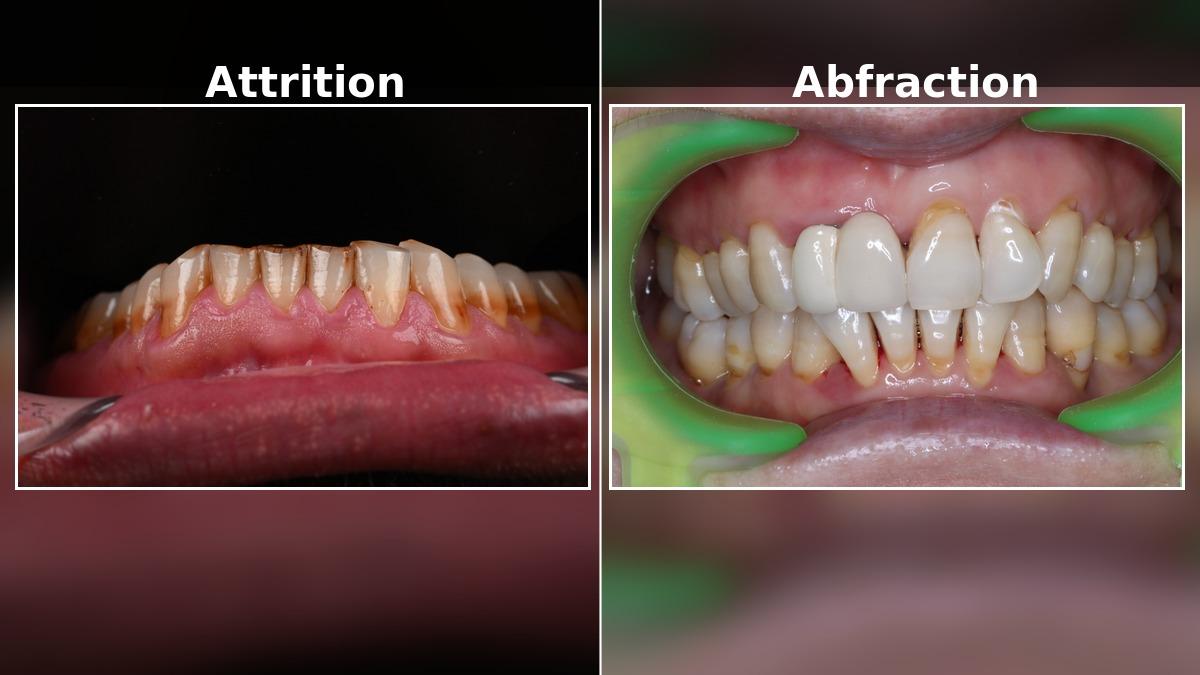
Attrition is dental wear caused by tooth-to-tooth contact. It often appears on biting edges, chewing surfaces, cusps, and restorations. Early attrition may only make the tooth tips slightly blunt. More advanced attrition can flatten molars, shorten front teeth, reduce bite height, expose dentin, and make teeth more likely to chip or crack.
A major driver is bruxism, which means grinding or clenching the teeth. MedlinePlus explains that people may clench or grind during the day or at night without realizing it, and sleep bruxism can be harder to control. Other attrition triggers include one-sided chewing, frequent hard foods, biting ice or hard objects, using teeth as tools, missing back teeth that overload the front teeth, and an unstable bite.
What Is Abfraction?
Abfraction refers to a proposed stress-related form of non-carious cervical lesion that develops near the gumline. According to this theory, repeated occlusal loading may cause the tooth to flex slightly, concentrating stress around the cervical area and contributing to the loss of enamel and dentin. These lesions may appear wedge-shaped and can sometimes cause sensitivity. However, current evidence does not confirm occlusal stress as the only or independent cause. Toothbrushing abrasion, acidic exposure and other factors may act together, so many dentists prefer the broader term “non-carious cervical lesion,” or NCCL.
Attrition vs Abfraction: Causes Compared
| Comparison Point | Attrition | Abfraction | What Patients May Notice |
|---|---|---|---|
| Main mechanism | Tooth-to-tooth contact. | Proposed concentration of stress in the cervical tooth area associated with repeated occlusal loading. | Flat biting edges or wedge-shaped cervical lesions. |
| Common location | Biting edges, cusps, and chewing surfaces. | Cervical area near the gumline. | Sensitivity during eating, drinking, or brushing. |
| Associated factors | Bruxism and repeated tooth contact. | Occlusal loading has been proposed; brushing abrasion and acidic exposure may also contribute. | Teeth may appear shorter, flatter, or notched. |
| Strength of evidence | Well-established wear mechanism. | Its role as an independent cause remains debated. | A clinical examination is needed to identify contributing factors. |
| First treatment goal | Reduce damaging tooth contact and protect the remaining tooth structure. | Assess occlusal, abrasive, and erosive factors and monitor progression before restoration. | Treatment depends on symptoms, progression, and structural risk. |
Treatment Options for Dental Wear
Dental wear is usually irreversible, so treatment has two goals: stop further damage and restore comfort, appearance, and chewing function. A dentist should first identify whether the main cause is grinding, bite imbalance, brushing trauma, acid exposure, missing teeth, or a mixed pattern. Treating only the visible notch or flat tooth without correcting the cause may lead to repeat damage.
- Mild wear: desensitizing treatment, fluoride or remineralizing care when suitable, monitoring, and habit correction.
- Attrition from grinding or clenching: a custom night guard or occlusal splint may protect teeth during sleep; bite adjustment may be considered only after diagnosis.
- Moderate cervical abfraction: tooth-colored composite resin can fill the groove, reduce sensitivity, and protect exposed dentin.
- Severe abfraction with pulp symptoms: root canal treatment may be needed before a crown protects the weakened tooth.
- Moderate to severe attrition: restorations such as crowns, onlays, occlusal veneers, or full-mouth bite reconstruction may be needed to rebuild height and chewing function.
- Acid-related wear: diet changes, reflux management, and timing of brushing are important before final restorative work.
How to Maintain Teeth After Dental Wear Is Found
Maintenance matters because dental wear often develops from daily habits. Patients should use a soft-bristled toothbrush, avoid forceful horizontal scrubbing, choose a low-abrasive toothpaste when advised, and brush gently at a 45-degree angle along the gumline. After acidic drinks or reflux episodes, rinsing with water first and waiting before brushing can help reduce mechanical damage to softened enamel.
Patients with grinding, clenching, jaw fatigue, or morning tooth soreness should ask about a custom night guard rather than buying an ill-fitting device without guidance. Hard foods, ice biting, opening packages with teeth, and long-term one-sided chewing should also be avoided. Regular dental exams help catch small grooves, sensitivity, and early cracks before the tooth requires more complex treatment.
If you notice dental wear, flat teeth, tooth sensitivity, wedge-shaped gumline defects, jaw soreness, or frequent chipping, you can register through the consultation form on the right side or at the bottom of the Huangshan Dental website. The patient support team can help arrange a free initial consultation, review your concerns, and guide you toward the next step before an in-person dental examination.
FAQ
Is attrition the same as bruxism?
No. Attrition is the tooth wear pattern caused by tooth-to-tooth contact. Bruxism is the habit of grinding or clenching teeth. Bruxism is one common cause of attrition, but attrition can also be related to bite imbalance, hard chewing habits, or missing tooth support.
What is abfraction vs. abrasion?
Abrasion is tooth loss from outside mechanical friction, such as aggressive brushing. Abfraction refers to a stress-related cervical lesion near the gumline, often discussed as a result of repeated bite forces. In real patients, brushing, acid, and bite stress may overlap, so diagnosis should be clinical.
Conclusion
Dental wear is common, but fast or painful wear should not be ignored. Attrition results from tooth-to-tooth contact, while abfraction is a proposed stress-related mechanism for cervical tooth lesions. Because cervical lesions are often multifactorial, occlusal loading, brushing abrasion and acidic exposure should all be evaluated before treatment.
Disclaimer
This Huangshan Dental article is for informational purposes only and does not constitute medical advice, diagnosis, or a guaranteed treatment result. Always consult a qualified dentist for a personalized evaluation and follow your dental team’s specific instructions before and after treatment.