
Dental Implant Infection: Symptoms, Causes and Treatment
On this page~8 min read
Key Takeaway
- A dental implant infection often begins as inflammation around the gum tissue, not as pain inside the implant itself.
- Early signs include red or swollen gums, bleeding when brushing or using interdental cleaners, bad breath, bad taste, tenderness, pus, or food trapping around the implant.
- Peri-implant mucositis may be reversible when caught early, while peri-implantitis involves bone loss and is harder to treat.
- Poor plaque control, smoking, excessive bite force, uncontrolled diabetes, and some bone-related medical histories can raise the risk.
- Regular implant maintenance, gentle daily cleaning, and timely dental review are the safest way to protect long-term implant stability.
Featured Answer: How do I know if a dental implant is infected?
A dental implant may be infected if the gums around it become red, swollen, tender, or bleed easily, especially during brushing or flossing. Other warning signs include persistent bad breath, a bad taste, pus, gum recession, deep pockets around the implant, chewing discomfort, or a crown, bridge, denture, screw, or implant that feels loose. Because early infection may not cause strong pain, a dentist should examine the area and may take X-rays to check whether bone around the implant has started to change.
Why Implants React Differently From Natural Teeth
When patients notice gum redness or bleeding around an implant, the problem is often described as a dental implant infection. Clinically, many of these cases belong to a group of conditions called peri-implant diseases. The original warning sign may look simple: the gum is swollen, brushing causes bleeding, or the area feels uncomfortable. However, if examination shows chronic inflammation and early bone change around the implant, it should not be ignored.
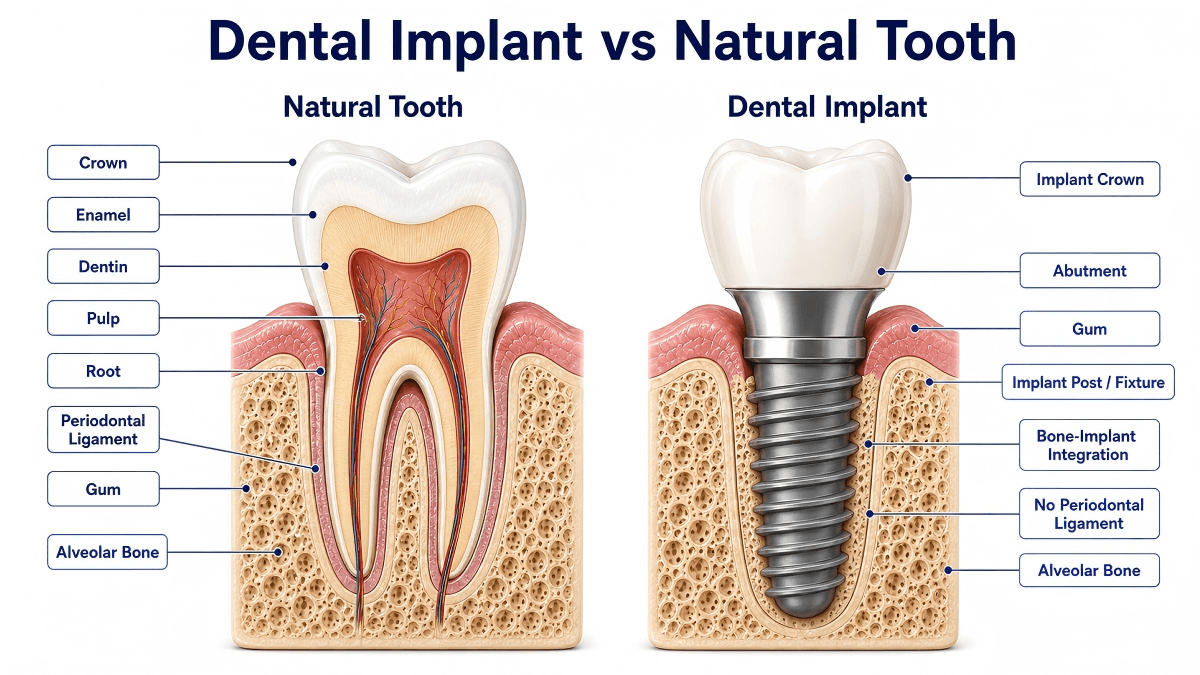
Natural teeth and dental implants do not protect themselves in exactly the same way. A natural tooth is surrounded by the periodontal ligament, a living cushion rich in blood vessels, nerves, and collagen fibers. This ligament helps suspend the tooth in the jawbone, gives the tooth a sense of pressure, and supports immune defense around the root.
A dental implant is different. It is held in bone through osseointegration, meaning the jawbone bonds directly with the implant surface. This provides strong support, but the implant does not have a periodontal ligament. As a result, it has less natural warning feedback. If you bite on something too hard, the implant may not give the same pain signal as a natural tooth, while excessive force may still stress the surrounding bone or restoration.
The soft tissue seal around an implant is also more vulnerable than the ligament around a natural tooth. Once plaque bacteria break through that soft-tissue barrier, inflammation can move deeper and affect the bone that supports the implant. This is why small symptoms around implants deserve early attention.
Two Stages: From Gum Inflammation to Bone Loss
Peri-implant disease usually develops in stages. The early stage is peri-implant mucositis. It is similar to gingivitis around natural teeth: the gum around the implant may look red, swollen, or shiny, and it may bleed during brushing, flossing, or professional probing. At this stage, inflammation is mainly limited to the soft tissue, and there is no progressive bone loss. With professional cleaning, improved home care, and risk-factor control, early mucositis can often be reversed.
The more serious stage is peri-implantitis. In peri-implantitis, inflammation has moved beyond the gum and begins to damage the bone supporting the implant. As bone is lost, the implant gradually loses support. Patients may notice pus, gum recession, a deeper pocket, chewing discomfort, or looseness of the implant-supported crown or bridge. Once bone has been lost, the damage is not simply reversed by brushing harder at home. A dentist may need to clean the implant surface professionally, control infection, adjust the bite, and consider surgical treatment or bone regeneration depending on the defect.
The important point is that the move from mucositis to peri-implantitis is often gradual. That gives patients and dentists a window to detect the problem early, before a small gum issue becomes a serious threat to the implant.
Symptoms and What They May Mean
| Sign around the implant | Possible meaning | What to do |
|---|---|---|
| Red, swollen, or tender gums | Early soft-tissue inflammation or peri-implant mucositis. | Book a dental review and improve cleaning around the implant gumline. |
| Bleeding when brushing or flossing | Plaque irritation around the implant or neighboring teeth. | Do not stop cleaning; use gentle technique and ask for professional implant maintenance. |
| Bad breath or bad taste | Bacterial buildup, food trapping, or possible pus around the implant. | Seek evaluation, especially if the smell persists after careful cleaning. |
| Pus, swelling, or gum abscess | Possible active infection and deeper inflammation. | Arrange prompt dental care. Do not rely on antibiotics without diagnosis. |
| Gum recession or visible implant threads | Soft-tissue loss and possible bone change around the implant. | Ask for X-rays and periodontal/implant assessment. |
| Loose crown, bridge, denture, screw, or implant | Restoration loosening, screw loosening, bite overload, or advanced bone loss. | Avoid chewing hard on that side and see a dentist quickly. |
Main Causes and Risk Factors
Poor oral hygiene is the most direct and common risk factor. Implants do not get cavities, but plaque can still collect around the implant neck, crown margin, abutment, or under an implant-supported bridge. If this bacterial film is left in place, it can irritate the gum and weaken the soft-tissue seal.
Smoking is another major risk factor. Tobacco can reduce blood supply to the gum tissue, impair immune response, and delay healing. Research and periodontal guidelines consistently identify smoking as a risk factor for peri-implant disease and implant complications. For patients with implants, stopping or reducing tobacco use is one of the most practical ways to protect long-term results.
Excessive bite force can also contribute to trouble. Because implants lack a periodontal ligament, they do not absorb force in the same way as natural teeth. Long-term overload, teeth grinding, biting hard objects, or an uneven bite may stress the crown, screw, implant, and surrounding bone. Patients who clench or grind may need bite adjustment or a night guard.
Systemic health matters as well. Uncontrolled diabetes can reduce immune defense and wound healing. A history of periodontitis, poor plaque control, osteoporosis, or use of certain bone metabolism medications may require closer planning and follow-up. These factors do not always mean a patient cannot have implants, but they do mean the dental team should assess risk carefully and monitor the implant regularly.
Treatment: What a Dentist May Do
Treatment depends on how deep the problem has progressed. For early peri-implant mucositis, the main goal is to remove plaque and tartar, teach better home-care technique, and reduce local irritants such as cement residue, food traps, or an over-contoured crown. Professional implant cleaning may use implant-safe instruments and air polishing powders rather than aggressive steel scalers that could scratch the implant or abutment surface.
For peri-implantitis, the dentist must evaluate both infection and bone support. Treatment may include deep professional decontamination, X-rays or 3D imaging, bite adjustment, removal and cleaning of the prosthesis, antiseptic irrigation, medication when appropriate, and sometimes surgical access to clean the implant surface more thoroughly. If significant bone loss has occurred, guided bone regeneration or other surgical therapy may be considered. In severe cases where the implant has lost too much support, removal may be the safest option.
At Huangshan Dental, implant infection care should begin with examination rather than guesswork. Our dental team needs to check the gum, pocket depth, bite, implant restoration, oral hygiene, medical history, and X-ray findings before deciding whether the problem is mucositis, peri-implantitis, a loose prosthetic screw, food impaction, or another issue.
How to Protect Your Implant Long Term
- Clean the implant every day with a soft toothbrush, especially at the gumline.
- Use floss, interdental brushes, floss threaders, or a water flosser if your dentist recommends them for your restoration shape.
- Do not stop cleaning because the gum bleeds; bleeding is a warning sign that the area needs gentle but consistent care.
- Avoid biting hard foods or objects such as ice, bone, hard shells, bottle caps, or very hard nuts.
- Control smoking, diabetes, and gum disease risk factors as part of implant maintenance.
- Schedule regular dental reviews, commonly every 6 to 12 months, or more often if you have gum disease history, diabetes, smoking, bleeding, or difficult-to-clean implant bridges.
FAQ
How do I know if a dental implant is infected?
You may notice red or swollen gums, bleeding during brushing, bad breath, bad taste, pus, tenderness, gum recession, food trapping, or loosening of the crown, bridge, denture, screw, or implant. A dentist can confirm the problem by checking the gum tissue, pocket depth, bite, restoration, and X-rays.
Can a dental implant infection be cured?
Early peri-implant mucositis can often be controlled and may be reversible with professional cleaning and better home care. Peri-implantitis is more serious because it involves bone loss. It can sometimes be treated, but the result depends on how much bone is lost, the implant design, cleaning access, risk factors, and treatment timing.
Can the implant cause infection?
The implant itself is not alive and does not decay, but bacteria can build up around the implant crown, abutment, and gumline. Surgery can also carry a small infection risk. Poor cleaning, smoking, diabetes, bite overload, and a history of gum disease can make infection around an implant more likely.
Conclusion
Dental implant infection should be taken seriously because early gum inflammation can progress to bone loss if it is ignored. The best protection is not panic, but early evaluation, implant-safe professional cleaning, daily plaque control, regular follow-up visits, and management of smoking, bite force, diabetes, and gum disease risk. If you see bleeding, swelling, pus, bad breath, gum recession, pain, or looseness around an implant, contact a qualified dentist before the problem becomes harder to treat.
Disclaimer: This Huangshan Dental article is for informational purposes only and does not constitute medical advice, diagnosis, or a guaranteed treatment result. Always consult a qualified dentist for a personalized evaluation and follow your dental team's specific instructions.