
Dental Implants for Diabetics: Case and Review in 2026
On this page~7 min read
Key Takeaway
Dental implants for diabetics can be safe and predictable when blood sugar is stable, gum infection is treated first, and the patient follows a stricter maintenance plan. Diabetes is not the automatic problem; uncontrolled diabetes, active periodontal disease, smoking, and skipped follow-up are the real risk multipliers.
Featured Answer: Are Dental Implants Safe for Diabetics?
Yes, dental implants are often safe for people with diabetes when the condition is properly controlled. The American Dental Association notes that implant placement is generally safe and reliable in patients with properly controlled diabetes, and may also be possible in moderately controlled cases. Poorly controlled diabetes can delay osseointegration, increase infection risk, and make the prognosis less predictable, so HbA1c, gum health, smoking status, and medical clearance should be reviewed before surgery.
How Diabetes Can Raise Implant Risk
A dental implant depends on osseointegration, the process in which living bone heals around the implant surface. Long-term hyperglycemia can interfere with normal immune response and soft-tissue repair. It may also make gum inflammation harder to control. When the tissues around an implant become inflamed, the risk of peri-implantitis and bone loss rises.
The ADA oral-health review highlights several diabetes-related oral concerns, including delayed wound healing, increased infection risk, dry mouth, gingivitis, and periodontitis. These are exactly the factors that matter after implant surgery because the implant needs a clean, stable environment while bone healing occurs.
Why Blood Sugar Control Comes First
HbA1c reflects average blood glucose over roughly the previous two to three months. It is not the only number that matters, but it is one of the most practical ways to judge whether elective implant surgery should move forward, be modified, or be postponed.
The 2026 American Diabetes Association Standards of Care state that an A1C goal below 7% is appropriate for many nonpregnant adults when it can be achieved without harmful hypoglycemia. Dental implant literature often treats A1C below about 7% as ideal and below about 8% as a common practical target for proceeding with extra precautions, depending on age, heart disease, kidney status, medications, infection, and surgical complexity.
For patients above that range, the safer path is often to pause, coordinate with the physician or endocrinologist, and improve metabolic control before elective implant placement. Waiting several months can feel frustrating, but it may protect the implant investment.
Source note: ADA Standards of Care in Diabetes - 2026; ADA Oral Health Topics: Diabetes; ITI clinical review on diabetes and implantology.
Huangshan Dental Case: Diabetes, Heart Disease, Missing Teeth, and Same-Day Temporary Teeth
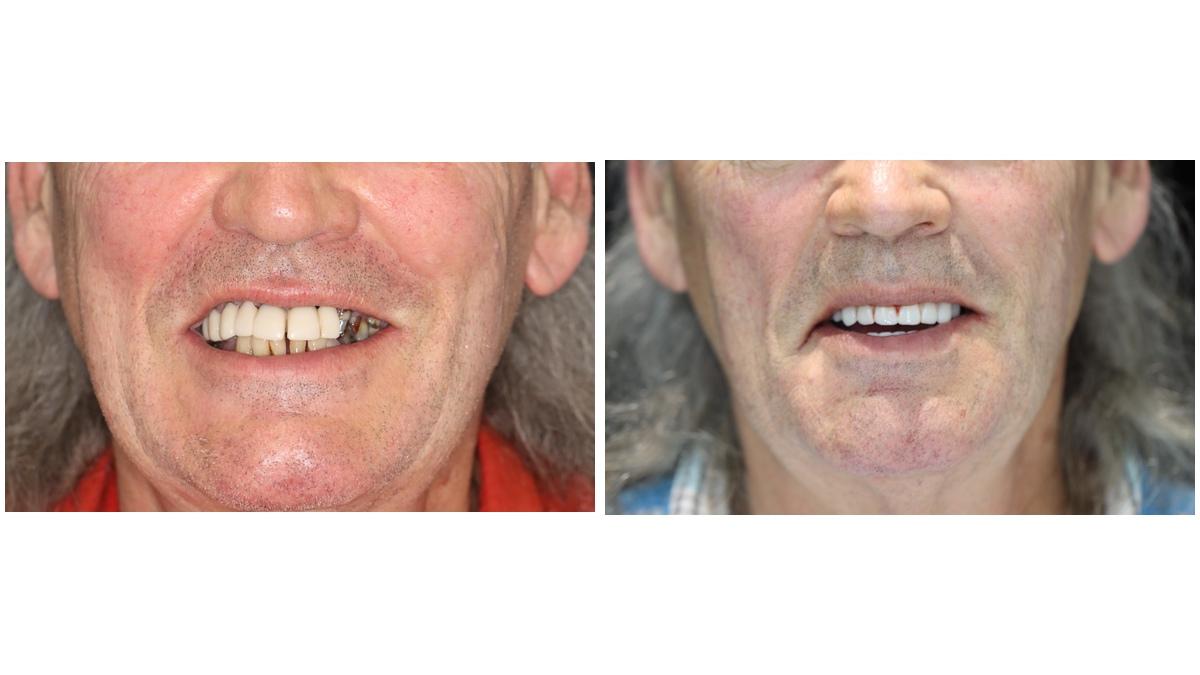
The Huangshan Dental case provided for this article involved Leslie Robert ADRIAN, a patient from Australia, with a complicated medical history: years of diabetes, hypertension, and coronary heart disease. Clinically, his upper front crowns had fallen off, several teeth were missing, and the anterior bone volume was limited. This is the kind of patient who should be evaluated carefully rather than rejected automatically.
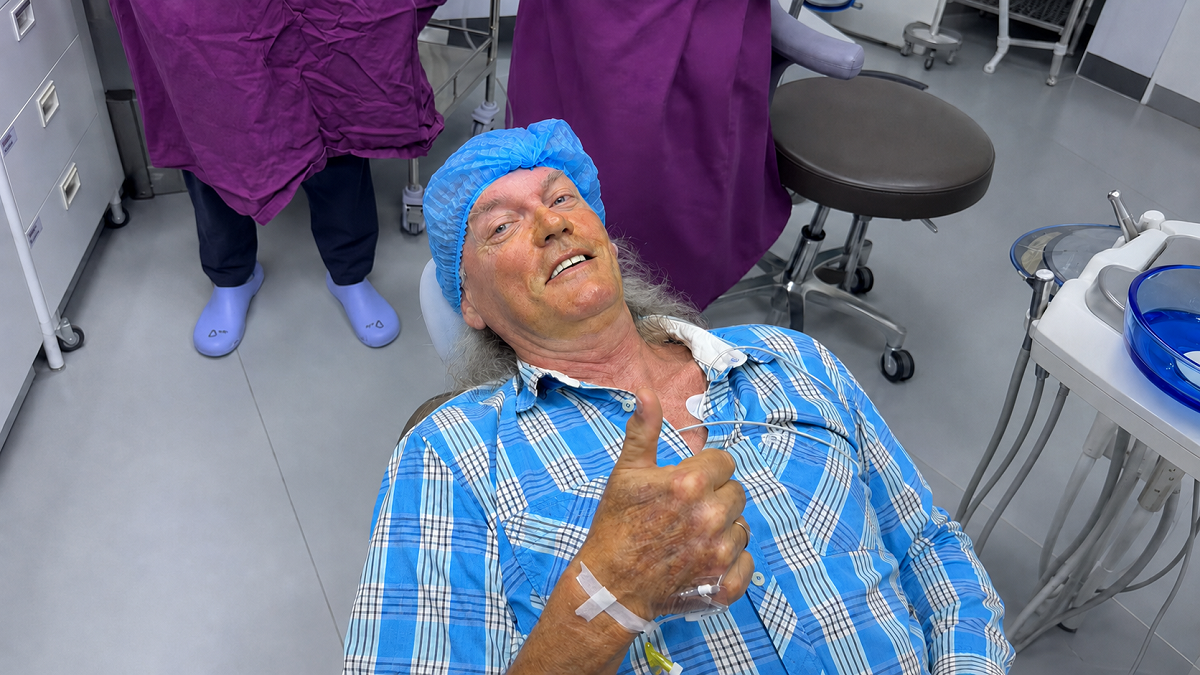
After assessing bone width, bite force, tooth loss pattern, and the need for fixed chewing support, the Huangshan Dental team planned a full-arch implant-supported approach. According to the case brief, 6 implants were placed in the upper jaw and 6 in the lower jaw. Self-tapping implants were used in the anterior region, while 4.5 mm implants were selected posteriorly where chewing load is heavier. About four hours after surgery, the patient left with a same-day temporary bridge.
The important lesson is not that every diabetic patient should receive same-day teeth. The lesson is that complex medical history requires a risk-controlled workflow: medical review, CBCT assessment, bite-force planning, implant-position strategy, infection control, and a provisional restoration that protects the implants during healing.
If you have lived with diabetes for many years and are considering dental implants, you do not need to feel discouraged. At Huangshan Dental, our experienced dental team can review your blood sugar control, medical history, bone condition, and missing-tooth situation before recommending a safe, personalized implant plan. You can click the consultation button on the right side or below to request a free assessment.
What Made This Case Higher Risk?
This patient was not only diabetic. He also had hypertension and coronary heart disease. Those conditions can affect medication planning, surgical stress, bleeding risk, and the timing of dental treatment. In addition, the front bone deficiency made implant positioning more demanding.
For patients like this, Huangshan Dental's approach should be explained as carefully selected treatment, not routine shortcut treatment. Same-day temporary teeth may improve comfort and confidence, but the provisional bridge must be designed to reduce overload while the implants integrate.
Clinical Planning Principles for Diabetic Implant Patients
First, review the medical history and recent HbA1c before surgery. The dentist should know the type of diabetes, medications, hypoglycemia history, heart disease, kidney disease, smoking status, and any history of slow healing or oral infection.
Second, treat active oral infection first. Professional cleaning, periodontal therapy, removal of hopeless roots, caries control, and oral hygiene instruction are not optional extras. They lower bacterial load before the implant wound is created.
Third, choose the surgical plan according to risk. Some patients may benefit from flapless or minimally invasive placement, staged loading, antibiotic coverage, or a longer healing period before final restoration. Other patients, after careful evaluation, may be candidates for immediate provisionalization.
Aftercare: Where Long-Term Success Is Won
Implants do not decay, but the gum and bone around them can become inflamed. For diabetic patients, maintenance is part of treatment, not a separate afterthought. A practical follow-up schedule is often every three to six months, especially in the first year or when periodontal risk is high.
Home care should include twice-daily brushing, careful cleaning around the gumline, and interdental tools chosen by the dentist. Water flossers, interdental brushes, or implant-safe floss may be useful depending on the gap shape. Patients with dry mouth should avoid sugary lozenges or drinks and ask about sugar-free moisturizers instead.
Smoking deserves special attention. Diabetes and smoking both reduce the body's healing reserve. Together, they can raise the risk of inflammation, bone loss, and implant complications.
Risk and Planning Table
| Factor | Why it matters | Preferred status | Action before implants |
|---|---|---|---|
| HbA1c / glucose stability | Poor control can slow healing and increase infection and peri-implant inflammation risk. | Ideally near individual medical target; often <7% preferred, <8% considered case by case. | Check recent HbA1c and coordinate with physician if control is unstable. |
| Gum disease | Active periodontitis increases bacterial load around the implant site. | No active infection; bleeding and plaque controlled. | Cleaning, periodontal therapy, extraction of hopeless teeth or roots. |
| Medical comorbidities | Heart disease, hypertension, kidney disease, and medications affect surgical planning. | Stable and medically reviewed. | Medical history, blood pressure, medication review, physician input when needed. |
| Bone and bite force | Low bone volume or heavy chewing load can affect implant number, diameter, and restoration design. | CBCT-based plan with load control. | Plan implant positions, diameter, possible grafting, provisional bridge design. |
| Smoking and home care | Smoking and poor plaque control increase inflammation and late complications. | Non-smoking or reduced risk; strong hygiene habits. | Quit smoking, select interdental tools, schedule 3-6 month maintenance. |
FAQ
Can diabetes cause dental implant failure?
Yes, especially when diabetes is poorly controlled. High blood sugar can slow wound healing, weaken infection defense, and increase inflammation around implants. Well-controlled diabetes, good gum health, careful surgery, and regular maintenance can greatly reduce this risk.
What is the recommended A1C level for dental implants?
There is no single universal cutoff. For many adults, an A1C below 7% is a common medical target, while many implant clinicians consider treatment around 7-8% case by case with added precautions. If A1C is above 8% or unstable, elective implant surgery is often delayed until control improves.
Conclusion
Dental implants for diabetics are not automatically unsafe. The outcome depends on the whole patient: blood sugar control, gum health, bone condition, smoking status, medical stability, implant design, and maintenance. The Huangshan Dental case shows that even a patient with diabetes, hypertension, coronary heart disease, missing teeth, and anterior bone shortage may still have options after careful evaluation.
For patients, the best next step is not to assume implants are impossible. The best next step is a complete assessment: recent HbA1c, medical history review, CBCT, periodontal evaluation, and a treatment plan that matches the risk level. When the body and mouth are prepared, dental implants can restore chewing function and confidence in many diabetic patients.
Disclaimer
This Huangshan Dental article is for informational purposes only and does not constitute medical advice, diagnosis, or a guaranteed treatment result. Always consult a qualified dentist or orthodontist for a personalized evaluation and follow your dental team's specific instructions before and after treatment.