
Food Impaction in Teeth: Causes and Fixes
On this page~8 min read
Key Takeaway
- Occasional food stuck between teeth is common, but repeated food impaction in the same area should not be ignored.
- The most common reason is an abnormal space or contact between neighboring teeth, often related to decay, tooth wear, gum recession, tooth movement, or periodontal disease.
- Forcing food out with hard toothpicks can injure the gums and may make recession worse; floss, interdental brushes, or a water flosser are safer daily tools.
- Treatment depends on the cause: fillings, inlays, crowns, periodontal therapy, deep cleaning, or bite/orthodontic correction may be needed.
- Professional cleaning does not cause gum recession. It removes tartar that was already irritating the gums and hiding existing gaps.
Why Food Impaction in Teeth Should Not Be Ignored
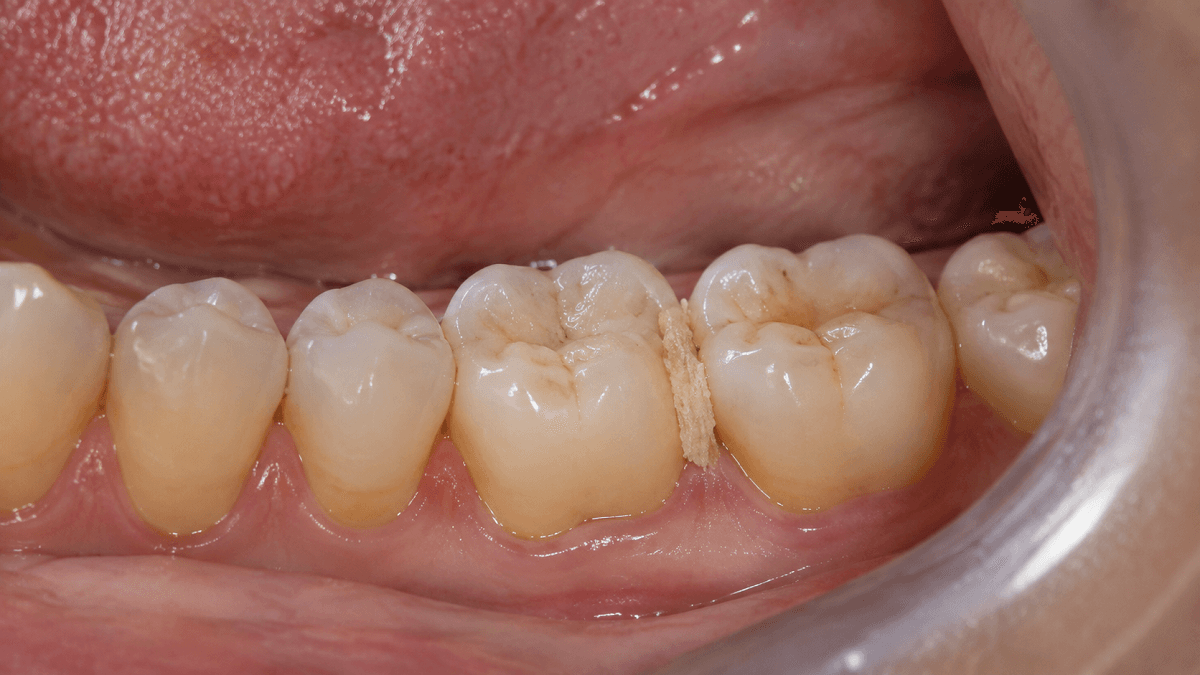
Food impaction in teeth is something almost everyone has experienced. A small piece of meat fiber, vegetable skin, or seed may get caught after a meal and come out easily with floss, the tongue, or gentle rinsing. When it happens once in a while, it may simply be an inconvenience. But when food repeatedly gets trapped in the same place, it can be a warning sign from your teeth and gums.
Healthy teeth are shaped to help chewing and protect the gums. There is a natural contact area between neighboring teeth, and dental floss should pass through with light resistance. Under normal conditions, food should slide away during chewing instead of being forced deep into the space between teeth. If food is always getting packed into a gap, the contact between the teeth may no longer be normal.
What Causes Food to Get Stuck Between Teeth?
The most common cause of food impaction in teeth is a space that has become too large or a contact point that has changed. This may happen because of tooth structure loss, gum recession, tooth loosening, tooth movement, crowded teeth, misalignment, uneven wear, or a bite that pushes food in the wrong direction. In other words, frequent food impaction is usually not just a food problem. It is often a tooth, gum, or bite problem.
Tooth Damage and Cavities
When a tooth has decay, a fracture, heavy wear, or an old defective filling, the smooth contact between teeth can break down. Food may then lodge in the damaged area, especially inside a cavity or rough edge. This can become a cycle: trapped food feeds bacteria, bacteria produce acid, decay gets worse, and the larger defect traps even more food.
This is why small cavities between teeth should be treated early. A small filling may solve the problem when the defect is limited. If the missing tooth structure is larger, an inlay, onlay, or crown may be needed to restore the shape and contact point properly.
Gum Recession and Gum Disease
Gum recession is more complicated. It may be related to periodontal disease, tartar buildup, aggressive brushing, traumatic toothpick use, tooth position, or natural aging. When oral hygiene is poor, tartar can build up around the neck of the tooth and under the gumline. This ongoing irritation can make the gums red, swollen, and more likely to recede over time.
As gum tissue and supporting bone shrink away from the teeth, small triangular spaces may appear between teeth. Many patients describe these as black triangles. Once these spaces become visible, fibrous foods can easily pack into them during chewing.
Hard toothpicks and forceful brushing can add mechanical trauma. Picking deeply at trapped food with a stiff wooden toothpick may injure the gum between teeth. A hard-bristled toothbrush used with heavy pressure can also contribute to gum damage. Safer cleaning tools include floss, interdental brushes, and water flossers used gently and correctly.
Loose Teeth and Tooth Movement
When periodontal disease progresses, it does not only affect the gums. The supporting bone around the teeth may also be lost. As support weakens, teeth can loosen or drift. Even a small change in tooth position can open a new gap or change the way food is pushed during chewing. This is why patients with gum disease may notice that food gets stuck more often over time.
What Problems Can Frequent Food Impaction Cause?
Repeated food impaction can lead to several oral health problems:
- Gum discomfort: trapped food can press on the gum and cause swelling, pain, or inflammation.
- Bad breath: food debris may ferment between teeth and create an unpleasant smell.
- Periodontal inflammation: long-term food trapping allows bacteria to grow near the gumline.
- Tooth decay: sugars and starches in food debris can be broken down by bacteria, producing acids that damage enamel and dentin.
Once an obvious gap has formed, making it disappear completely can be difficult. The first step is to identify the real cause. A cavity, a broken contact point, gum recession, loose teeth, or misalignment all require different solutions.
Food Impaction Causes and Fixes
| Possible cause | What you may notice | Common dental fix | Prevention tip |
|---|---|---|---|
| Cavity, broken tooth, worn edge, or defective filling | Food sticks in one same spot; sensitivity or rough edges may appear | Filling, inlay, onlay, or crown to rebuild the tooth contact | Treat small cavities early before the defect becomes larger |
| Gum recession or black triangles | Open spaces near the gumline; food fibers pack near the gums | Periodontal evaluation, hygiene therapy, possible gum treatment or restorative reshaping | Use floss, interdental brushes, or water flossers gently; avoid hard toothpicks |
| Periodontal disease with bone loss | Loose teeth, bleeding gums, bad breath, shifting teeth | Scaling and root planing, periodontal maintenance, possible periodontal surgery | Schedule regular cleanings and follow the periodontist's maintenance plan |
| Crowding, misalignment, or uneven bite | Food is pushed into gaps while chewing; some teeth feel high or tilted | Bite adjustment, orthodontic evaluation, restoration adjustment, or combined care | Have repeated food impaction checked rather than only cleaning it at home |
Can Frequent Food Impaction Be Fixed?
In many cases, yes, but the treatment must match the cause. If hard tooth structure is missing because of decay, fracture, or wear, a dentist may restore the tooth with a filling, inlay, onlay, or crown. A small defect may only need a resin filling, while a larger defect may need a stronger indirect restoration to rebuild the side wall of the tooth and close the food-trapping contact.
If food impaction is caused by gum recession from periodontal disease or traumatic irritation, basic periodontal treatment is often needed first. This may include professional cleaning, scaling and root planing, improved home care, and in some cases periodontal surgery. However, when severe periodontal disease has already created large spaces between many teeth, fully restoring the original tight contact can be clinically difficult.
That is why prevention matters. It is easier to protect healthy contacts and gums than to rebuild them after years of damage. Regular dental exams can detect interproximal cavities, defective fillings, bite problems, gum recession, and early periodontal disease before food impaction becomes a daily problem.
Does Dental Cleaning Make Gums Recede?
A common misunderstanding is that dental cleaning makes the gaps between teeth larger. In reality, professional cleaning removes tartar that has already built up around and between teeth. After tartar is removed, a gap that was previously hidden may become visible. At the same time, swollen gums may shrink back toward a healthier shape once the irritation is gone, making the space look more obvious.
This does not mean cleaning caused the recession. It usually means tartar and inflammation had already been affecting the gums. If tartar is left in place, it can continue to irritate the gum tissue and support structures. Over time, untreated gum disease can lead to deeper pockets, bone loss, loose teeth, and eventually tooth loss.
The American Dental Association explains that floss and interdental cleaners remove food and plaque from areas a toothbrush cannot reach. The National Institute of Dental and Craniofacial Research also notes that early gum disease caused by plaque buildup can often be reversed with daily brushing and flossing, while periodontal disease requires professional care.
How to Prevent Food Impaction in Teeth
- Brush correctly with a soft-bristled toothbrush and avoid heavy pressure at the gumline.
- Clean between teeth every day with floss, interdental brushes, or a water flosser that fits your mouth.
- Remove trapped food promptly instead of letting it stay between teeth for hours or days.
- Avoid hard toothpicks, especially if food is stuck near the gum. Repeated digging can injure the gum papilla.
- See a dentist if the same area traps food again and again. A filling, crown margin, cavity, gum pocket, or bite problem may need correction.
- Schedule regular dental checkups and cleanings. People with periodontal disease may need shorter cleaning intervals and deeper periodontal therapy.
- Reduce overly hard foods if they are causing tooth wear or repeatedly forcing food into the same gap.
The goal is not only to remove the food after it gets stuck. The real goal is to keep teeth, gums, and contact points healthy enough that food does not keep getting trapped in the first place.
FAQ
Can food impaction go away on its own?
A small piece of food may come out with flossing or rinsing, but repeated food impaction in the same spot usually does not go away on its own. It often means there is a cavity, open contact, gum recession, loose tooth, or bite problem that needs dental evaluation.
How long can food stay stuck in between your teeth?
Food should be removed as soon as possible. If it stays between teeth for many hours or days, it can irritate the gums, worsen bad breath, and feed bacteria that contribute to decay and gum inflammation. Do not force it out with sharp or hard objects.
How do you tell if you have a food impaction?
Common signs include pressure between teeth, gum tenderness, bleeding after flossing, bad breath from one area, food repeatedly catching in the same gap, or a rough cavity-like spot. If the same area traps food often, schedule a dental checkup.
Conclusion
Food impaction in teeth may look like a small daily annoyance, but frequent trapping can be an early warning sign of tooth decay, gum recession, periodontal disease, tooth movement, or an uneven bite. Cleaning the area is important, but it is not enough if the same gap keeps trapping food. A professional dental exam can identify the cause and choose the right fix before the problem becomes harder to treat.
Disclaimer
This Huangshan Dental article is for informational purposes only and does not constitute medical advice, diagnosis, or a guaranteed treatment result. Always consult a qualified dentist for a personalized evaluation and follow your dental team’s specific instructions before and after treatment.