
Porcelain Veneers for Tetracycline Stains in Huangshan Dental
On this page~9 min read
Key Takeaway
- Tetracycline stains are usually intrinsic tooth discoloration, often gray, yellow, brown, or banded, and they can be difficult to remove with brushing or routine polishing.
- Whitening may help mild tetracycline discoloration, but deeper stains often need a more predictable masking treatment such as porcelain veneers.
- At Huangshan Dental, selected porcelain veneer prices range from RMB 1,680 to RMB 5,880 per tooth, about US$249 to US$872 using an approximate RMB 6.74/USD exchange rate.
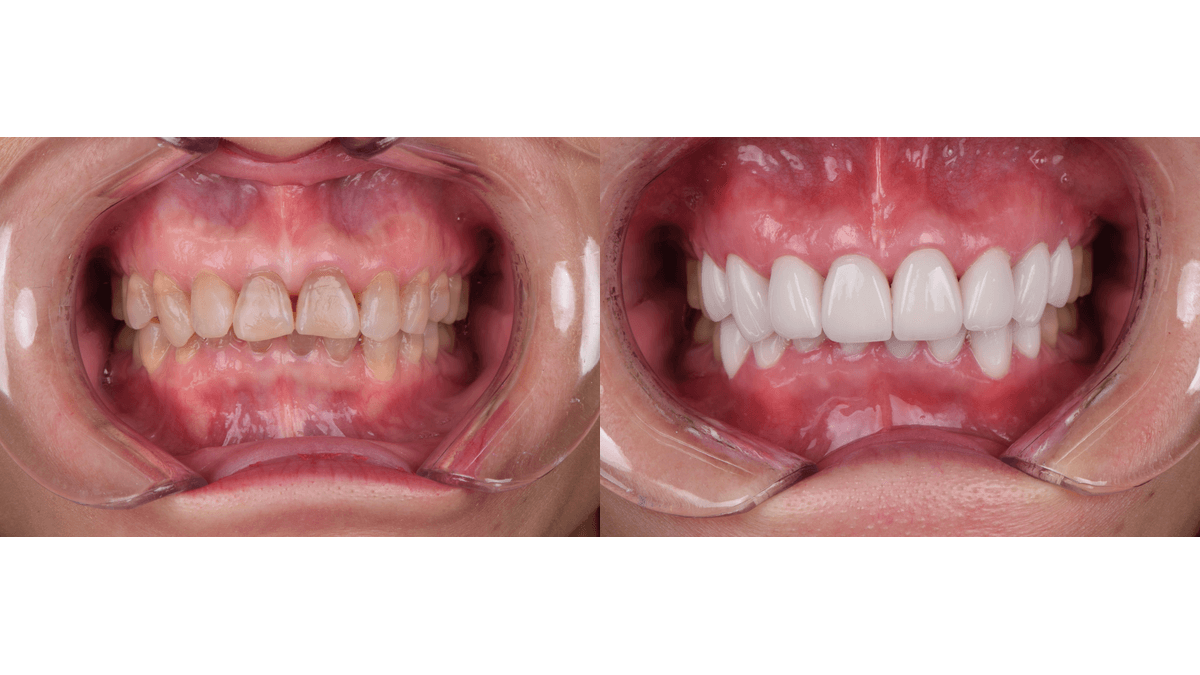
- The featured Huangshan Dental case used a 16-tooth E-MAX porcelain veneer plan to improve brown-yellow tetracycline teeth and create a brighter, more balanced smile.
Featured Answer: What Does Tetracycline Do to Your Teeth?
Tetracycline can discolor developing teeth when exposure occurs during tooth formation, especially during pregnancy, infancy, or childhood. The antibiotic can bind with calcium in forming tooth structures, creating intrinsic discoloration that later appears yellow, gray, brown, or banded. Because the color is inside the tooth rather than only on the surface, normal brushing and polishing usually cannot remove it. The CDC notes that older tetracycline-class antibiotics have been linked to permanent tooth staining and enamel hypoplasia when used in children under 8 years old. Treatment depends on stain severity: mild cases may improve with whitening, while deeper tetracycline stains may need porcelain veneers or crowns for predictable color correction.
Understanding Tetracycline Stains
Tetracycline stains are different from common coffee, tea, wine, or smoking stains. Surface stains sit on the enamel and may improve after professional cleaning or whitening. Tetracycline stains are usually intrinsic, meaning the color is incorporated into the tooth while the tooth is developing. Published case literature describes tetracycline-related discoloration as yellow, gray, brown, or banded, and the color may become darker as the tooth ages and oxidizes. This is why many patients say they have brushed carefully for years but their teeth still look dull, gray, or brown-yellow.
The appearance can vary from mild yellow-gray color to severe brown or bluish-gray bands. Some patients have only a few visible teeth affected, while others have full-mouth color inconsistency. In a smile zone, even moderate tetracycline stains can affect confidence because the teeth may look older, darker, or less clean than they actually are. Before treatment, the dentist must separate several issues: the depth of stain, enamel thickness, tooth shape, bite, gum health, and the patient's preferred shade. A veneer plan that looks beautiful on one patient may look too white or too opaque on another.
This is also why tetracycline stain treatment should not begin with the question, "How white can the teeth become?" A better question is: what treatment can make the smile brighter, natural, stable, and suitable for the patient's face? If the discoloration is mild, whitening may be a conservative first step. If the discoloration is deep, uneven, or gray-brown, porcelain veneers can offer better control over visible color, shape, and symmetry.
How Are Tetracycline Teeth Treated?
Treatment for tetracycline teeth depends on stain depth. Professional cleaning is useful for plaque, tartar, and external stains, but it cannot remove color trapped inside the tooth. Whitening may be tried for mild discoloration, and some studies and clinical reports show that bleaching can reduce certain tetracycline bands or make the overall shade lighter. However, whitening may need more time, may not create an even result, and may not fully hide gray-brown stains. It also cannot reshape teeth, close small gaps, or correct worn edges.
Porcelain veneers are often considered when the patient wants a more predictable cosmetic change. Veneers are thin ceramic restorations bonded to the front surface of teeth. For tetracycline stains, the dentist must choose porcelain shade, opacity, thickness, and tooth preparation carefully. If the ceramic is too translucent, the dark base color may show through. If it is too opaque, the teeth may look flat or artificial. This is where clinical planning and dental lab communication matter. The goal is to mask discoloration while preserving a natural enamel-like appearance.
Huangshan Dental Case: E-MAX Veneers for Tetracycline Teeth
The featured Huangshan Dental case involved a patient with full-mouth brown-yellow discoloration from childhood. The teeth also appeared gray and dull, which made the smile look darker than the patient wanted. Because the color change was deep and uneven, brushing, routine polishing, and simple cleaning could not solve the main concern. The patient wanted a brighter smile, but the final result still needed to look natural rather than overly white or artificial.
In some severe cases, full crowns may be considered, especially if the teeth are heavily restored, worn, structurally weak, or require major shape correction. But for many cosmetic tetracycline cases with relatively healthy teeth, porcelain veneers may offer a more conservative way to improve visible color and smile shape. The dentist should always evaluate enamel, bite, gum condition, sensitivity risk, and patient expectations before recommending whitening, veneers, crowns, or a combined approach.
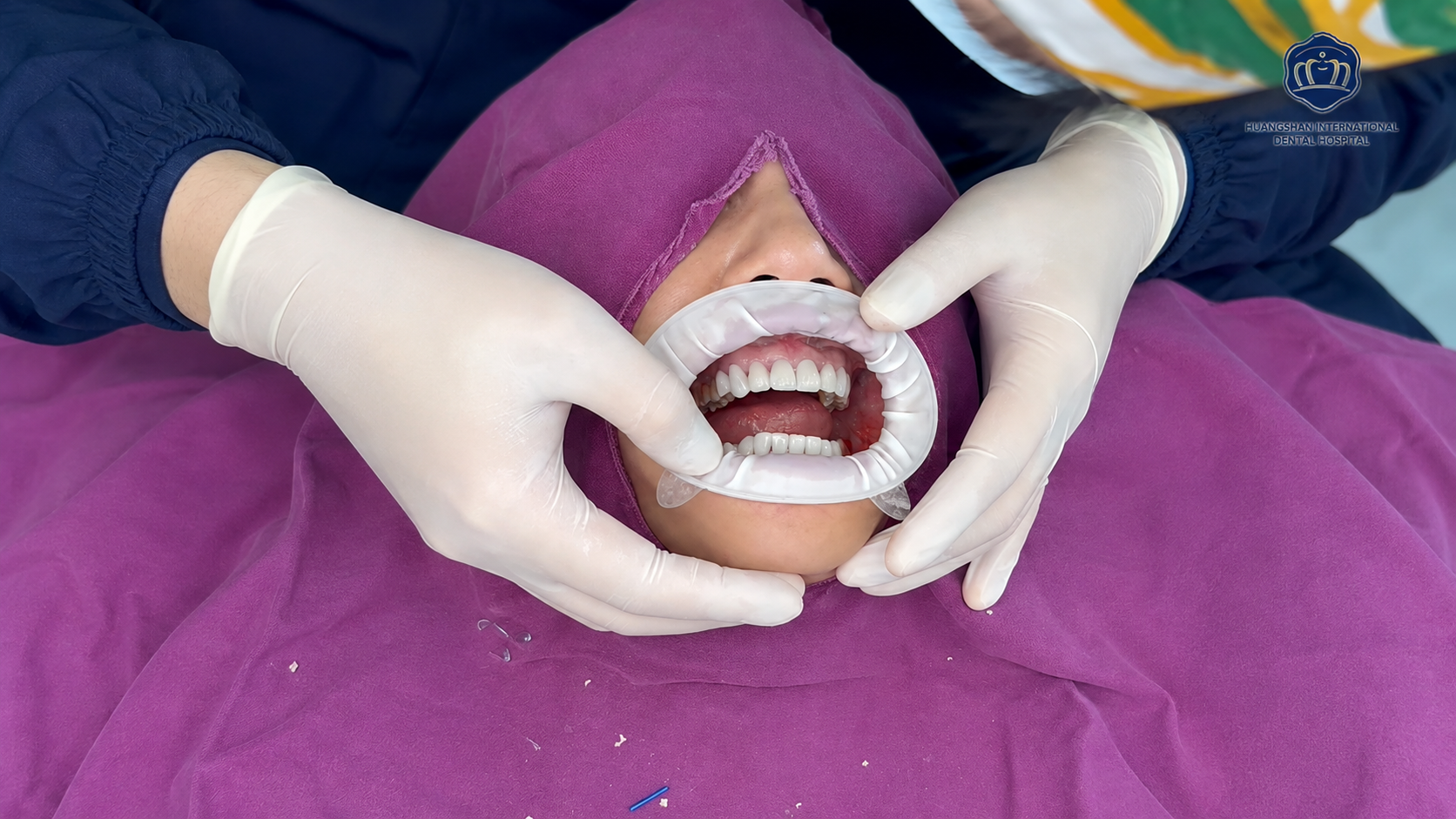
The planned treatment was 16 E-MAX porcelain veneers. A 16-tooth design can cover the main visible smile area on the upper and lower arches, reducing the risk that treated front teeth look bright while untreated side teeth remain dark. In this case, the wider plan helped address both color and overall smile balance. The goal was not only to cover brown-yellow tetracycline stains, but also to improve tooth shape, visible brightness, edge harmony, and the smile line.
The case also shows why in-house dentist-lab communication matters. Tetracycline teeth require careful masking: enough opacity to hide gray-brown color, but enough translucency and surface texture to avoid a flat look. Huangshan International Dental Hospital's integrated clinical and lab model allows the dentist and technician to discuss shade, contour, and details more directly. For traveling patients, this can also support a smoother timeline, with veneer treatment often completed in about 3 days depending on case complexity.
Selected Huangshan Dental Porcelain Veneer Prices
The following prices are selected from the supplied Huangshan Dental porcelain veneer price image. They are reference prices only, not a treatment quote. Final cost depends on clinical examination, veneer number, material choice, smile design, tooth preparation, bite condition, and the dentist's final plan.
| Veneer option | Example package | Reference price |
|---|---|---|
| Upcera Glass Ceramic Veneer | Per tooth | RMB 1,680 (approx. US$249) |
| E-MAX Porcelain Veneer | Per tooth | RMB 2,280 (approx. US$338) |
| E-MAX Porcelain Veneer | 16 teeth package | RMB 22,800 (approx. US$3,383) |
| VITA Amber Porcelain Veneer | Per tooth | RMB 3,880 (approx. US$576) |
| Ivoclar IPS e.max hand-crafted porcelain veneer | Per tooth | RMB 5,880 (approx. US$872) |
| Ivoclar IPS e.max hand-crafted porcelain veneer | 16 teeth package | RMB 66,800 (approx. US$9,911) |
China vs Turkey, Thailand, and USA Veneer Price Comparison
The comparison below is a broad planning reference. Veneer prices vary by material, city, clinic level, lab quality, smile design, warranty, and whether the quote includes temporary veneers, digital design, follow-up, or retreatment support. Low sticker prices do not always represent the final total cost, especially for dental tourism patients who must include flights, hotels, time away from work, and possible return visits.
| Region | Typical veneer price reference | Approximate cost position | Planning note |
|---|---|---|---|
| China at Huangshan Dental | Selected porcelain veneers from RMB 1,680 to RMB 5,880 per tooth | About US$249 to US$872 per tooth | Useful for patients comparing material choice, in-house lab coordination, and travel value. |
| Turkey | Many clinics advertise porcelain or E-MAX veneers around US$198 to US$400 per tooth | Often lower sticker price | Compare material, tooth preparation style, lab quality, and aftercare before choosing. |
| Thailand | Porcelain veneers are often listed around US$370 to US$900 per tooth | Mid-range dental tourism pricing | Strong tourism infrastructure, but costs vary widely by Bangkok, Phuket, and clinic level. |
| United States | Porcelain veneers commonly range around US$900 to US$2,500+ per tooth | Usually higher | Local follow-up may be easier, but cosmetic veneer fees are often not covered by insurance. |
What Patients Should Know Before Porcelain Veneers
Porcelain veneers can create a major smile improvement, but they are not a temporary cosmetic sticker. In many cases, the dentist removes a small amount of enamel to create space, improve ceramic thickness, and avoid bulky edges. The amount depends on tooth position, stain depth, final shade, and bite. Patients should ask how much tooth preparation is expected, whether temporary veneers will be used, how the final shade will be selected, and what happens if a veneer feels high or uncomfortable after bonding.
For tetracycline stains, shade selection is especially important. A very white shade may look attractive in isolation but may not match the patient's lips, skin tone, age, or facial proportions. A natural white shade often looks more believable, especially when 16 veneers are used. The dentist should also check gum health first. Veneer edges need healthy gums and good home care. If there is plaque, tartar, gum bleeding, cavities, or bite trauma, those issues should be treated before cosmetic bonding.
Aftercare is straightforward but important. Patients should brush twice daily, clean between teeth, avoid biting hard objects, avoid chewing ice, and attend regular dental checkups. If the patient grinds at night, a night guard may be recommended. Porcelain does not decay, but the tooth underneath and the gum around the veneer still need protection. With proper planning and maintenance, porcelain veneers can remain attractive for many years.
FAQ
How to Reverse Tetracycline Stained Teeth?
Tetracycline stained teeth usually cannot be fully reversed by brushing because the discoloration is inside the tooth. Mild cases may improve with whitening. Moderate or severe gray-brown stains often need porcelain veneers or crowns for predictable masking. A dentist should examine stain depth, enamel, bite, and gum health before recommending treatment.
Can Tetracycline Yellow Teeth Be Whitened?
Sometimes. Whitening may lighten mild tetracycline yellow teeth, but deeper gray, brown, or banded stains may remain uneven. Whitening also cannot change tooth shape. If the patient wants a major, even color change, porcelain veneers may provide a more predictable cosmetic result.
Can Tetracyclines Discolor Teeth?
Yes. Older tetracycline-class antibiotics have been linked to permanent tooth discoloration when used during tooth development, especially in children under 8 years old. The color may appear yellow, gray, brown, or banded. Modern prescribing decisions should always be made by a qualified medical professional.
Conclusion
Tetracycline stains can be frustrating because the color is often deep inside the tooth rather than on the surface. Whitening may help mild cases, but severe brown-yellow or gray discoloration often needs a more controlled restorative solution. Porcelain veneers can mask dark internal color, improve tooth shape, and create a more balanced smile when planned carefully.
In the Huangshan Dental case, 16 E-MAX porcelain veneers were planned for tetracycline teeth with full-mouth brown-yellow and gray discoloration. The case shows how a veneer plan can naturally transition from stain treatment to smile design: the goal is not simply whiter teeth, but a brighter, more harmonious, and confident smile. Patients considering veneers should begin with a dental examination, personalized shade planning, and a clear discussion of cost, timeline, preparation, and long-term care.
Disclaimer
This Huangshan Dental article is for informational purposes only and does not constitute medical advice, diagnosis, or a guaranteed treatment result. Always consult a qualified dentist for a personalized evaluation and follow your dental team's specific instructions before and after treatment.