


The prevalence of edentulous patients in Germany has been steadily declining for many years. According to the Sixth German Oral Health Study, the prevalence of edentulism in the 65–74 age group has halved to 5% compared with the previous study.1 Another study predicts that only 4% of this age group will be edentulous by 2030.2 However, the treatment of edentulous patients will continue to pose challenges for dental technicians and dentists. There has been an increase in patient demand for implant-supported dentures for patients with edentulism. Nevertheless, this form of restoration is not an option considered by many patients owing to the surgical procedure and significantly higher costs involved and the longer duration of treatment required. The conventional fabrication of dentures using prefabricated teeth and denture base acrylics via the casting or pressing technique is still considered the gold standard.
However, these fabrication methods are time-consuming, and a large portion of the work is performed by the dental laboratory. The large number of appointments required and low reimbursement by statutory health insurance place further strain on dental practices. Through the ongoing digitalisation in dentistry, new treatment options are emerging for this patient group. The digital workflow employed in the following case report provides insight into the treatment of edentulous patients.
Clinical case presentation
A 74-year-old female patient presented to our outpatient dental clinic after a recent serial extraction in the maxilla and mandible that left only teeth #11 and 21. A prosthetic treatment plan was not available. Teeth #11 and 21 were deemed non-restorable owing to advanced bone loss and mobility (Grade III). Owing to incomplete ossification and soft-tissue wound healing as well as the necessity of extracting teeth #11 and 21, we decided to fabricate provisional dentures with 3D printing. These were to be replaced by definitive milled dentures once the hard- and soft-tissue healing was complete.
At the first appointment, the patient’s oral condition was digitised using an intra-oral scanner (TRIOS 4, 3Shape; Fig. 1). The complete dentures were designed in the Dental Designer software (3Shape). First, teeth #11 and 21 were digitally extracted. A virtual tooth set-up was then performed for both arches (Fig. 2). The morphology of the two remaining incisors determined the selection of the digital anterior teeth. The posterior teeth were selected and positioned accordingly. Subsequently, the denture base extensions were defined, and the tooth segments were adapted to the bases. The corresponding STL files were generated.

Fig. 1: Intra-oral scan of the initial situation, showing the jaws in relation.

Fig. 2: Virtual set-up in Dental Designer.
Nesting software (Composer, Asiga) was used to position the print files for the tooth segments and denture bases relative to the build plate, generate supporting structures and calculate the print job (Figs. 3 & 4). The denture bases were produced additively from V-Print dentbase (VOCO) using the MAX UV digital light processing printer (Asiga). After the printing process, the printed parts were carefully detached from the build plate and the supporting structures removed (Figs. 5 & 6). Subsequent cleaning was carried out using 98.5% isopropanol. The printed parts were immersed several times in a bath and then underwent an initial cleaning in an ultrasonic bath (SONOREX SUPER RK 102 H, BANDELIN electronic) for 3 minutes and a final cleaning in a fresh bath for 2 minutes. Secondary polymerisation was carried out in the Otoflash light polymerisation unit (2 × 2,000 flashes; NK Optik).
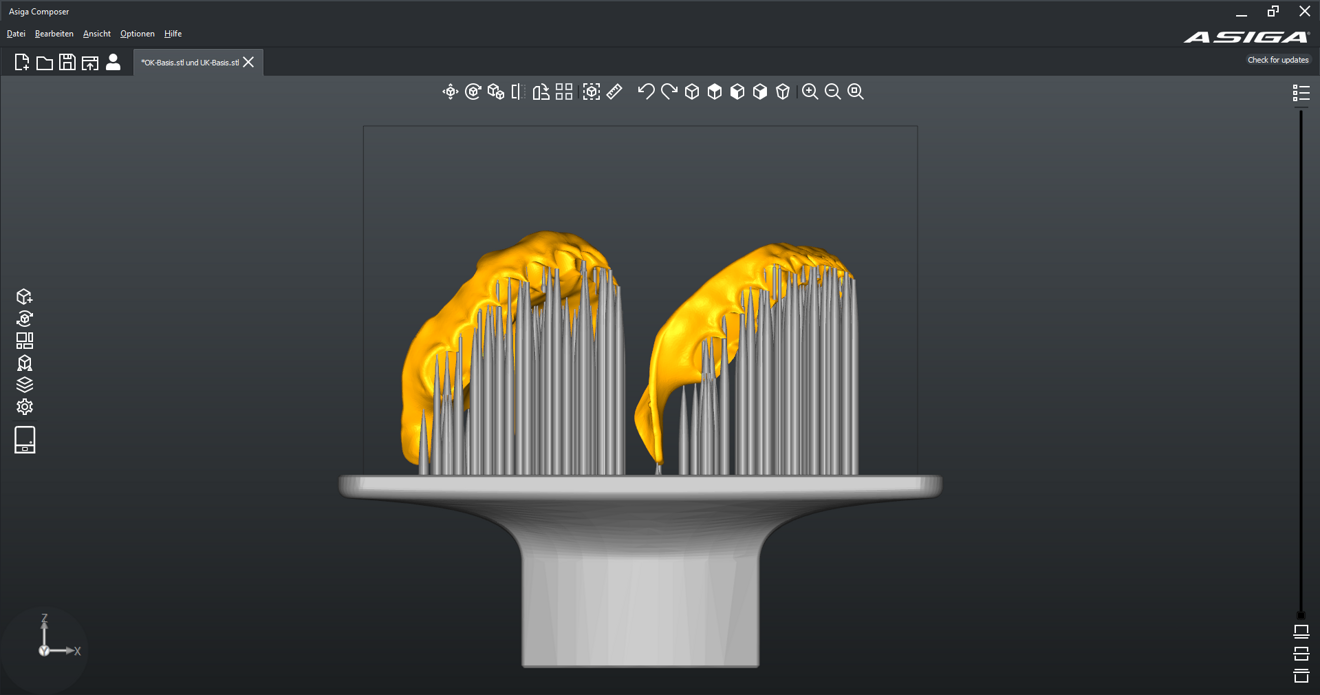
Fig. 3: Denture bases with supporting structures on the build plate in the nesting software.
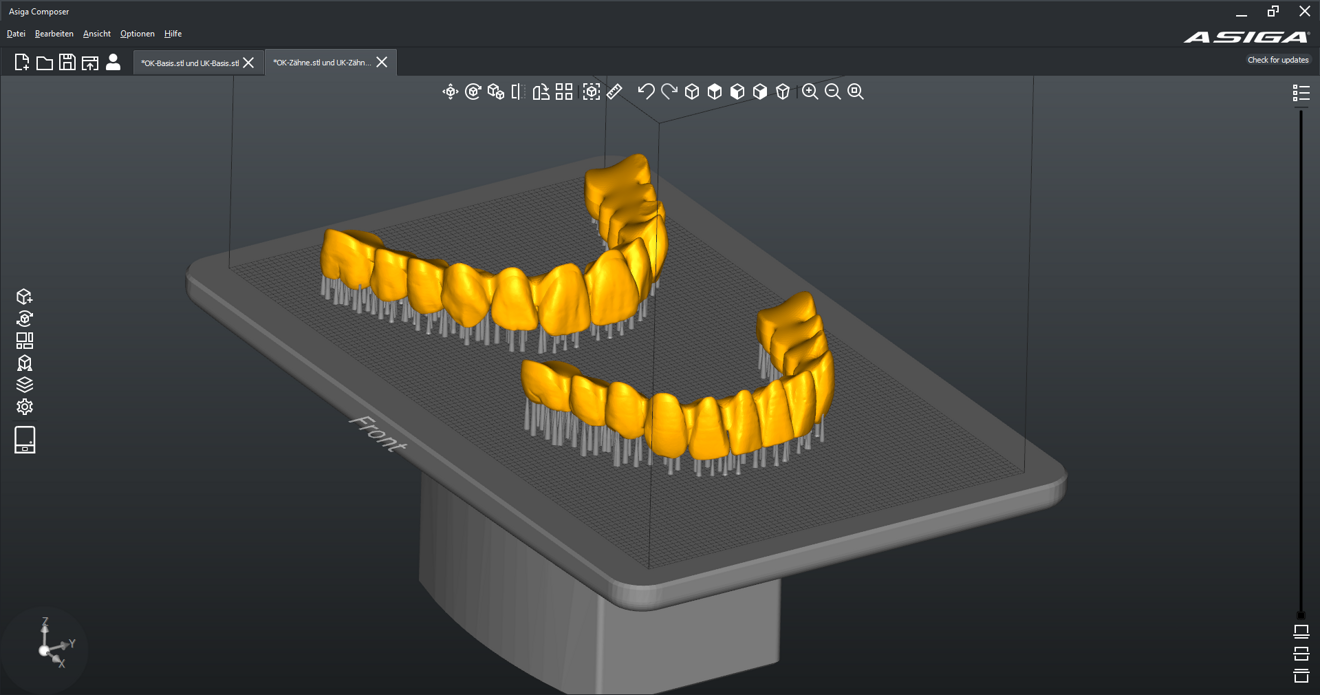
Fig. 4: Tooth segments with supporting structures on the build plate in the nesting software.
