

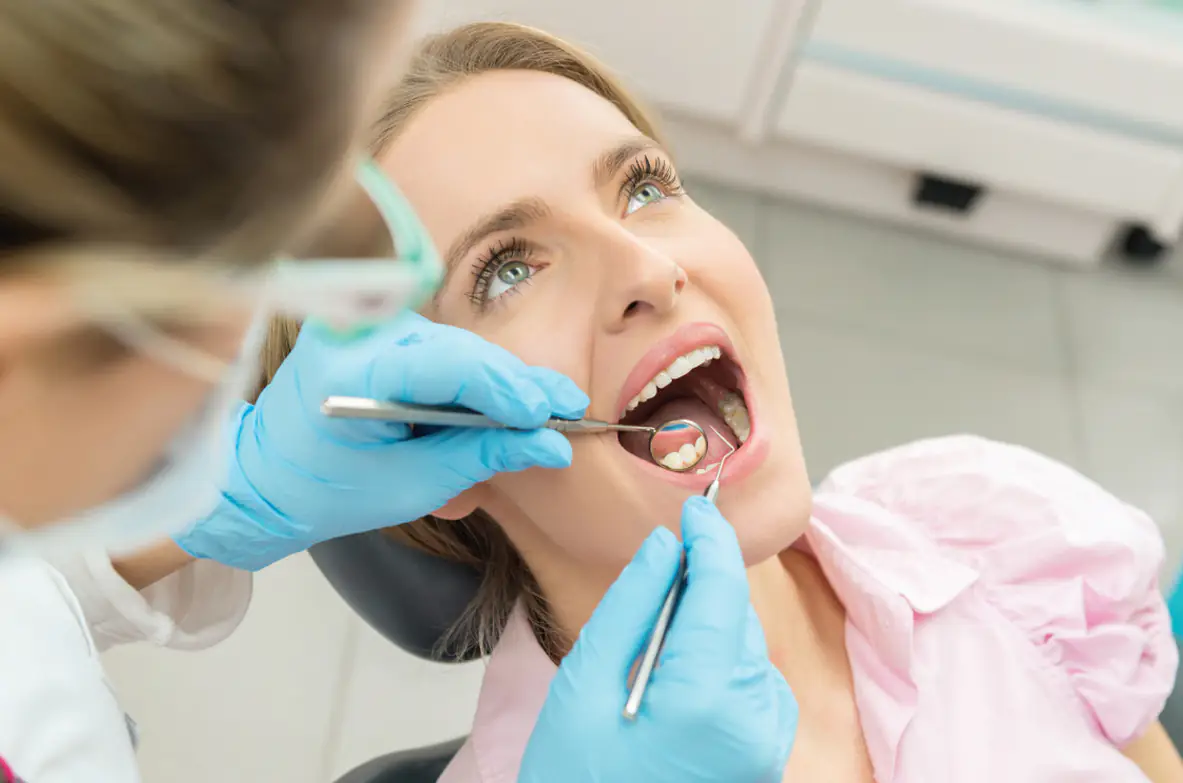
Caries Detection – How ?
Diagnosing every stages of caries plays an important role in halting disease process. There are many many aids in diagnosing caries. Let us discuss a few in the following article namely – Major requisites, requisites of diagnostic tests, Visual examination, Tactile examination and basic radiographic methods.
Major requisites
- Using ‘sharp’ eyes and the possible use of magnification in the form of dental loupes
- Using good illumination from the overhead dental chair light or a more focused light from a fibreoptic headlight coupled with the use of loupes
- Having clean tooth surfaces to examine, both wet and dry (using a 3-1 air/water syringe). If surface debris (plaque/calculus) is present this may have to be removed prior to any dental examination taking place
- Using blunt dental explorers – the use of sharp dental probes is contraindicated for carious lesion detection as they can potentially cause cavitation in a previously non-cavitated lesion
- Sufficient time allocated for the examination of all tooth surfaces as well as the soft tissues and periodontium
Requisites of Diagnostic Tests
- Accurate
- Sensitive (diseased tooth) and
- specific (sound tooth)
- Reproducible and reliable
- Should not transfer any micro-organism from affected area to unaffected area
- Should be cost effective
Visual Examination
- Needs sufficient time and patience
- Involves visually looking for surface roughness, opacification, discoloration and cavitation
- The teeth are cleaned and dried with compressed air and illuminated under adequate light source
- The limitation of using this method is discoloration of the pits and fissures, a common finding in normal healthy adult teeth (extrinsic stains) may simulate discoloration of caries
- The individual’s past history and the habits can help differentiate between these two discolorations
Tactile Examination
- Determining roughness/softness of the tooth surface with a sharp explorer
- Both penetration and resistance to removal of an explorer tip (catch) have been interpreted as an evidence of caries
- May transmit cariogenic bacteria from one site to another (one probe is used to examine different sites)
- May produce irreversible traumatic defects in enamel, which further become susceptible to caries attack
- May not add any information to the visual examination
- The explorer tip may bind in a fissure because of reasons other than caries. The reasons can be:
-
- Shape of the pit/fissure: Small/rounded pits/fissures can bind the tip
- Sharpness of an explorer: A sharp explorer has a diameter of 200 microns at its tip and pressing the explorer may push the tip into enamel
- Force of application: Heavy pressure may lead to binding of the probe tip into enamel fissures
Disadvantages
- The visual tactile examination method, in all probability, may miss out an incipient lesion
- The criterion for detection of caries is not standardized
- The method of examination and criterion for diagnosis varies from individual to individual
- Probing depth and pressure is controversial
Radiographic Methods
- Periapical radiography
- Bitewing radiography
Limitations of radiographic interpretation of occlusal caries are
- Difficult to detect caries in enamel because of superimposition of adjacent enamel over the fissures
- Lesions involving buccal grooves of molars are superimposed over the occlusal area and can simulate occlusal lesions
- A thin radiolucency at the dentino-enamel junction in occlusal caries, may be confusing with normal radiolucency in enamel and dentin
- Difficult to distinguish between occlusal caries and the internal resorption
Although visual and tactile examination helps in diagnosing majority of dental caries lesions, there may be requirement of combined approach with use of radiographs as well. Clinician must utilize the clinical skills and other aids for proper diagnosis.
Article by Dr. Siri P.B.
