

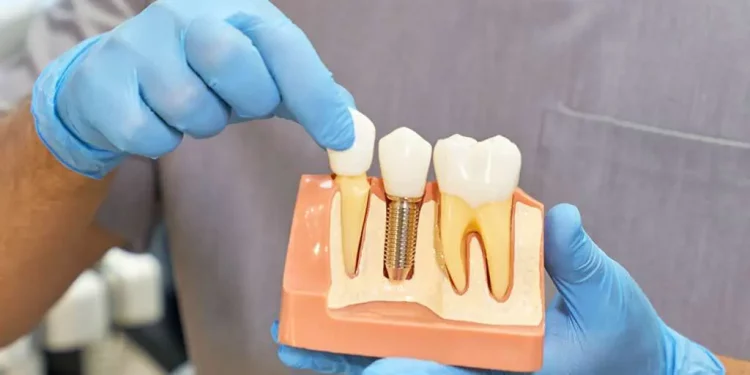
In recent years, China’s healthcare reform has continued to advance, and the scope of the national centralized bulk procurement (CBP) policy has expanded from pharmaceuticals and medical consumables to dental implants. Through unified, large-scale bidding and a volume-based pricing model, CBP has significantly lowered medical product prices.
Since its pilot program in 2018 in the pharmaceutical sector, the policy has expanded to cover high-value consumables such as coronary stents and artificial joints, and has now officially been implemented for dental implants.
In the past, the price of a single dental implant often reached around 10,000 RMB (approximately US$1,390), prohibiting many middle-aged and elderly patients.
Since the implementation of CBP, the price of dental implants has dropped to between 5,000 and 7,000 RMB, a decrease of over 50%, significantly alleviating the financial burden on patients and theoretically expanding market demand.
However, for dental clinics that have long relied on the high-profit dental implant business, this represents a structural shock. Gross profit margins, previously high at 60% to 70%, could be halved. Many small and medium-sized clinics are facing cash flow pressures and may even be forced to exit the market.
Lu Jiarui, a healthcare industry analyst at Leo Research Institute, noted that CBP is disrupting the long-standing high-price model and compressing supply chain margins to a more transparent level, thereby reshaping the dental implant market. Leading dental chains are attempting to mitigate this impact through three key strategies:
Upstream expansion—establishing processing centers or collaborating with domestic manufacturers to reduce costs;
Digital transformation—using technologies like AI implant planning and 3D printing to improve efficiency;
Innovative service models—launching full-cycle care packages that combine implants, periodontal treatment, and regular maintenance.
The market is rapidly diverging: high-end clinics are turning to high-value services like complex implants and “All-on-4” procedures to maintain pricing power, while the mass market relies on standardized processes and scaled operations to reduce costs.
Future policies may introduce differentiated payment systems—CBP covering basic plans, allowing patients to upgrade to higher-end options at their own expense; or reforms to individual medical insurance accounts may improve affordability.
For dental practices, the era of relying on insurance dividends is over. Only by prioritizing medical quality and patient experience can sustainable competitiveness be achieved.
Lu Jiarui predicts that the industry will exhibit a dual-track development trend: high-end specialty clinics in core cities will focus on complex implants and orthodontics, while affordable community clinics will provide basic treatment and preventive care, achieving scale through insurance and standardized services.
At the same time, technological innovation, early oral intervention for children, oral care for the elderly, and expansion into lower-tier cities will become new growth points.
More broadly, the transformation of dental clinics reflects the ongoing shift in China’s healthcare system from “commercialized medicine” to “medicalized commerce”—a shift from the pursuit of rapid expansion and high profits to a sustainable model driven by medical value.
One possible solution is a “flagship + satellite” model: establishing flagship institutions with teaching and research capabilities in core cities, radiating to surrounding standardized satellite clinics, and leveraging remote consultations and technology sharing to improve overall efficiency.
