


The distalisation of the maxillary posterior teeth is limited to approximately 2 mm when treated solely with aligners.1–3 This often results in dental side effects such as tipping and anchorage loss, leading to proclination of the anterior teeth.4, 5 Additionally, the success of treatment is highly dependent on patient compliance, particularly when using intermaxillary elastics.
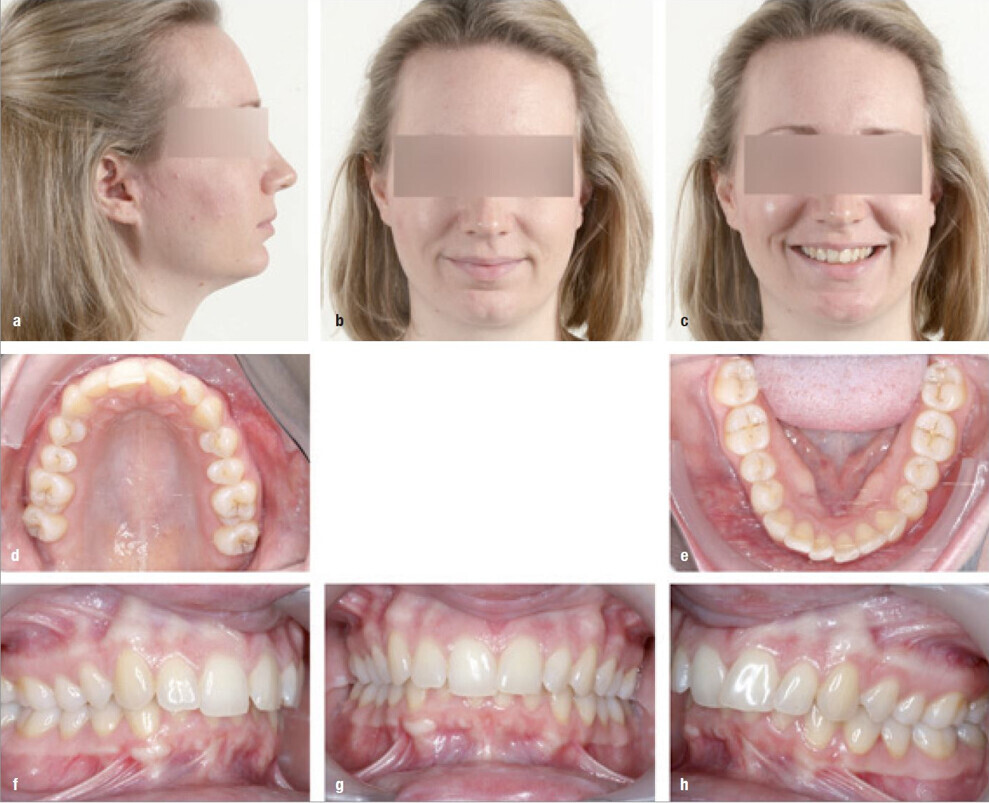
Figs. 1a–h: Facial and intra-oral photographs of a 35-year-old female patient with an increased overbite and a Class II relationship.
To optimise bodily distalisation in terms of precision and efficiency, integrating the Beneslider into aligner therapy has proved to be an innovative approach.6, 7 Two approaches to such therapy can be taken: two-phase treatment, where distalisation is first achieved using the Beneslider before finishing the occlusion with aligners, and one-phase treatment which enables concurrent molar distalisation and aligner therapy. Both approaches have shown promising clinical outcomes and expand the range of aligner-based treatment options.
Skeletal anchorage for distalisation in the maxilla
The introduction of skeletal anchorage has led to a paradigm shift in orthodontic therapy in recent years. It significantly reduces the dependence on patient cooperation, ensuring more consistent and reliable results.8 Mini-implants are minimally invasive, relatively low cost and versatile in application, making them a favourable option for both practitioners and patients.9–11The anterior palate has become the preferred insertion region for skeletal anchorage for maxillary molar distalisation.12, 13 This area, called the T zone, is located posterior to the palatal rugae and is characterised by dense cortical bone and minimal soft-tissue thickness and thus provides ideal conditions for stable and reliable anchorage.14
The distaliser
Among the established distalisation appliances, the Beneslider is known for its efficient sliding mechanics and high clinical success rate.15, 16 The distaliser was developed as an alternative solution to the Beneslider and utilises a screw mechanism.17 The screw mechanism ensures precise, controlled and predictable movement of the teeth throughout the treatment. The distaliser, typically activated by the patient on a weekly basis, offers a clearly defined activation distance per time unit, simplifying synchronisation in the aligner staging process in a one-phase treatment approach. However, the distaliser is bulkier than the Beneslider, and this factor should be considered, especially for adult patients.
Patient case
A 35-year-old female patient presented with an increased overbite, an increased overjet of 7 mm, and a bilateral Class II molar relationship, exhibiting a three-quarter unit distal occlusion on the right and a half unit distal occlusion on the left (Figs. 1–3). Orthognathic surgery had previously been recommended owing to the Class II skeletal relationship evident in the cephalometric analysis, but the patient declined this option.
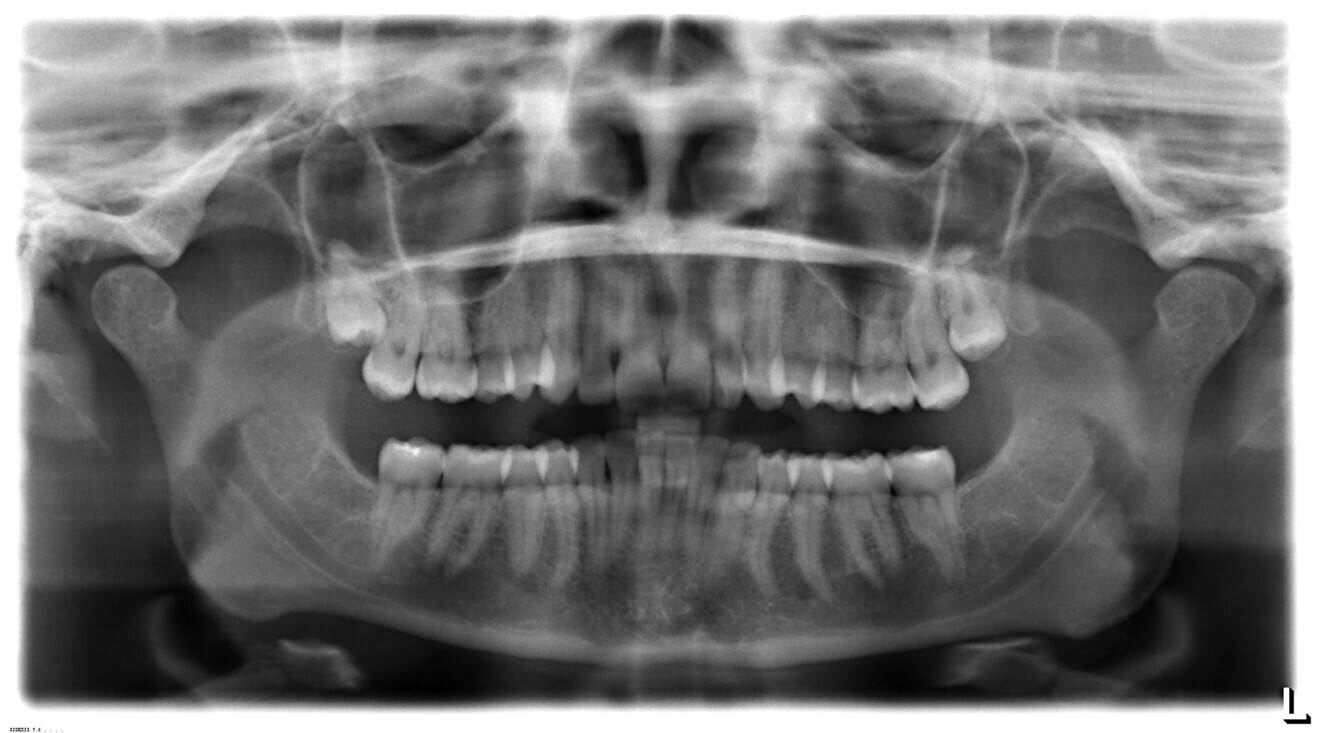
Fig. 2: Panoramic radiograph.
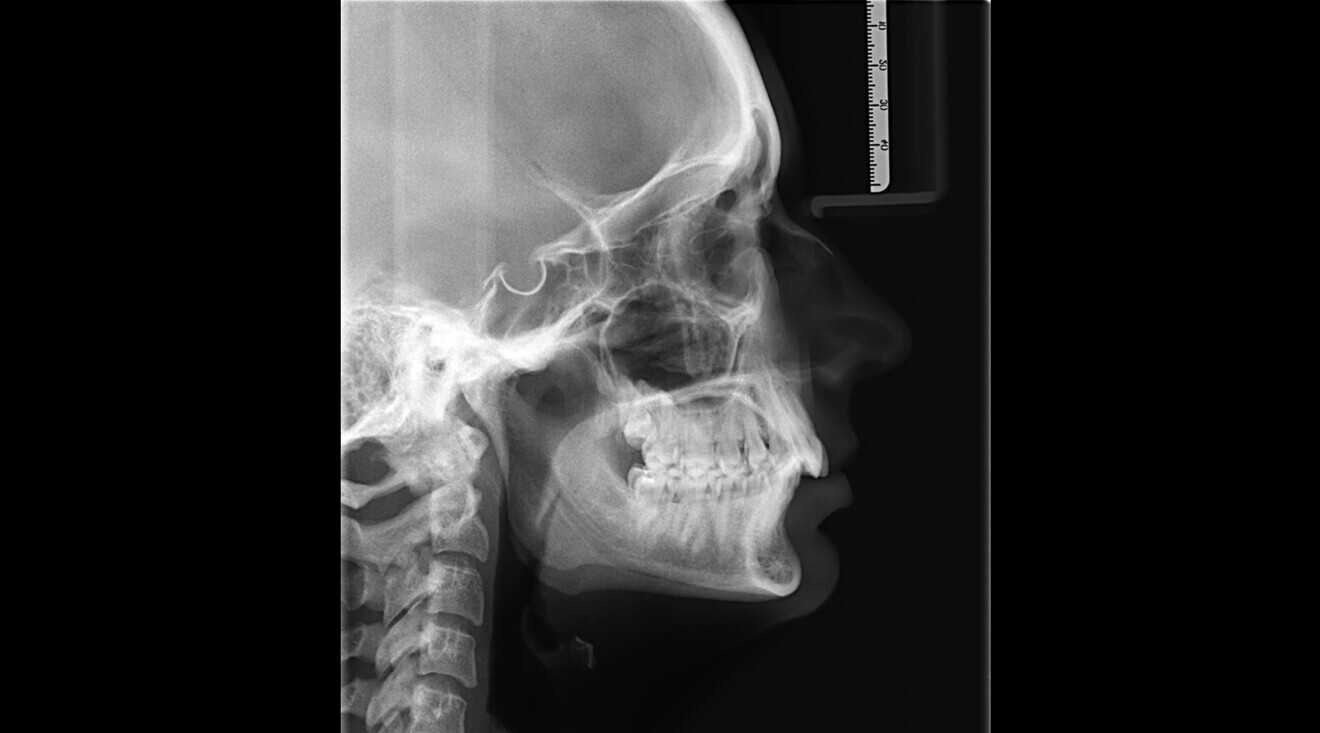
Fig. 3: Cephalometric radiograph.
The patient’s main concerns were the crowding of the maxillary anterior teeth and the large sagittal discrepancy. She desired a discreet treatment option that would ideally avoid tooth extractions.
After an intra-oral scan, the positions of the mini-implants (BENEfit, 2 × 9 mm; PSM Medical) and of a bilateral distaliser were digitally planned. The distaliser (TADMAN) was manufactured using the selective laser melting process (Fig. 4). A simultaneously planned insertion guide (TADMAN) allowed for precise placement of the mini-implants and immediate fitting of the distaliser in a single appointment (Fig. 5).
Since a one-phase treatment approach was planned, an additional scan was taken immediately afterwards to produce the aligners (Invisalign, Align Technology). The goal was to achieve simultaneous bilateral molar distalisation and alignment of all the teeth using the aligners. To facilitate this, a distalisation rate of 0.2 mm per week was set, corresponding to a quarter turn of a screw with a thread pitch of 0.8 mm. The distalisation was planned asymmetrically because the molars in the maxillary right quadrant had drifted further mesially than those in the maxillary left quadrant (Fig. 6). The patient was given specific instructions on which aligner to activate the distaliser screws with. The distalisation was completed by the 20th aligner.
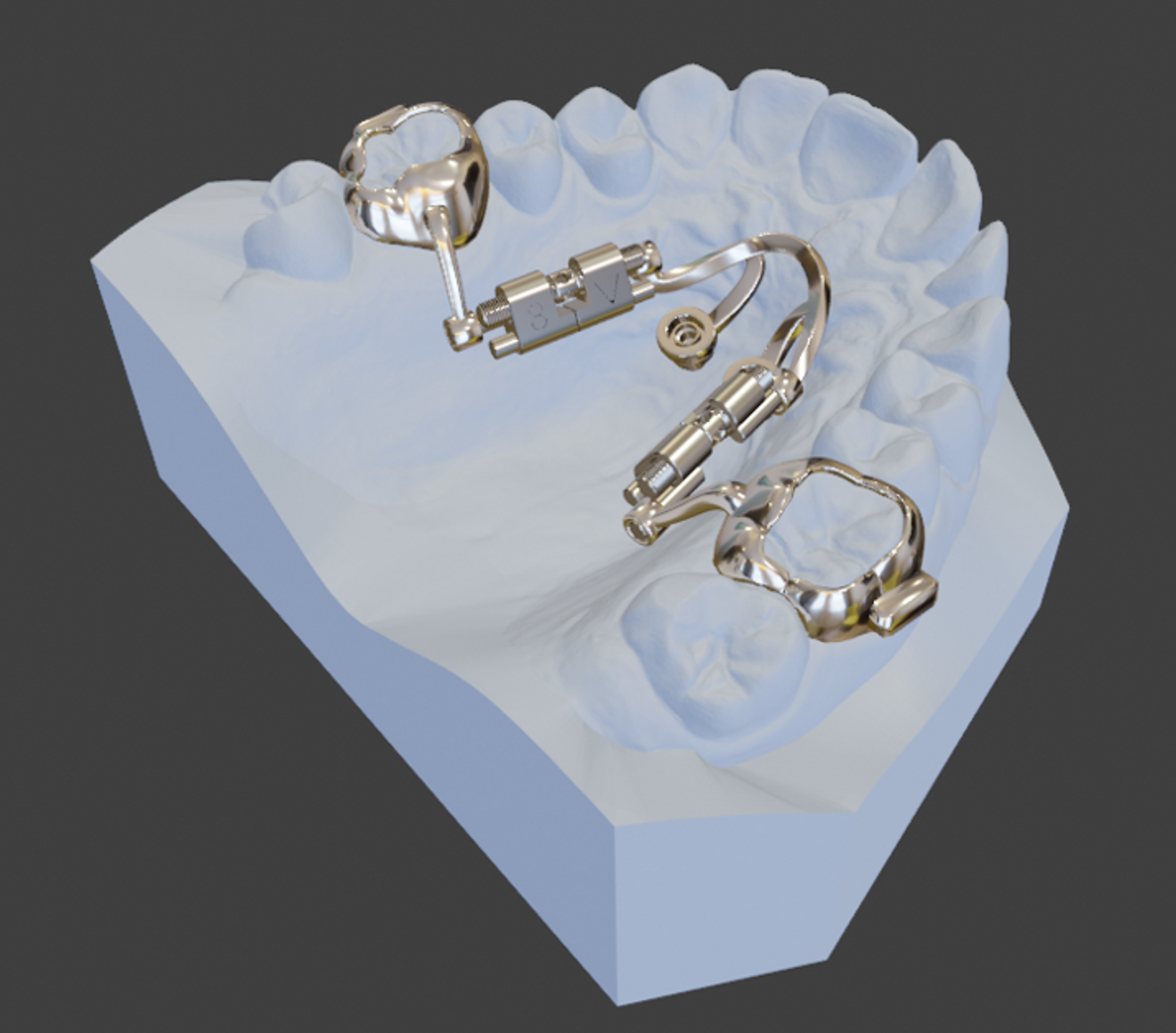
Fig. 4: Digital planning of the distaliser with metal attachments on the shells.

