

The Class II restoration remains one of the most common—and technically demanding—procedures in dentistry. Every day, clinicians must deliver durable, aesthetic and anatomically precise posterior restorations under time pressure and often for limited return. Advanced resin composites such as TPH Spectra ST, bulk-fill materials such as SDR flow+ and sectional matrix systems such as Palodent continue to address core challenges in direct posterior composite restorations. However, outcomes in larger or more complex Class II cases—especially those involving cusp replacement—often depend less on materials and more on the clinical skill and experience of the practitioner.
We recently described the beginning of a new era in connected dentistry and its potential for improving treatment efficiency, practice growth and patient care.1 Could the innovations we discussed also benefit complex Class II restorations?
The answer lies in CEREC Go, which reintroduces a compelling vision: digitally designed, precisely milled composite inlays and onlays. CEREC Go is not primarily a crown mill; it is a direct restoration machine. Purpose-built for complex Class II cases, it allows clinicians to flexibly transition between manual and digital workflows according to their skill level and clinical scenario. This flexibility does not extend chair time, and the system combines speed, precision and material strength to deliver predictable results without compromising quality.
A smart solution for complex Class II cavities
Posterior composite restorations demand tight proximal contacts, natural interdental architecture, functional occlusal anatomy, excellent marginal integrity, and resistance to polymerisation stress and to wear and fracture. Even minor issues—such as air entrapment, bonding deficiencies, incomplete polymerisation or marginal overhangs—can compromise restoration longevity and patient satisfaction.2 Digitally designed composite inlays and onlays produced from prefabricated composite blocks help mitigate many of these variables.3 Historically, CAD/CAM workflows were seen as too slow, complex or costly for what was perceived as a simple restoration (Figs. 1a–e). CEREC Go changes that perception by leveraging connected dentistry technologies—integrating hardware, software and data platforms to streamline restorative workflows.

Fig. 1a: A typical workflow for a Class II direct restoration. Initial situation.
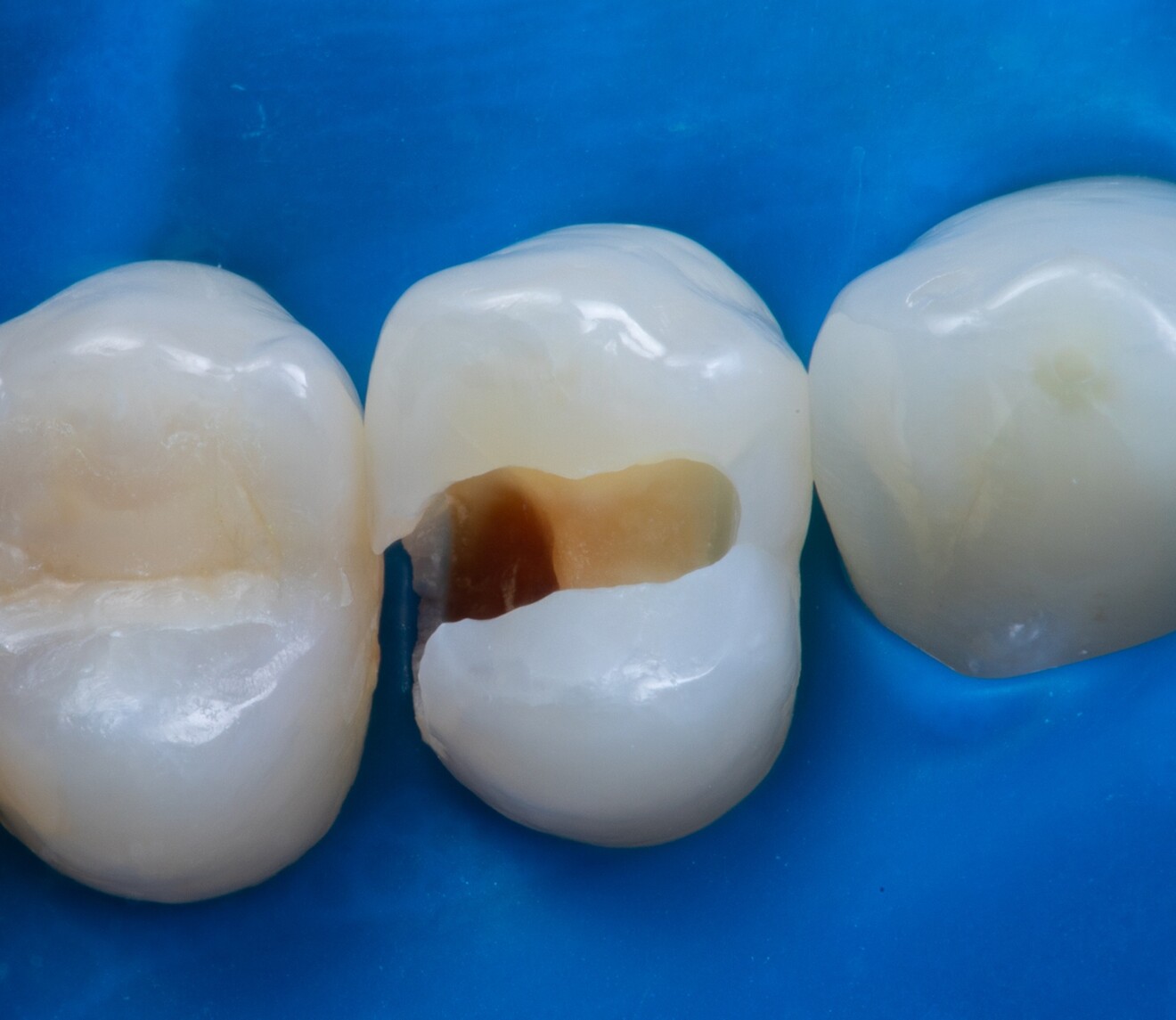
Fig. 1b: Preparation.

Fig. 1c: Matrix placement.
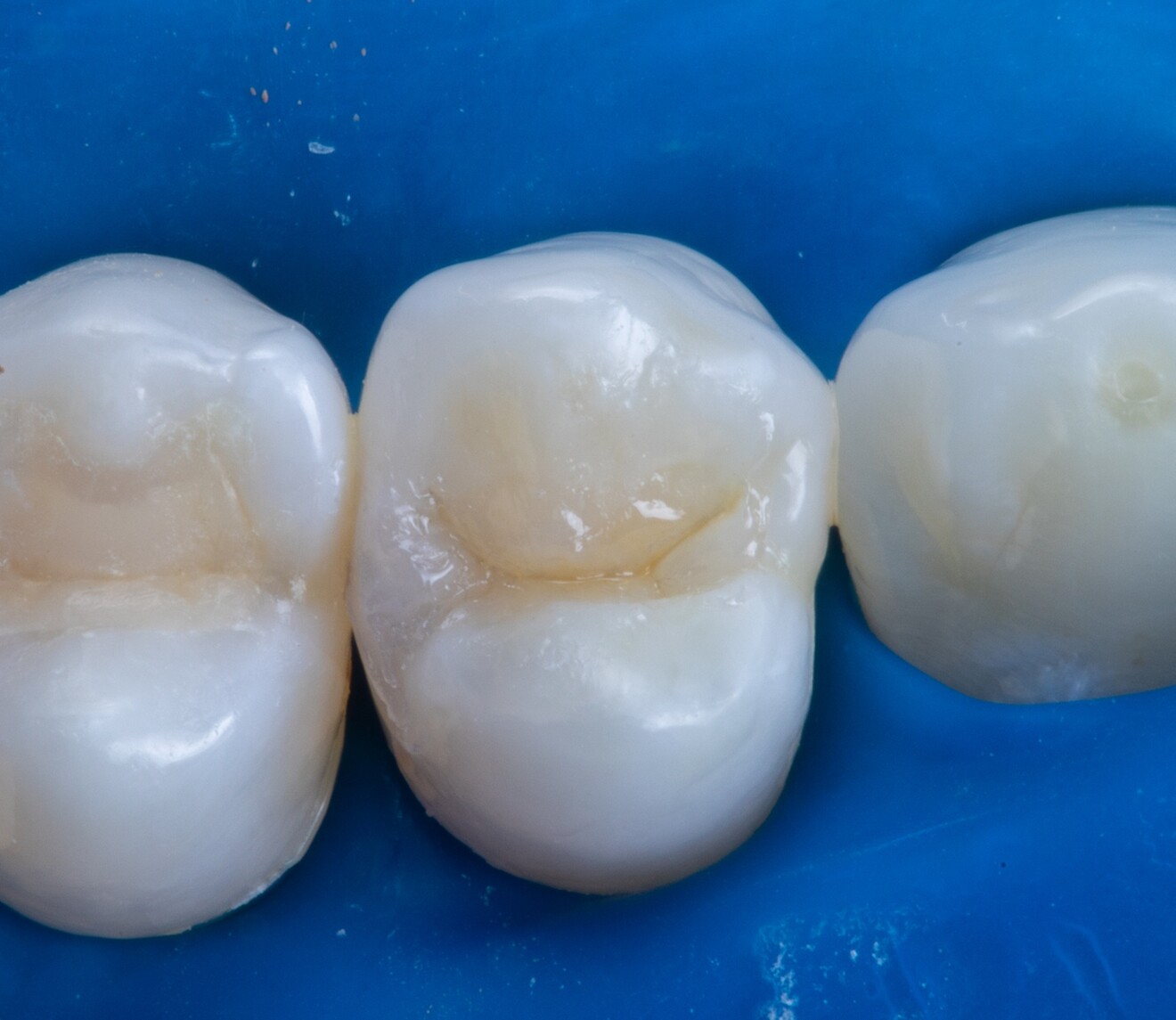
Fig. 1d: Composite build-up.
