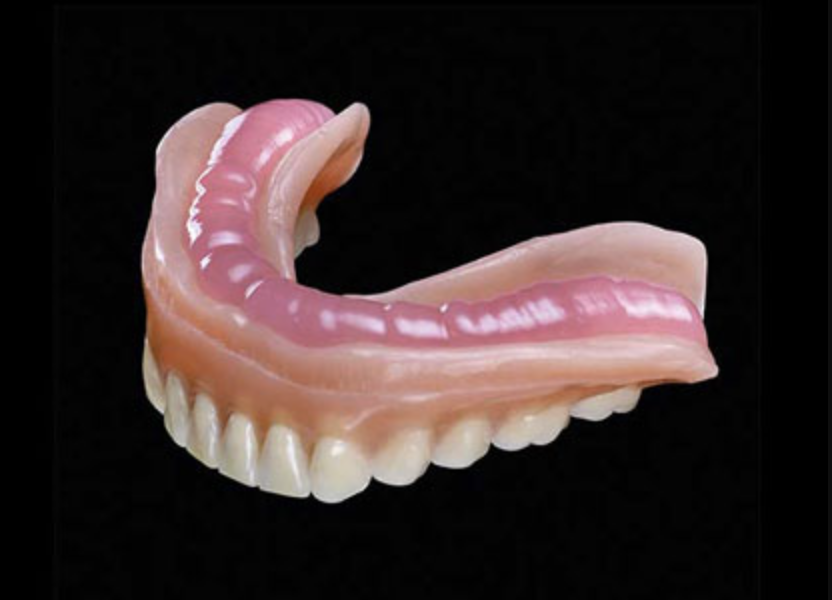
 Relining dentures can be a challenging and frustrating experience for the patient and the dentist. To help the fully or partially edentulous patient, clinicians should be familiar with the different techniques and when to use which material. There are two main types of denture reline materials—hard and soft., ,Hard denture reline materials are rigid materials that are used for permanent relines. Typically made of acrylic resin and usually processed in a dental lab, hard relines provide a long-lasting solution and are more durable than soft relines. However, they may require more chairside adjustments to achieve a proper fit., ,Soft denture reline materials are flexible and more comfortable for patients with sensitive or sore gums. They are usually made of a silicone-based material and provide a cushioning effect between the denture and the gums. Soft relines are often used temporarily to provide relief while a patient’s gums heal or adjust to the denture. They are less durable than hard relines and may need to be replaced more frequently., ,The choice of denture reline material depends on factors such as patient comfort, the condition of the denture, and the dentist’s preference. Both types of materials have their advantages and limitations, but here are some considerations when choosing a material., ,Compatibility,The material should be gentle on oral tissue to minimize the risk of inflammation or injury to the gums., ,Durability & Stability,It should be durable enough to withstand the forces exerted during chewing and speaking without degrading or breaking down quickly. It should provide stable support for the denture, preventing movement or slippage while being worn., ,Adaptability,The material should be able to adapt well to the contours of the patient’s mouth to provide a comfortable fit. It should also maintain its shape and size over time to ensure a proper fit and minimize the need for frequent adjustments., ,Ease of Use & Stain Resistance,The material should be easy for the dentist to work with, allowing for efficient and effective application and adjustment. A desirable material should also resist staining or discoloration over time., ,Longevity & Cost-Effectiveness,Ideally, the reline material should have a long lifespan, reducing the frequency of replacements and the inconvenience for the patient. While providing excellent performance, the material should also be cost-effective for both the dentist and the patient., ,These qualities collectively contribute to a successful denture reline procedure, ensuring comfort, functionality, and satisfaction for the patient.


