


CLEVELAND — More than 500,000 Ohio residents lack health insurance, and for many of them, free and charitable clinics are a vital source of care.
Ohio is home to 59 free and charitable clinics and pharmacies that serve uninsured and underinsured patients. These clinics are supported by the Charitable Healthcare Network (CHN), which is marking Free Clinic Appreciation Month by highlighting care provided in 86 of the state’s 88 counties.
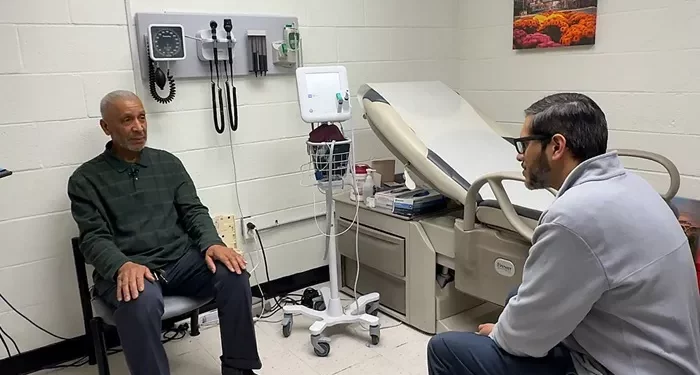
One of those providers is Salaam Clinic in Cleveland, which serves hundreds of patients each year. Among them is Shafeeq Sabir, who said the clinic helps him manage his health without the burden of high out-of-pocket costs.
“The opportunity is there for me to see a doctor without having to worry about the cost,” Sabir said. Although he has insurance, he lives on a fixed income and sometimes cannot afford copays.
Salaam Clinic treats uninsured and underinsured patients, as well as those who cannot afford traditional care. Sabir said he often chooses the clinic over his primary care doctor when costs become a concern.
The clinic is part of CHN, Ohio’s statewide system supporting free and charitable clinics. CHN Executive Director Jason Koma said the network plays a central role in the state’s healthcare safety net.
“We are the backbone of the safety net of health care in the state of Ohio,” Koma said.
Between January and September 2025, more than 60,000 patients received care at CHN-supported facilities. Nearly 80,000 patients were seen statewide in 2024.
CHN clinics provide a broad range of services, including primary and specialty care, dental and vision services, behavioral health care, social services, pharmacy support, testing, prescriptions, patient education and insurance enrollment. In 2024 alone, the clinics delivered an estimated $224 million in healthcare services.
The network receives funding from the Ohio Department of Health through the Uninsured Care Fund, which supports medical and dental services for uninsured and underinsured residents. CHN receives $1.75 million each fiscal year to distribute among clinics statewide.
Salaam Clinic receives funding from several sources, including CHN. Dr. Syed Shoaib Shah, the clinic’s CEO, said it costs about $230,000 annually to operate.
“That includes a part-time nurse practitioner, an administrative assistant, supplies and the resources needed to run mobile and pop-up clinics across the city,” Shah said.
Funding does not always meet the clinic’s full needs, Shah added, prompting a greater reliance on private donations.
Without clinics like these, Koma said many patients would have no alternative but emergency rooms, which are far more expensive. According to UnitedHealthcare, the average emergency room visit costs about $1,700.
Shah said free clinics often serve as the first step toward better health.
“We make sure every patient leaves with a roadmap — knowing where they’re going, what they’re doing and what referrals they need,” he said.
Demand for services is rising. Salaam Clinic treated about 700 patients in 2024, a number that nearly doubled to 1,400 in 2025. Shah expects that figure to continue increasing as healthcare costs rise and hospital outpatient centers reduce services for uninsured patients.
Despite the challenges, Shah said the clinic remains committed to serving the community.
“We expect to see more underinsured and uninsured patients who cannot afford care,” he said.
Sabir said he is grateful for the clinic and regularly encourages others to seek help there.
“It gives me peace of mind about my health and my life,” he said.
Salaam Clinic accepts appointments and walk-ins. It operates Sundays from 1 p.m. to 5 p.m. at its Midtown Cleveland location and on the last Friday of each month in Solon. The clinic also runs pop-up and mobile services and offers multilingual care in languages including Arabic, French, Swahili, Urdu, Hindi and Punjabi.
Like other CHN clinics, Salaam Clinic is a nonprofit organization supported by paid staff, volunteers and donations. CHN officials said every dollar donated to the network generates about $13 in healthcare services for patients in need.