

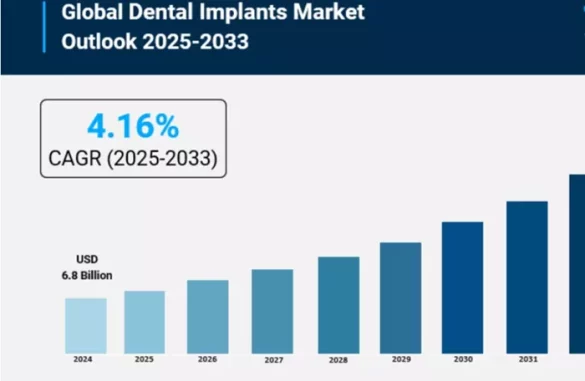
The global dental implants market is set for steady growth, with its value expected to climb from USD 6.8 billion in 2024 to USD 9.8 billion by 2033, according to IMARC Group. The market is forecast to expand at a compound annual growth rate (CAGR) of 4.16% between 2025 and 2033.
North America Leads the Market
North America currently accounts for more than 36.8% of global sales. The region’s dominance is driven by advances in implant technology, rising awareness of aesthetic dentistry, a shift from removable to permanent dental solutions, and the expansion of dental tourism.
Growing Demand for Implants
Demand is rising in 2025 as more patients and dentists choose implants as a long-term solution for missing teeth. Implants not only restore function and appearance but also prevent bone loss, improve chewing and speech, and meet higher aesthetic expectations. An aging global population and greater awareness of dental care are further fueling adoption.
Digital Dentistry Gains Ground
One of the strongest trends in 2025 is the growth of digital dentistry. Dentists are increasingly using intraoral scanners, CAD/CAM technology, and 3D printing to design and manufacture restorations with greater precision and speed. Digital tools enable guided implant placement, reduce chair time, and even allow same-day restorations—enhancing patient comfort and efficiency.
Advances in Materials
Titanium remains the standard material for implants, but research into alternatives such as zirconia and hybrid options is growing, particularly for patients seeking non-metal and more aesthetic solutions. Innovations in surface coatings are also improving osseointegration, reducing healing times, and lowering failure rates. At the same time, bone graft materials and growth-factor therapies are expanding treatment options for patients with low bone density.
Minimally Invasive Techniques
Minimally invasive procedures and immediate loading techniques are becoming more common. In some cases, dentists can place an implant and attach a temporary crown in a single visit, offering immediate function and appearance. These faster methods are particularly attractive to patients with limited time and can reduce overall treatment costs.
Shifting Global Dynamics
While developed economies continue to spend on premium technologies, demand in developing countries is surging due to rising incomes and broader insurance coverage. Dental tourism also plays a key role, as patients travel to lower-cost regions for implant procedures combined with leisure trips.
Challenges: Cost and Coverage
Despite growing demand, cost remains a barrier. Implants are more expensive than dentures, and insurance coverage varies widely. However, flexible financing options and efforts to expand reimbursement are helping more patients access treatment.
Training, Regulation, and Competition
The availability of trained professionals also affects market growth. Continued education in implantology is making the treatment more accessible. At the same time, regulatory demands and supply chain standards shape the competitive landscape. Manufacturers are increasingly collaborating with dental labs and digital platforms to offer integrated solutions and meet strict sterilization and safety requirements.
Rising Patient Awareness
Public awareness is another driver. Social media, influencers, and improved patient education have boosted recognition of implants as a reliable, long-term treatment. With strong survival rates and proven outcomes, patient confidence continues to grow.
