

The government has announced significant proposals that impact NHS dental nursing. But will they be adequately funded and supported? Dental nurses share their views.
The NHS 10-Year Health Plan released on 3 July announced that the dental nursing scope of practice would be expanded to include administering fluoride varnish. Dental nurses will also have a key role to play in the introduction of a Neighbourhood Health Service, delivering oral health advice to the community.
We heard from experts in the dental nursing profession on whether they support the changes announced in the plan, what they could achieve, and if there is enough funding and infrastructure to ensure the measures succeed.
Fiona Ellwood, SBDN executive director

So, what does this mean for dentistry and oral health wellness and for dental nurses in particular, from my perspective?
The plan is centralised on three shifts:
- Hospital to community
- Analogue to Digital
- Sickness to prevention.
With this in mind, we certainly have some work to do. Many would incorrectly think dentistry will never be a good fit for this, but actually it is already happening in some parts of the country, albeit at varying levels.
Nevertheless, this provides a much-needed opportunity to modernise the way in which we as a profession deliver oral care. It brings the potential to design and embed communities of practice and embrace skill mix, something the profession has been pushing for over many years. In more rural areas and remote environments, where services are often deemed hard to reach, this shift could bring about enormous changes and reduce inequalities if successful.
Dentistry, oral care and oral wellness have to be part of a health system and provision, not an isolated service. If we turn that comment on its head, the mouth is the gateway to health. We all know that well-versed mantra of ‘there is no health without oral health’.
Opportunities and challenges
The plan is timely. As we take stock of the services we offer and the challenges we face, the plan asks more of us – or at least that we think and work differently. We now truly need to consider a way forward that is inclusive of the whole team, but that keeps patients and their oral health outcomes at the heart of it.
Overall, I cannot help but be inspired and hopeful that the plan brings with it opportunity. Opportunity to play a greater part in the oral wellbeing of our communities, opportunity to grow and progress and opportunity to be part of community care provisions. This is not out of reach, but there has to be some realism here, too. There are a number of areas to consider:
- We know the why – now we need the where, when, what and how
- What existing community-level practices are in place?
- What are the training needs and the available skills?
- What should or will any additional training look like?
- Do we have the training infrastructure and teams to deliver on the training?
- What do the communities need and want from the profession and where do we start?
A tip of the iceberg list, really, but nevertheless important. It does excite me, as I look to what it actually means and the work I have already committed to begin related to this direction of travel. It is an opportunity for the profession, and particularly dental nurses to lean in and to help steer what is to come. I have never been one to sit and wait for opportunities or wait for things to come my way, knowing that if you do, they pass you by.
Dental nurses at the heart of the plan
It goes without saying that dental nurses and oral health practitioners should be at the heart of the plan, the ministers speak of building a system that is fit for the future, and I truly hope that this mantra underpins what is to come for our profession. It is time to recognise the enormous value and contributions that dental nurses bring to the provision of oral care and what else they could bring if the red tape and bureaucracy were removed.
Dental nurses are talented individuals with an ability to undertake far more than they do. They are restricted and limited in their scope of practice and also not often able to work to their full scope of practice. I would like to see an education and training system that puts dental nurses on a par with other health professionals. This would allow the purpose, value, autonomy and ambition to attract more to the profession and further our own pride in what we have become and what we are still to become.
I would welcome a discussion with Mr Streeting. Our voices as dental nurses are all too often murmurs in the background. If listening to the people is truly at the heart of this, I say let us make up some of those people.
Preetee Hylton, BADN president

The 10-Year Health Plan rightfully speaks of much needed transformation, especially focusing on preventative measures, but sidelines the largest portion of the oral health workforce.
Fluoride application on the prescription of a dentist and the provision of oral health education in the community is not an emerging trend or innovative in any way. Many of us are already doing this, despite receiving little structural support, recognition and remuneration. With post-registration qualifications, dental nurses have an extended scope of practice as acknowledged by the GDC.
This plan refers vaguely to dental nurses leading ‘oral health education’ but does not offer any commissioning framework, in terms of dental nurse-led prevention programmes (especially in areas of greatest need), and no funding for further training to support this.
For this plan to be effective, we need to recognise, acknowledge, empower and fund the essential role dental nurses play – not as a passing comment, but in policy.
Emma Riley, dental nurse and oral health practitioner
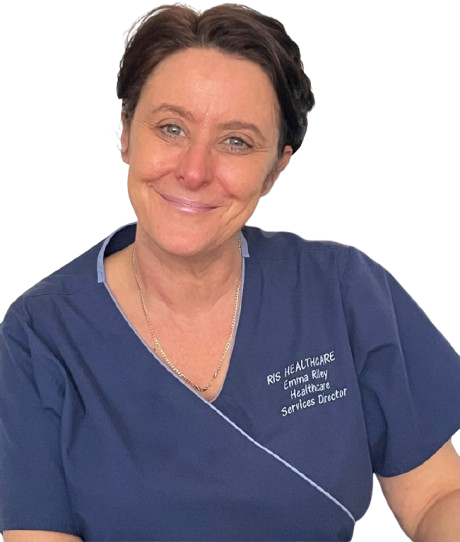
For a large part of my career I have focused on head neck and throat cancer work and have loved every moment of it, often working in multidisciplinary teams. My work now, although it still has a strong focus on head, neck and throat cancers, is based on older person oral care. I experience the challenges that this community of people face on a daily basis – we need to do better and do more.
I am so passionate about the treatment pathways and post-treatment care. It is not hard to see that the system has let people down at times in this regard. Older people being released from the hospital into the community are often seen as bed blockers – this is not acceptable.
This plan, if successful, can only help this group of people. If they can get the care they need on their doorstep; it would be amazing. But whether we have the infrastructure to deliver the promised care is another question.
Red tape
Many will blame the dental contract, but this goes beyond this; red tape is an enormous barrier here, and it shouldn’t be. We should be investing in the oral health team. My work has shown that aspirational pneumonia cases can be reduced by effective oral care. People can be kept out of hospital if effective oral care is adopted as a common practice. Dental nurses are trained, practising and competent professionals – we are so well placed to deliver oral care. So why aren’t we?
When it comes to digitalisation, I can see the benefits, I really can – especially for the professionals involved in what can sometimes be complex care cases. But we must not leave our older people behind. Many do not have the modern gadgets or the means to invest in them. They may not be connected to the internet or may not have the dexterity to use some of the technologies. And of course, some may not have the capacity.
The voices of these wonderful people need to be listened to and heard. We certainly have the potential to create greater disparities and inequalities if we get this wrong. Thought out properly, it could bring huge advantages.
Joined-up thinking
The older community often feel overlooked and a burden. We as a profession tend to focus on early years and not across the life course and this needs to become the focus going forwards. To anyone not invested in oral care for our older population, at least consider the economical stance here.
I am hopeful that this plan means these people will get the care they need and when they need it. We need quicker and better referral systems and better access to care for them. Above all else, it may give them an element of independence back.
Achieving this will need a sustainable infrastructure; it will need joined-up thinking and collaboration beyond dentistry. This could happen through the plan’s proposal of linking dentistry into social care and other areas of healthcare.
I am really excited about this and see it as an opportunity for the profession to invest in the care of our older population, allowing them to benefit from improved nutrition, a smile and effective communication. My ask is that we do not waste this opportunity and that the three shifts have our older population at heart as they evolve. Ultimately we need trained teams and everything that comes with that.
Gemma Forsythe, dental nurse

This recognition is a positive first step, but it must now be matched with concrete action. Dedicated funding must be given to recruitment, retention, fair pay across the board, and genuine, clear progression pathways for dental nurses. Without that, we risk creating a workforce imbalance where nurses, the backbone of every dental team, are not adequately supported.
The proposal to tie newly qualified dentists into NHS service for three years after graduation may help improve access in the short term. But without offering any real incentive or support, it risks becoming a sticking plaster over a much deeper issue.
Dental students face years of study and significant debt. Yet unlike their medical counterparts, they don’t benefit from fully funded training. Expecting them to commit to years of NHS service without any reward – such as tuition fee funding, living cost support, or golden handshakes – feels unfair, and possibly even counterproductive.
If we want to rebuild NHS dentistry in a sustainable way, we need to offer graduates a system they actually want to stay in – not one they’re obligated to remain in. That means making NHS dentistry financially viable, professionally rewarding, and properly supported.
Will changes apply to Northern Ireland?
Meanwhile in Northern Ireland, with no comparable decade-long strategy for dentistry, NHS dental services face critical shortages. Reform is needed that mirrors England’s approach: a funded, long-term workforce and oral health plan to attract and retain both dentists and dental nurses, ensuring communities have consistent access to care.
With practices under pressure and many professionals leaving the system, meaningful reform is essential if we want to attract and retain the dental workforce our communities depend on. We’ve seen progress in other areas of health with decade-long strategies here; dentistry must not continue to be left behind.
Whether in England, Northern Ireland or beyond, oral health is public health. Dental professionals – including dental nurses – deserve to be seen, heard and properly supported in shaping the future.
Follow Dentistry on Instagram to keep up with all the latest dental news and trends.
