

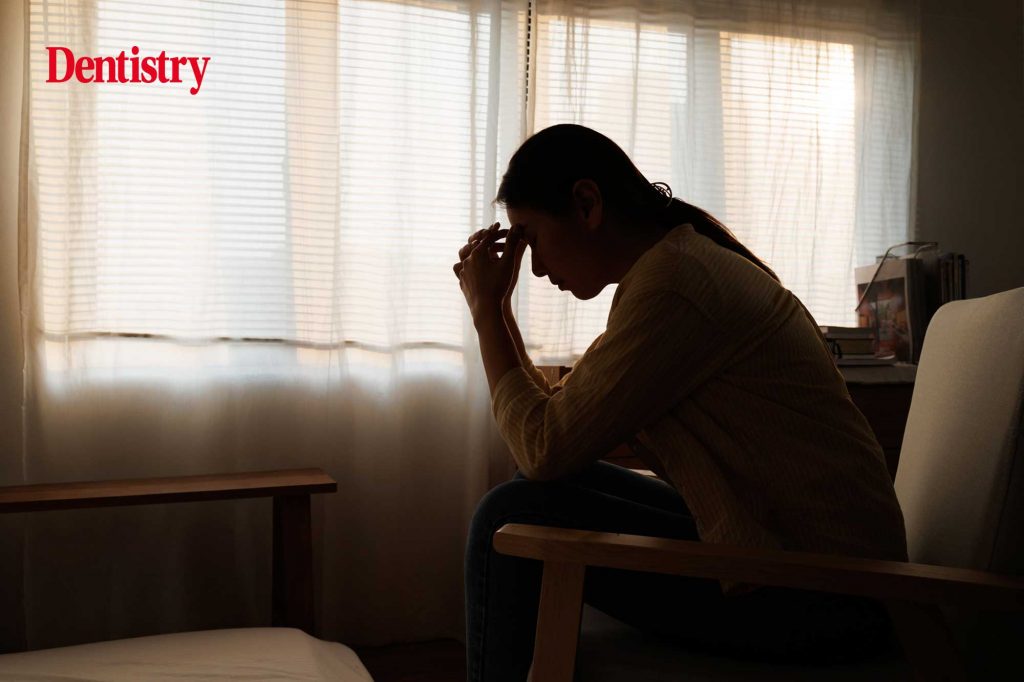
Marium Riaz shares her experience with brain aneurysm, stroke and rediscovering her career path in dentistry in the aftermath.
Dentistry has always been more than a profession to me – it has been a source of joy, purpose, and identity. After 11 years practising in Riyadh, Saudi Arabia, I made a life-changing decision to move to the UK with my seven-year-old son in 2022. I wanted to expand my career by pursuing an MBA in global healthcare management and also be closer to my sister. I never imagined that within two years, my life would change in ways I could never have prepared for.
Before my aneurysm ruptured, I experienced a series of symptoms that, in hindsight, were warning signs. I frequently saw double and suffered from persistent headaches. I visited several doctors – general practitioners and even an ophthalmologist – but no one could pinpoint the cause. On 13 April, my brother-in-law noticed something alarming: the right side of my face looked different from the left. He was worried it might be the beginning of a stroke.
We rushed to A&E, waited for hours, and finally saw a doctor. Despite my concerns and my request for a CT scan, I was reassured that everything was fine. I left feeling uneasy but tried to trust the medical advice.
The next day, everything changed. I became unconscious, and an ambulance took me to the hospital. By the time I arrived, my aneurysm had already ruptured. It was a devastating diagnosis – an aneurysmal rupture followed by three strokes. I remained unconscious for over a month. When I finally woke up, nothing felt the same. My speech was heavily slurred, I couldn’t walk, and I had lost the use of my right side – my dominant side as a dentist.
Life after the rupture
Coming back to consciousness was both a relief and a shock. I had to relearn the most basic parts of daily life. Mobility was a struggle, speech was a struggle, and even recognising myself was a struggle. I still remember the frustration of wanting to speak clearly but hearing only slurred words come out. The feeling of helplessness was overwhelming at times.
It has now been 17 months since my aneurysm ruptured, and although I am much better, the recovery has been far from linear. I walk with the help of a stick, and while my speech is still slower than before, it is much clearer. My right hand remains weaker, which means returning to clinical dentistry is no longer possible. Accepting that reality was one of the hardest parts of my journey.
People often ask me about the recovery process, but the truth is, I am still figuring it out. There is no clear handbook, no predictable timeline, and no definite endpoint. Instead, recovery feels like a series of tiny victories – getting through a conversation without struggling for words, managing steps without fear, or simply recognising how far I’ve come.
I’ve had to learn patience with myself, something I was never good at before. This experience has forced me to slow down, recalibrate, and appreciate progress in all its forms.
Rebuilding my career
Despite the physical limitations, my passion for dentistry hasn’t faded. I passed the license in dentistry (LDS) Part 1 exam before my surgery, and I’m actively looking for remote opportunities that allow me to stay connected to the profession. I believe I still have so much to contribute – whether through administrative roles, case coordination, consultancy, patient support, or practice management.
Looking ahead, I dream of opening my own clinic one day, one that I can manage even if I cannot practice clinically. I want to create a space that reflects my values, my resilience, and my love for the profession.
If I could offer one piece of advice to anyone going through something similar, it would be this: pay attention to your symptoms and trust your instincts. You know your body better than anyone else. And if life does take an unexpected turn, don’t lose hope. This journey can be long, painful, and incredibly challenging – but improvement is possible. You can still rebuild your life, even if it looks different from before.
Before my aneurysm, I wasn’t working in the UK yet, so I did not have an established workplace to rely on. However, since beginning my recovery, I’ve found the dental community to be encouraging and welcoming. Still, I believe more can be done – especially in raising awareness of invisible disabilities, offering flexible or remote roles, and creating pathways for clinicians who, like me, can no longer practice clinically but still have immense knowledge and value to bring.
Today, I am ready to return to work in a new capacity. My journey has changed me, but it has not taken away my determination or my connection to dentistry. I am proud of how far I’ve come, and I am hopeful for what lies ahead.
