

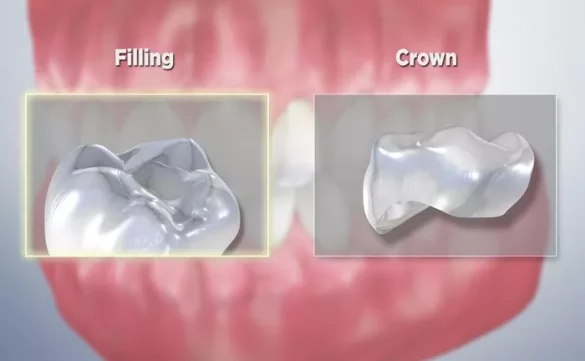
Many patients who visit the dentist often wonder whether getting a crown hurts more than receiving a filling. Both dental procedures are common restorative treatments, but they differ in complexity, duration, and post-procedure sensitivity.
Understanding these differences is important for patients who have concerns about pain management, sensitive teeth, gum disease, and long-term oral health.
Understanding Dental Fillings
A filling is one of the most common dental procedures. It is performed when a tooth is affected by cavities or minor damage.
The dentist removes the decayed portion of the tooth and then replaces it with a material such as composite resin, amalgam, or ceramic. The purpose of a filling is to restore the tooth’s strength and prevent further decay.
Steps Involved in a Filling
The process of getting a filling usually involves numbing the tooth with local anesthesia. The dentist then removes the decay using a drill or laser, cleans the cavity, and places the filling material. The procedure is often completed within 30 minutes to an hour.
Pain Level in a Filling
Most patients experience minimal pain during a filling because local anesthesia is effective. However, some individuals may feel pressure or vibration during drilling. After the anesthesia wears off, temporary sensitivity to hot, cold, or pressure is common. For patients with sensitive teeth, this discomfort may last a few days but usually resolves quickly.
Understanding Dental Crowns
A crown is a dental restoration that covers the entire visible part of a tooth. It is usually recommended when a tooth is severely decayed, fractured, or weakened after a root canal. Crowns can be made from porcelain, ceramic, metal, or a combination of materials. They restore function, improve aesthetics, and protect the tooth from further damage.
Steps Involved in a Crown Procedure
The crown process is more complex than a filling. It typically requires two appointments:
During the first visit, the dentist reshapes the tooth, removes decay, and may build up the tooth with filling material. An impression is taken for the crown.
A temporary crown is placed to protect the tooth while the permanent crown is fabricated.
At the second visit, the permanent crown is cemented in place.
Pain Level in a Crown
The crown procedure involves more extensive tooth preparation than a filling. Local anesthesia is used, so pain during treatment is minimal. However, discomfort may arise from gum irritation, temporary crown sensitivity, or pressure when biting. After the permanent crown is placed, some patients report soreness or mild pain for a few days. If the crown does not fit correctly, pain may persist until adjustments are made.
Comparing Pain: Crown vs Filling
The question of whether a crown hurts more than a filling depends on several factors. Fillings are quicker and less invasive, so the discomfort is generally less. Crowns require more tooth reduction and often involve two visits, which can lead to more prolonged sensitivity. However, both procedures are well-managed with anesthesia and modern dental techniques.
Factors That Influence Pain
Tooth condition: A tooth with extensive decay or infection may hurt more during crown preparation than a simple cavity filling.
Patient sensitivity: People with sensitive teeth are more likely to feel discomfort after both fillings and crowns.
Gum health: Patients with gum disease may experience additional tenderness during crown placement because gums are often manipulated.
Procedure duration: Fillings are shorter, while crowns require more chair time, which can increase anxiety or discomfort.
Managing Pain After a Filling
Pain after a filling is usually mild and temporary. Dentists may recommend avoiding very hot or cold foods until the sensitivity subsides. Over-the-counter pain relievers can help manage discomfort. If pain persists beyond a week, it may indicate an underlying issue such as bite misalignment or infection.
Managing Pain After a Crown
After crown placement, patients may feel soreness around the gums and jaw. Temporary crowns are especially prone to sensitivity. Dentists advise patients to avoid sticky or hard foods until the permanent crown is cemented. Proper bite adjustment is crucial, as an uneven crown can cause persistent pain. In some cases, root canal treatment may be required if the nerve remains inflamed.
Role of Gum Disease and Sensitive Teeth in Pain Perception
Gum disease and sensitive teeth play a major role in how much pain a patient experiences. Inflamed gums are more likely to bleed and feel sore during both fillings and crowns. Patients with enamel erosion or dentin hypersensitivity may find crown procedures particularly uncomfortable. Dentists often recommend desensitizing toothpaste, fluoride treatments, or protective sealants to reduce pain risk.
Long-Term Comfort with Fillings and Crowns
When properly placed, both fillings and crowns provide lasting relief from dental problems. Fillings typically last 5 to 15 years depending on the material, while crowns can last 10 to 20 years with proper care. Pain after the initial healing phase is uncommon unless secondary decay or gum disease develops.
When to See a Dentist About Persistent Pain
If pain after a filling or crown does not improve within one to two weeks, patients should consult their dentist. Persistent pain could signal issues such as high bite pressure, cracked tooth, infection, or gum complications. Early evaluation helps prevent further problems.
Conclusion
In summary, getting a crown may cause more discomfort than a filling because of the procedure’s complexity and longer recovery. However, both treatments are effectively managed with local anesthesia, and pain is usually temporary. Patients with gum disease or sensitive teeth may feel more discomfort, but modern dental care provides many solutions to minimize pain. Ultimately, the choice between a filling and a crown depends on the severity of tooth damage, not just the level of pain.
