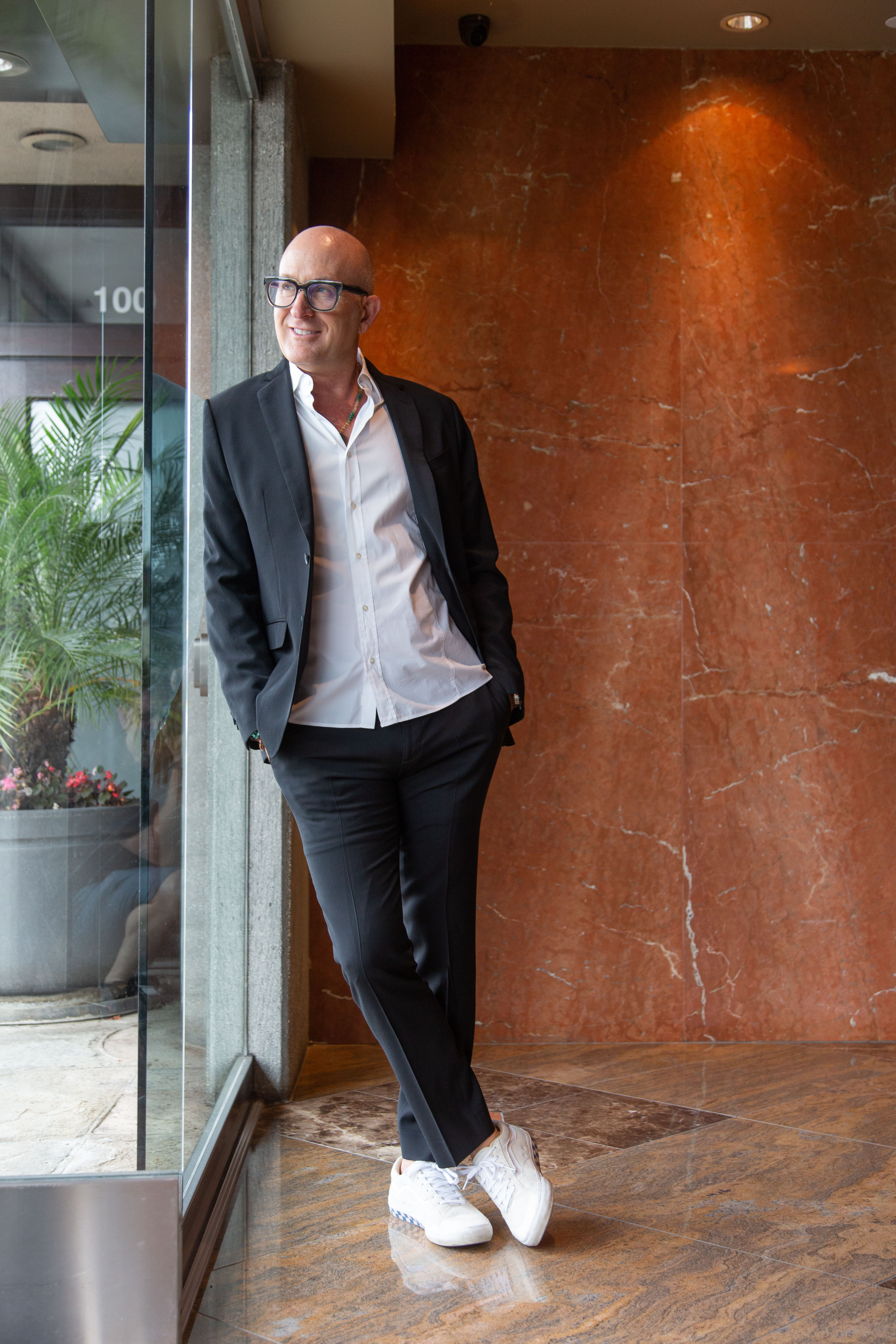
 ,Dr. Michael Fulbright, a Sustaining Member of the American Academy of Cosmetic Dentistry (AACD) and member of many accredited professional boards, has been practicing for 23 years. At his Redondo Beach and Manhattan Beach, CA, practices, he focuses on complete health dentistry, with specialties including cosmetic treatment, full-mouth rehabilitation, and implant surgery. Formerly a dental hygienist, he has designed periodontal protocols over the years, learning from what worked and what wasn’t as effective, and eventually designing a custom soft-tissue management program for the practice. The program has evolved as new technologies and techniques came to light, and patients are treated with a periodontal program based around the severity of the disease. , ,Q: Why do you believe it is important to proactively diagnose periodontal disease?,A: Considering that somewhere around 50% of all Americans have periodontal disease, I think it’s important to recognize it and treat it. We now know, due to the overwhelming evidence from studies, that periodontal disease is not just a link, but has a causational effect and is responsible for a significant percentage of all heart attacks and strokes. As dentists, it’s our duty to recognize periodontal disease, and if you want to make a difference in people’s lives and people’s health, diagnosing and treating periodontal disease is a must for any general dentist or any dentist, for that matter. But being a cosmetic dentist, I can’t do my job properly without having a healthy foundation to start with. We must get the patient healthy before we do veneers or any treatment like that., ,To me, it’s a health issue, and being able to elevate our profession into something equal to our medical colleagues is fantastic, because not too many things in dentistry in the past have been like that. Now we can really have a big impact on people’s health and stop looking at dentistry as just the mouth and really start looking at it systemically. That’s how our whole practice is designed—for systemic health., ,Q: How do you speak to your patients about periodontal disease?,A: I speak to them bluntly, oftentimes. I don’t take it lightly. I don’t use what we call wiggle words and say, ‘Oh, you have a little bleeding here, a little there.’ We have guidelines in our practice that we set and we not only check for pocket depth, but we also check for bleeding points when we’re doing our exams. If a patient has 10 or more bleeding points, even if they have shallow pockets, they have periodontal disease. And I’m pretty frank about it—I tell them how concerned I am that they have this, that it’s an infection, a disease, and they need therapy. We use different language in our practice that doesn’t make it seem like we need to do a routine “teeth cleaning.” It’s important, and our whole team is on board. My hygienists are highly trained and take their job very seriously, too. It’s, perio, perio, perio at my practice., ,Q: What obstacles do you face in getting patients to agree to treatment and how do you overcome them?,A: I think that’s the holy grail. That’s what we’re all looking for—how to overcome these obstacles, and the number one reason is money, right? With any procedure that I recommend, we talk about the medical necessity of the treatment in the exam room. I do the diagnosing, I make the recommendations, and as a doctor, I don’t talk about finances. We have treatment coordinators who go over the financials with our patients and we fit it into their lifestyle. Our treatment planners come up with creative ways to make it affordable for them, whether it’s financing or payment plans. I am a fee for service practice, so patients come prepared to pay for their portion of the time of service., ,We’re pretty well versed in talking about money, and that’s probably the biggest obstacle. The other obstacle could be that patients are in denial, and we’re big advocates of taking a lot of intraoral photographs and letting the pictures do the talking so we don’t have to convince somebody that they have this disease. We take no fewer than 4 pictures per patient, every time, and our hygienists show them throughout the appointment, whether they have a healthy mouth or an unhealthy mouth. If they have a healthy mouth, I want them to see that, too, and congratulate them. Oftentimes we will overcome the obstacles by just showing them the pictures and we say nothing and just let them look. Then it’s that awkward moment of silence when they finally say, ‘What are we going to do about that?’ Or they say, ‘This is gross.’ At that moment, I know they are engaged in taking care of their health. When they ask me what the solution is, that’s when I know they bought in. Once we know the patient wants to receive treatment, I let my treatment coordinator take over from there and the patient is on their way to a healthier life., ,So, I think that’s the biggest obstacle, just money, maybe some denial that… It takes good training with a system in place to educate patients and have have them take ownership of what is going on in their mouth, and how to coordinate the financials. , ,Q: How do you incorporate Perio Protect into your treatment protocols?,A: We started Perio Protect several years ago after hearing about it for a couple years. I didn’t really understand what it was because I didn’t have the time to go look into it. I have tried a million other products that are out there and brought them into my protocols without very good success. So, I was maybe in denial at first. I was at a seminar when I learned more about how it works. It seemed really simple. I tried it on myself first, and although I didn’t have periodontal disease, I noticed how much better my gums felt. I saw the whitening effects., ,So, we decided we were going to put that into our STM protocols for our perio patients. We only did it with our moderate to advanced periodontal patients at first. Then I said, well, this is working really well, we’re seeing great results. Next was putting this in the package for our mild periodontal patients. After a while, I said, ‘Heck, what about these healthy patients? Let’s continue to keep them healthy.’ We started recommending Perio Protect for even our healthy prophy patients that we see every 6 months and patients were really receptive to it. Not only is it in our Perio Program and our periodontal maintenance patients, it’s also for our healthy patients. The patients find that the whitening effect is pretty awesome. It’s a slow whitening process, but the teeth look naturally white, and they maintain that whiteness. Also, there’s no sensitivity with the 1.7% hydroxide., ,Patients get two for one—they’ll get healthier and they’ll get whiter teeth. And I think it’s just a win-win. There’s no patient in our practice that doesn’t get recommended Perio Protect, and it’s been very successful. I have so many great results and success stories.


