


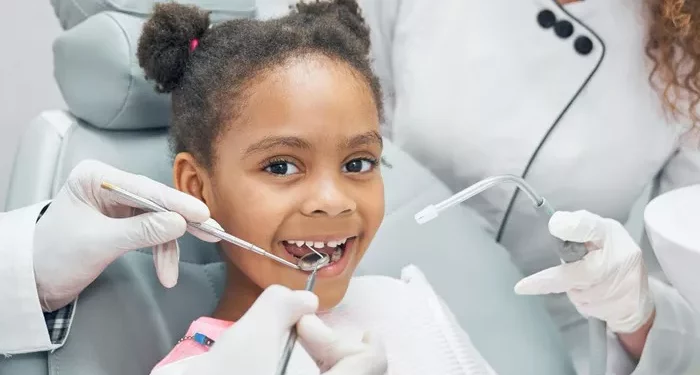
The Eastman Institute for Oral Health (EIOH) has received more than $3 million in grant funding to strengthen its Community Dentistry programs, increasing access to preventive and comprehensive dental care for underserved children and vulnerable populations throughout the Greater Rochester area and across New York State.
“These grants allow us to meet people where they are and remove barriers that prevent them from accessing essential oral health care,” said Dr. Sangeeta Gajendra, DDS, MPH, MS, chair of Community Dentistry and Oral Disease Prevention. “Our goal is to create sustainable systems that support lifelong oral health, whether that’s in schools, clinics, or community settings.”
Expanding Clinical Education and Workforce Development
EIOH was awarded $2.1 million from the Health Resources and Services Administration (HRSA) to develop a community-based training model aimed at two key objectives: increasing dental care access in underserved communities and training dental professionals to care for patients with medically complex conditions and intellectual or developmental disabilities.
The funding will support a two-year Dental MPH/Dental Public Health Residency program, rotations at the Golisano Specialty Care Clinic, and the establishment of an Oral Health Resource Center.
School-Based Dental Programs Improve Access and Outcomes
Many families, particularly those on Medicaid or in under-resourced communities, face challenges accessing consistent dental care. According to the CDC, 18% of children ages 2–5 and 26% of children ages 6–8 in low-income households have untreated dental decay.
For over five decades, EIOH’s SMILEmobile program has brought dental care directly to inner-city schools, treating more than 50,000 children to date. Schools participating in the program have reported improved attendance and academic performance among students.
Under Dr. Gajendra’s leadership, EIOH expanded school-based care to suburban and rural areas through the Building Dental Homes for Schoolchildren (BUDHS) initiative, funded by the New York State Department of Health, the Avantor Foundation, and the RCIPA Foundation. BUDHS establishes small dental clinics within schools, providing exams, x-rays, cleanings, fluoride varnish, and dental sealants. Students requiring more advanced care are referred to local dentists who accept their insurance.
“By connecting families to a dental home and addressing insurance and referral barriers, we’re building a foundation for better oral health well beyond the school years,” Dr. Gajendra said.
Additional support from Bank of America funded a care coordinator to manage referrals, assist families with insurance, and facilitate restorative care, including treatment under sedation when necessary. The coordinator also delivers school-based oral health education. A grant from the American Association of Dental Public Health helped develop SMART-DENT, a web portal that improves communication among parents, school personnel, and dental teams.
In its first two years, BUDHS provided care to 457 children across eight schools, successfully referring 60% to dental homes. The program is set to continue through 2031 and expand to additional schools.
Targeted Care for People Living with HIV/AIDS
People with HIV/AIDS face complex oral health and mental health challenges. Dr. Gajendra and Dr. Scott McIntosh from the URMC Department of Psychiatry are leading research funded by the National Institute of Dental and Craniofacial Research to identify barriers to dental and mental health care for this population.
A related project, supported by the FDI World Dental Federation’s Dental Development Fund, aims to develop a mobile app for people living with HIV/AIDS. The app will provide dental care referrals, oral health education, and resources to manage tobacco use.
Statewide Oral Health Promotion
EIOH also contributes to statewide oral health initiatives with CDC funding in collaboration with the New York State Department of Health. Dr. Gajendra leads projects to improve water fluoridation, care for New Yorkers with Type 2 diabetes, infection prevention, and school-based preventive programs.
“Much of the data we need already exists,” Dr. Gajendra said. “By analyzing it thoughtfully, we can use those insights to guide effective oral health policies and programs statewide.”
The initiative includes the creation of a Water Fluoridation Advisory Group, analysis of oral health indicators, guidance on school reporting systems, and infection prevention resources for dental providers.
“Serving the community has always been central to EIOH’s mission,” said Eli Eliav, DMD, PhD, MBA, director of Eastman Institute for Oral Health. “For more than 100 years, we’ve been the area’s safety net provider. These initiatives demonstrate how education, research, and clinical care come together to remove barriers and create lasting change.”
Tags: dental care