

Abstract
Objectives:
We examined the surface gloss and roughness of a dental composite and human enamel after brushing with a new bioactive glass (BCF201) additive designed to treat dentine hypersensitivity.
Methods
We prepared 2 cohorts of samples: a resin-based composite (RBC) and human enamel. Each cohort received 20 000 brushing cycles with Colgate Optic White Enamel (Colgate Optic), Sensodyne Whitening Repair and Protect (Sensodyne), Colgate Enamel Health Sensitivity Relief (Colgate-EN) with and without BCF201 added or Germiphene Gel 7 HT (Gel 7) with and without BCF201 added. The average gloss and roughness of the enamel and RBC surfaces were measured before brushing and after 20 000 back-and-forth brushing cycles. A linear regression function was applied to the gloss results, and the data were analyzed using ANOVA and a Tukey post-hoc test (α = 0.05).
Results:
After 20 000 brushing cycles, the control (Gel 7) had no significant effect on the gloss or roughness of the RBC. However, the choice of dentifrice had a significant effect on both gloss and roughness (p < 0.001). With respect to RBC, after brushing, surface roughness was ranked from smoothest to roughest: Gel 7 = Gel 7 plus BCF201 > Colgate-EN plus BCF201 = Colgate Optic = Colgate-EN > Sensodyne. With respect to enamel, the smoothest to the roughest surfaces after brushing were: Gel 7 plus BCF201 = Sensodyne = Colgate-EN plus BCF201 > Gel 7 = Colgate Optic = Colgate-EN.
Conclusions:
The bioactive glass additive had no adverse effect on the surface roughness or gloss of human enamel or RBC.
Significance
The addition of BCF201 appears to have a polishing effect on RBC and enamel and reduced the abrasive effects of Colgate-EN on RBC and enamel.
Dentine hypersensitivity produces a sharp pain, sometimes followed by a dull ache. This pain is typically in response to a thermal, tactile, osmotic or chemical stimulus that “cannot be ascribed to any other form of dental defect or pathology.”1 The prevalence of this condition is challenging and difficult to quantify because screening is not routinely conducted, and there are large variations in occurrence.2 However, according to a survey carried out in 2007, 79% of dental professionals believe that the problem of dentine hypersensitivity is increasing.3 In addition to increased pain when the enamel is removed, the exposed dentine surface is rougher than enamel. This roughness increases the adherence of bacteria, further increasing the risk of caries.4-6 Related to the increased surface roughness is an esthetically undesirable decrease in surface gloss.
Patients can treat dentine hypersensitivity using 2 primary methods: nerve desensitization and/or occlusion of the dentine tubules. Potassium salts in some dentifrices can be used to desensitize the nerves in the pulp.2,7,8 Alternatively, fluid movement in dentine tubules can be reduced by either blocking the exposed open tubules or by occluding the tubule from within. Commercial products designed to accomplish this objective may contain particles of strontium acetate, strontium chloride, stannous salts, calcium phosphate, soluble oxalates or bioglasses.2,8,9 The abrasivity and enamel polishing capabilities of dentifrices, especially those containing silica, are highly variable, but those marketed as “whitening” products, especially those containing silica, have been reported to be more abrasive.10 Consequently, the dentifrice is thought to have a greater impact on the surface roughness of resin-based composites (RBCs) than the bristle properties of the toothbrush.11
The dentifrice Sensodyne Repair & Protect (GlaxoSmithKline, Brentford, UK) contains a bioglass (NovaMin) that forms a hydroxyapatite layer to block open dentine tubules.9,12-14 It is believed that the optimum diameter of these bioglass particles should be 1–5 μm because larger particles would not be able to enter into the dentine tubules. Instead, they would sit on the dentine surface where they may be readily dislodged. These particles should also be degradable and, so, minimize any harm to the environment or the patient. Ideally, the particles would also carry a payload of fluoride ions, so that the degradation by-products (including fluoride) would promote the mineralization of apatites, including fluorapatite.
Consequently, we developed an inorganic polymer (BCF201) to reduce dentine hypersensitivity. The particles of BCF201 can enter dentine tubules where they precipitate apatite and occlude the tubules. However, the abrasive nature of BCF201 should be studied. Accordingly, we examined the effects on gloss and surface roughness of adding BCF201 to a commercially available dentifrice on RBC or enamel after toothbrushing. The null hypotheses were that:
- Brushing an RBC surface with a non-abrasive fluoride gel would have no effect on the surface gloss or roughness.
- Brushing an RBC or enamel surface with various commercial dentifrices would not produce an average surface roughness greater than the 200 nm threshold.4
- The addition of BCF201 to a non-abrasive fluoride gel or a commercial dentifrice would not decrease gloss retention or increase the surface roughness after brushing either RBC or enamel.
Materials and Methods
We studied the effects of various dentifrices by measuring gloss and surface roughness before and after brushing 2 cohorts of samples: Filtek Supreme Ultra Universal (3M Oral Care, St. Paul, Minn., USA) RBC and human enamel. The dentifrices chosen for this study were Optic White Enamel (Colgate-Palmolive, North York, Ont., Canada), Enamel Health Sensitivity Relief (Colgate-EN; Colgate) and Repair and Protect, Whitening (Sensodyne); their compositions are shown in Table 1.
|
Dentifrice |
Manufacturer |
Ingredients |
|||||
|---|---|---|---|---|---|---|---|
|
Note: PEG = polyethylene glycol, PPG = propylene glycol, PVP = polyvinylpyrrolidone. |
|||||||
| Gel 7 HT (non-abrasive control) | Germiphene | Sodium fluoride 1.10 w/w, water, glycerin, potassium sorbate, methyl paraben, polysorbate 80, sodium saccharin, acrylic polymer, sodium hydroxide, xanthan gum | |||||
| Optic White Enamel | Colgate | Sodium monofluorophosphate, propylene glycol, calcium pyrophosphate, glycerin, PEG/PPG 116/66 copolymer, PEG-12, PVP, silica, flavour, sodium lauryl sulfate, tetrasodium pyrophosphate, hydrogen peroxide, disodium pyrophosphate, sodium saccharin, sucralose, BHT | |||||
| Enamel Health, Sensitivity Relief | Colgate | Sodium fluoride, potassium nitrate, polyethylene glycol, tetrasodium pyrophosphate, anethole, benzyl alcohol, blue 1, cellulose, cellulose gum, cocamidopropyl betaine, glycerin, silica, mica, PEG-12, sodium lauryl sulfate, sodium saccharin, sorbitol, titanium oxide, xanthan gum, zinc phosphate tetrahydrate | |||||
| Repair and Protect, Whitening | Sensodyne | Calcium sodium phosphosilicate, monofluorophosphate, glycerin, sodium bicarbonate, silica, silicon dioxide, PEG, calcium carbonate, tetrapotassium pyrophosphate, potassium nitrate, sodium tripolyphosphate, cocoamidopropyl, potassium chloride, dodecyl sodium sulfate, quartz, zinc citrate, flavour, xanthan gum, alumina, carboxymethylcellulose, sodium hydroxide, L-menthol, tin (II) fluoride, trisodium phosphate dodecahydrate, sodium fluoride, tocopheryl acetate, trisodium phosphate, citric acid, D-panthenol, propylparaben, sodium benzoate, sucralose, butylated hydroxyanisole, butylated hydroxytoluene | |||||
The bioactive inorganic polymer BCF201 was synthesized using published methods15 by IR-Scientific (Halifax, NS, Canada) and was subsequently mixed into Colgate-EN. This dentifrice was chosen because it has a relative dentine abrasion value of 130–135,16 and it is claimed to reduce sensitivity by nerve desensitization. Gel 7 HT (Gel 7; Germiphene, Brantford, Ont., Canada), a non-abrasive neutral pH fluoride gel was used as a control, with and without the addition of BCF201.
We did not add BCF201 to Sensodyne, as we considered that it would have an adverse effect on this product, which already contains 5% (weight) NovaMin; BCF201 was also not added to Optic White, as this product is not intended for sensitivity relief, but, as a whitening product, would provide valuable comparative insights into the loss of gloss resulting from abrasion. BCF201 was added at 5% (weight) to Colgate-EN and water or 5% (weight) to Gel 7 (control) just before use to ensure a fresh mix for the study.
Filtek Supreme Ultra Universal restorative, shade A2B, was light-cured in a 12.7-mm diameter, 2-mm thick metal split-mold. Mylar sheets were placed above and below the mold, and glass plates were used to press the RBC flat and squeeze out any extra material. The specimens were exposed to light from a broadband multiwave LED light-curing unit (Valo Grand, Ultradent Products, South Jordan, Utah, USA) for 20 s on the standard-setting so that the specimens received 26 J/cm2. This was more than 3 times the minimum radiant exposure (8 J/cm2) recommended in the manufacturer’s instructions.17 Thus, the 2-mm-thick RBC was considered to be well polymerized. Excess material was removed by hand before mounting the specimens for brushing. Samples were stored at 37°C in the dark for a minimum of 24 h before use. A total of 90 disks of RBC were made, and they were randomly divided into 6 groups with 15 disks in each group.
After receiving Dalhousie Ethics Board approval (2015-3632), 90 unrestored extracted human maxillary incisors were mounted in acrylic resin and stored in water until use. Because of privacy concerns, the gender, age and reasons for extraction of these teeth were not known. The surface of the enamel was prepared by polishing with first 600, then 800 and finally 1200 grit sandpaper with copious water coolant to produce a flat, smooth enamel surface. Final polishing was carried out on cloth pads with 3-µm and then 0.3-µm alumina oxide powder slurries (Buehler Ltd., Lake Bluff, Ill., USA). Each polishing step lasted approximately 1 minute with pressure applied by hand. The teeth were then randomly divided into 6 groups, each containing 15 teeth.
Both the enamel and the RBC were brushed mechanically using a custom-made brushing machine (Ultradent Products), which could brush 10 samples simultaneously.18 Ultrasoft toothbrushes (GUM 459PC; Sunstar, Guelph, Ont., Canada) were used, and a load of 176 g was applied during brushing; the toothbrushes were replaced after 10,000 brushing cycles (1 cycle = 1 back and forth movement or 2 strokes). The brushing unit moved the toothbrushes in a horizontal, back-and-forth motion across the RBC surface, while the specimens also rotated. This ensured uniform brushing of the entire surface of the specimens that were covered with a 3 mm deep slurry made of a 5:8 weight ratio of dentifrice:distilled water.18 The positions of the dentifrice in the brushing machine were randomized and changed each time the machine was used. The samples were rotated to a different position every 2500 brush cycles while ensuring that the sample was brushed with the same dentifrice each time it was moved. A new slurry of dentifrice was used after measuring the gloss at each point. The samples were brushed for a total of 20 000 brushing cycles (40 000 strokes), which represents approximately 2 years of toothbrushing.19-21
Measurement of Gloss and Roughness
Gloss was measured at 0, 5000, 10 000, 15 000 and 20 000 brushing cycles. After removing the samples from the machine, they were sonicated in deionized water for 10 minutes and blot dried before their gloss was measured using a calibrated glossmeter (Novo-Curve G, Rhopoint Instruments, Hastings, UK).18,22 Surface gloss was measured at 3 random points to create an average value for the entire surface.
Surface roughness was measured using an atomic force microscope (AFM;nGauge, ICSPI Corporation, Rev. 1.0, Waterloo, Ontario, Canada) at 3 positions on each sample before and after 20 000 brushing cycles. The average roughness (in nm = the mean of the absolute departures of the roughness profile from a line that was 25 μm long) of the surfaces was measured, data were analyzed using Gwyddion open-source software and the values were compared using ANOVA and Tukey post-hoc tests (α = 0.05). In addition, a linear regression function was applied to the results.
Selected RBC and enamel specimens that represented the average roughness for each group were sputter-coated with gold/palladium and examined with a field emission scanning electron microscope (SEM; Hitachi S-4700; Hitachi, Schaumburg, Ill., USA). A magnification of 5000× was used to approximate the same viewing area as in the AFM images (25 × 25 µm).
Results
The mean gloss value for each substrate, before and after brushing, is shown in Figures 1A and B and Table 2. The ANOVA and Tukey’s post-hoc tests carried out on the gloss values after 20 000 brushing cycles of RBC versus enamel showed that the substrate affected the results. The gloss values also differed with dentifrice (ANOVA p < 0.01). When the same test was carried out on the roughness values, the substrate affected the results for all dentifrices, except Gel 7 with the BCF201 additive.
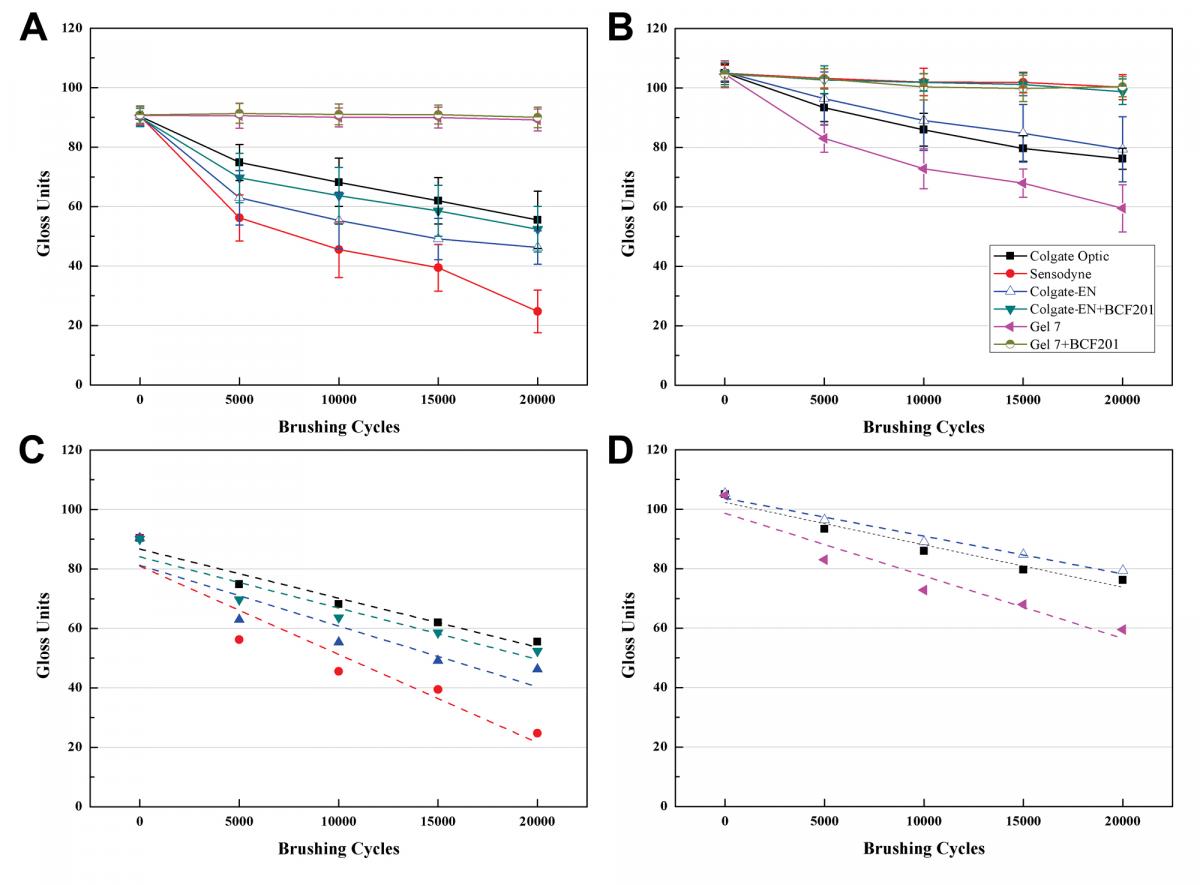
Figure 1: Mean gloss values (± standard deviation) for surfaces of resin-based composite (A) and human enamel (B) before brushing and after brushing for 5000, 10 000, 15 000 and 20 000 cycles with a variety of dentifrices (n = 15 in each group). Near-linear fits apply to dentifrices that produced gloss values after brushing resin-based composite (C) and enamel (D) samples. No fit was possible where there was no decrease in gloss.
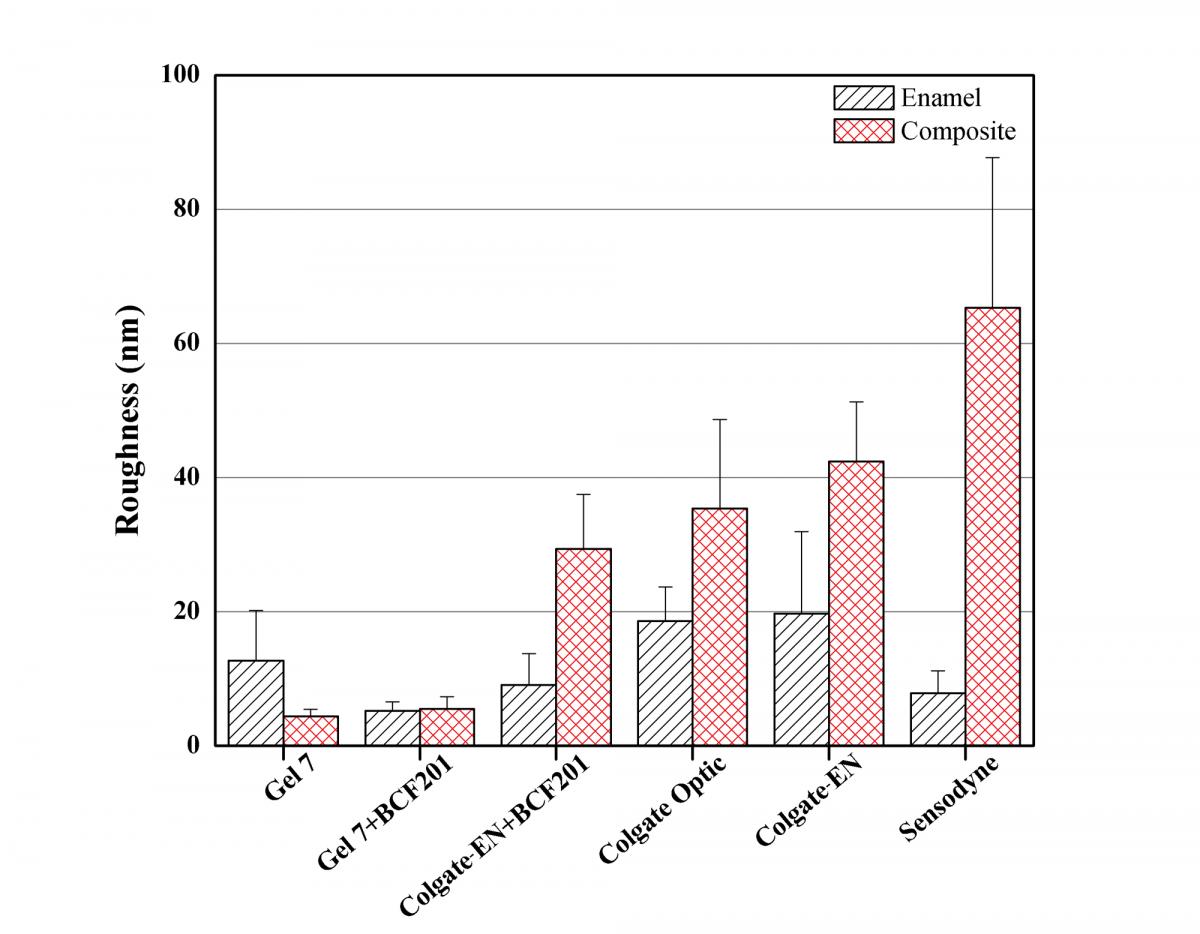
Figure 2: Mean surface roughness (± standard deviation) of resin-based composite and enamel surfaces after 20 000 brushing cycles (n = 15 specimens per group).
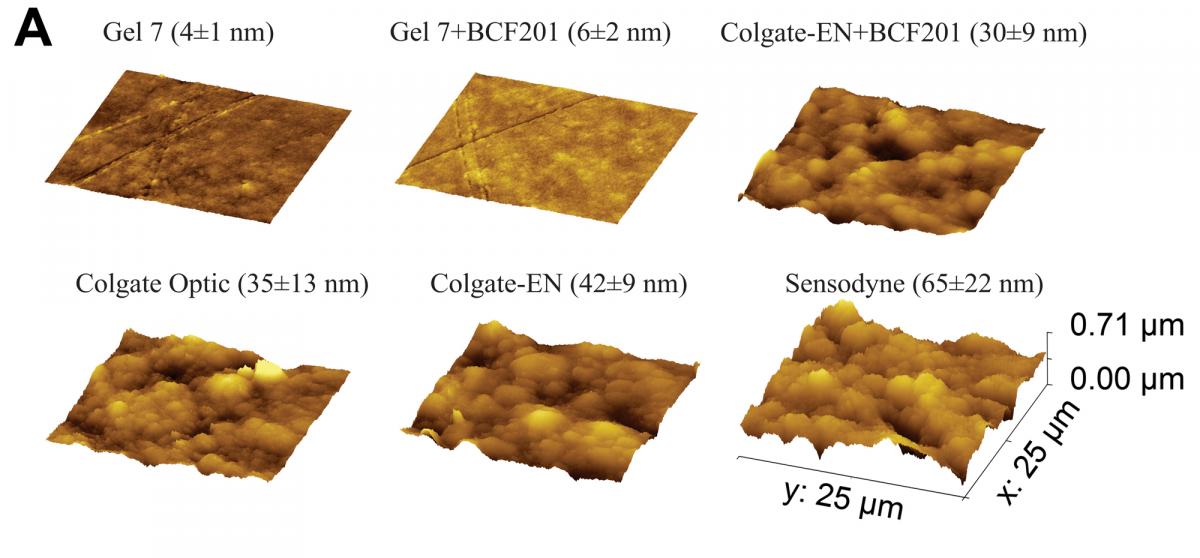
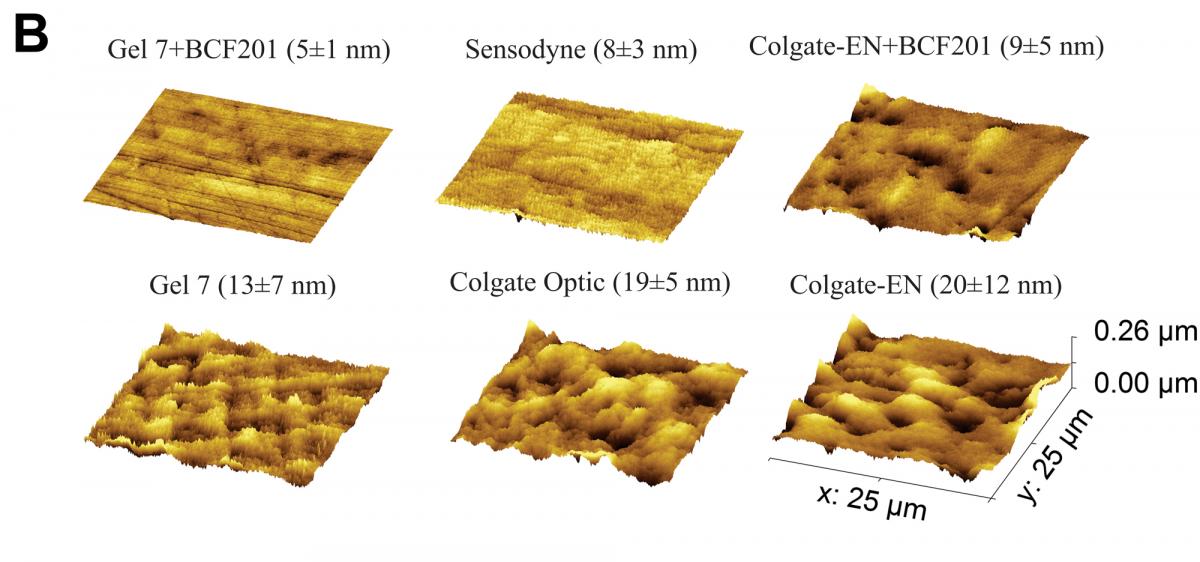
Figure 3: Representative atomic force microscope images of resin-based composite (A) and enamel (B) samples brushed with different dentifrices for 20 000 cycles. Mean roughness and standard deviation are shown in parentheses (n = 15 specimens per group). Images are placed in order of increasing mean roughness and scaled to the roughest result for each surface. Images are 25 × 25 µm.
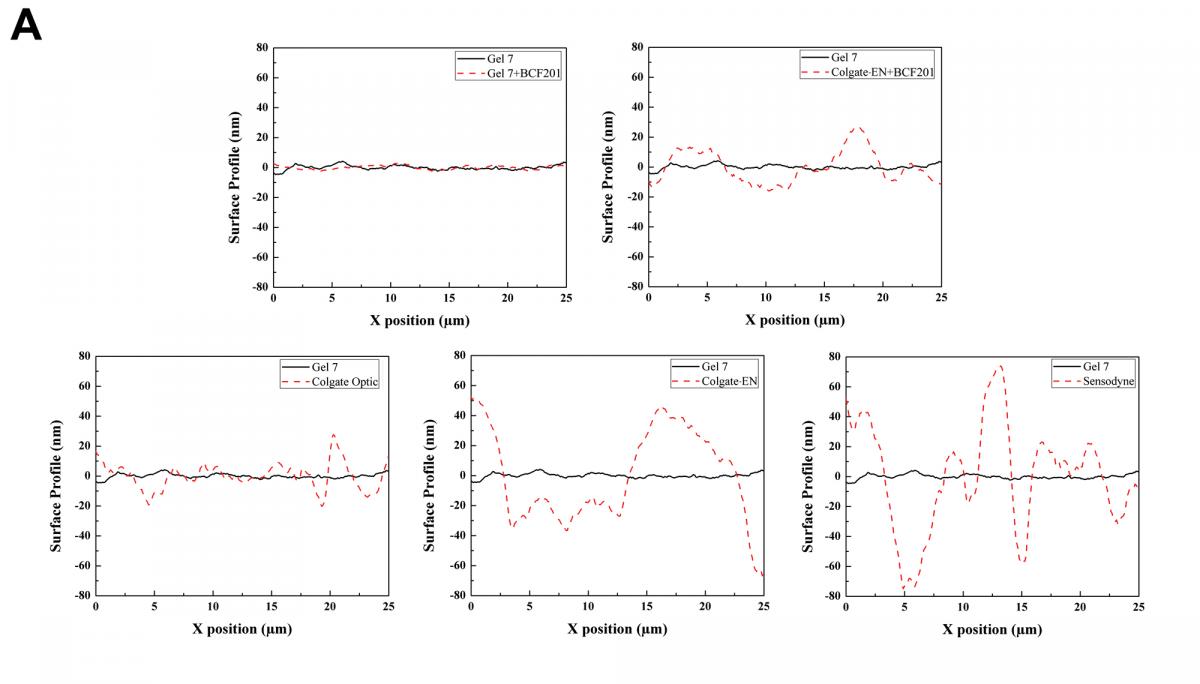
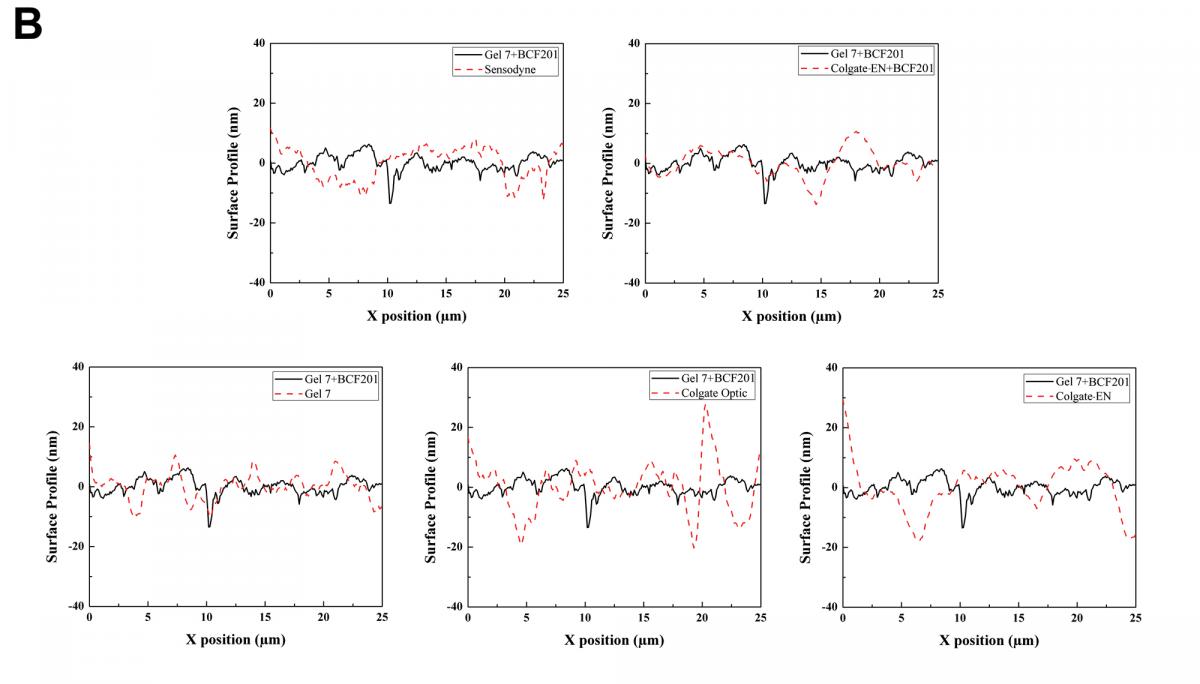
Figure 4: Line profiles extracted from representative atomic force microscope images of resin-based composite (A) and enamel (B) samples brushed with different dentifrices for 20 000 cycles. Plots show the line profile of each dentifrice compared to the line profile of the dentifrice that produced the smoothest surface for that substrate.
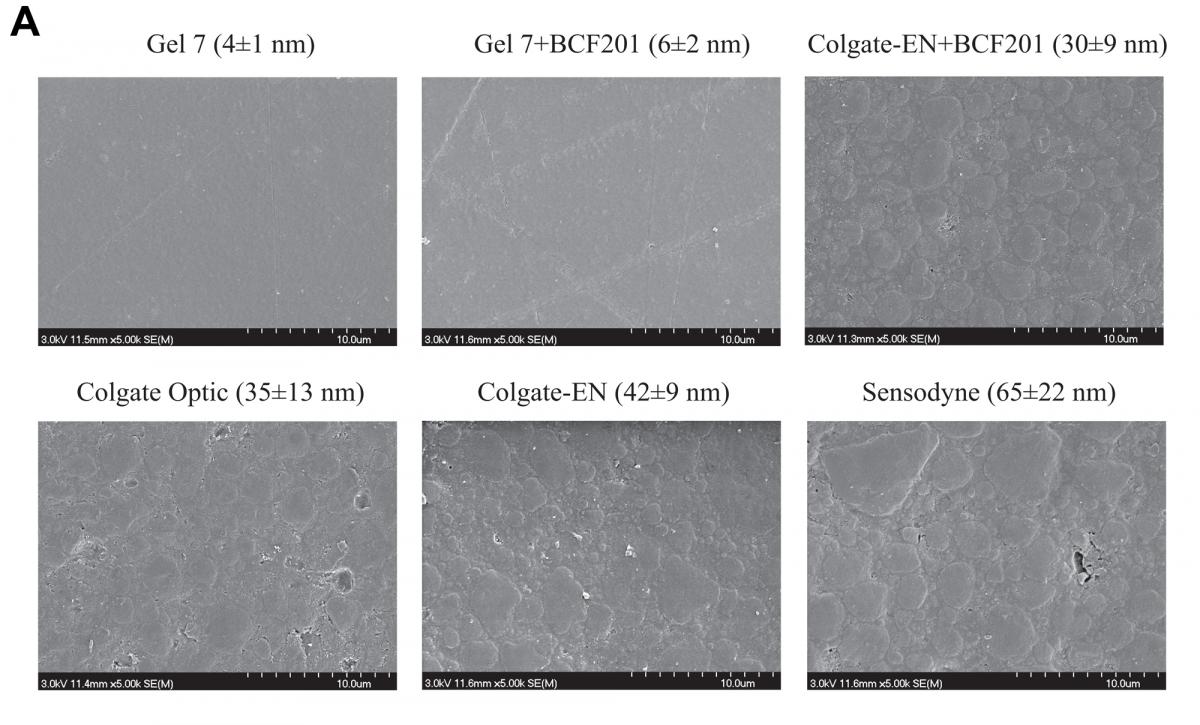
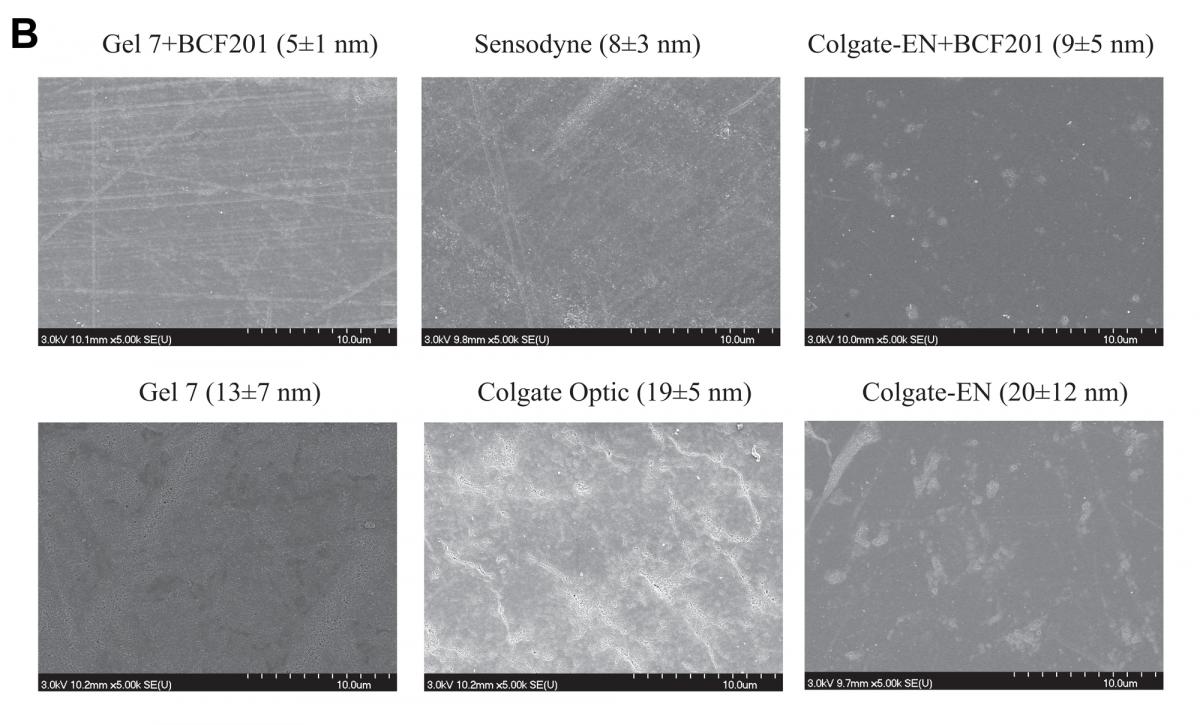
Figure 5: Scanning electron microscope images of representative samples of resin-based composite (A) and human enamel (B) after 20 000 brushing cycles (5000× magnification). Images approximate the same viewing area as in the atomic force microscope images (25 × 25 µm). Mean roughness values and standard deviation are in parentheses. The images are presented in order of increasing roughness for each sample type.
|
Sample |
Brushing cycles |
Gel 7 (control) |
Gel 7 + BCF201 |
Colgate Optic |
Colgate-EN |
Colgate-EN + BCF201 |
Sensodyne |
|---|---|---|---|---|---|---|---|
| RBC | 0 | 91 ± 3 a,1 | 91 ± 3 a,2 | 90 ± 3 a | 90 ± 3 a | 90 ± 3 a | 91 ± 3 a |
| 5000 | 91 ± 4 a,1 | 91 ± 3 a,2 | 75 ± 6 | 63 ± 9 c | 69 ± 8 b,5 | 56 ± 8 d | |
| 10000 | 90 ± 3 a,1 | 91 ± 3 a,2 | 68 ± 8 b,3 | 55 ± 1 | 64 ± 10 b,5 | 46 ± 9 6 | |
| 15000 | 90 ± 3 a,1 | 91 ± 3 a,2 | 62 ± 8 c,3 | 49 ± 7 4 | 59 ± 9 c,5 | 39 ± 8 6 | |
| 20000 | 89 ± 4 a, 1 | 90 ± 3 a,2 | 56 ± 10 b | 46 ± 6 b,4 | 52 ± 7 b | 25 ± 7 | |
| Enamel | 0 | 105 ± 5 a | 105 ± 4 a,3 | 105 ± 3 a | 105 ± 3 a,5 | 105 ± 4 a,8 | 105 ± 3 a,9 |
| 5000 | 83 ± 5 | 103 ± 3 a,3 | 93 ± 5 b | 96 ± 9 b,5,6 | 103 ± 5 a,8 | 103 ± 3 a,9 | |
| 10000 | 73 ± 7 1 | 100 ± 4 a,3 | 86 ± 6 b,4 | 89 ± 10 b,6,7 | 102 ± 3 a,8 | 102 ± 5 a,9 | |
| 15000 | 68 ± 5 1,2 | 100 ± 4 a,3 | 80 ± 4 b,4 | 85 ± 10 b,7 | 101 ± 4 a,8 | 102 ± 3 a,9 | |
| 20000 | 60 ± 8 2 | 100 ± 3 a,3 | 76 ± 4 b | 79 ± 11 b,7 | 99 ± 4 a,8 | 100 ± 4 a,9 |
Effect of Dentifrice on Gloss
The addition of BCF201 to the Gel 7 fluoride dentifrice did not alter its effect on the gloss of the RBC samples (Table 2). Ranking gloss retention on RBC of each dentifrice from best to worst, Gel 7 = Gel 7 plus BCF201 > Colgate-EN plus BCF201 = Colgate Optic = Colgate-EN > Sensodyne. Using a linear regression function (Figure 1C), the relative ranking of the effect on the gloss for each dentifrice on RBC from the least to the greatest was Colgate Optic < Colgate-EN with BCF201 < Colgate-EN < Sensodyne.
The effect of each dentifrice on gloss retention on enamel was ranked from least to worst: Gel 7 plus BCF201 = Colgate-EN plus BCF201 = Sensodyne > Colgate-EN = Colgate Optic > Gel 7. Figure 1B shows that the addition of BCF201 to Gel 7 improved its overall gloss retention on enamel (p < 0.05). Brushing with Sensodyne was statistically equivalent to when BCF201 was added to Colgate-EN and provided the highest levels of gloss retention after 20 000 brushing cycles. Using a linear regression function (Figure 1D) to estimate a relative ranking of the rate of gloss loss on enamel for each dentifrice, there was a small, but statistically significant, decrease in enamel gloss over the 20 000 brushing cycles from the least to the greatest loss: Colgate-EN < Colgate Optic < Gel 7.
Effect of dentifrice on Roughness of RBC and Enamel
The average surface roughness of each substrate before and after 20 000 brushing cycles is shown in Figure 2 and Table 3. The control (Gel 7) had no discernible effect on the roughness of the RBC. Of note, Gel 7 plus BCF201, Sensodyne and Colgate-EN plus BCF201 did not affect the roughness of the RBC after 20 000 brushing cycles. This agrees with the gloss data. The effect of the dentifrices on RBC roughness was ranked from the least to the greatest: Colgate-EN plus BCF201 = Colgate Optic = Colgate-EN > Sensodyne. With respect to the enamel surfaces, the effect of each dentifrice was ranked from least to greatest: Gel 7 plus BCF201 = Sensodyne = Colgate-EN plus BCF201> Gel 7 = Colgate Optic = Colgate-EN Gel 7 > Colgate Optic = Colgate-EN.
|
Sample |
Brushing cycles |
Gel 7 (control) |
Gel 7 + BCF201 |
Colgate Optic |
Colgate-EN |
Colgate-EN + BCF201 |
Sensodyne |
|---|---|---|---|---|---|---|---|
| RBC | 0 | 7 ± 2 a | 7 ± 3 a,1 | 9 ± 3 a | 8 ± 2 a | 9 ± 4 a | 9 ± 3 a |
| 20000 | 4 ± 1 a | 6 ± 2 a,1 | 35 ± 13 b | 42 ± 9 b | 30 ± 9 b | 65 ± 22 | |
| Enamel | 0 | 5 ± 2 a | 5 ± 1 a,1 | 5 ± 1 a | 6 ± 2 a | 10 ± 10 a,2 | 6 ± 3 a,3 |
| 20000 | 13 ± 7 b | 5 ± 1 c,1 | 19 ± 5 b | 20 ± 12 b | 9 ± 5 c,2 | 8 ± 3 c,3 |
Average surface roughness after 20 000 brushing cycles was measured using an AFM, which also produced 3D images of the surface topography (Figure 3A and B). From these scans, line profiles were also extracted (Figure 4) to illustrate the differences in a 2D graph. SEM images of the same samples are shown in Figure 5. The 5000× magnification approximated the same viewing area of the same samples as in the AFM images (25 × 25 µm).
Discussion
The objective of this study was to determine whether a new bioactive glass (BCF201) dentifrice additive, that was designed to treat sensitivity, would have any adverse effects on the gloss and roughness of teeth if it were used daily. We examined changes in the surface gloss and roughness of an RBC and human enamel after brushing with the additive. Filtek Supreme Ultra, shade A2B, was chosen as the RBC substrate for the abrasion studies because it has been well studied, and its response in toothbrushing studies has been previously established.18,22,23 Human enamel was used to provide a clinically relevant substrate. Examination of the effect on enamel is also a required part of the abrasion performance characterization of a dentifrice (ISO11609).24 With respect to benchmarking, 3 commercial dentifrices were used in the study. Sensodyne Repair & Protect (with NovaMin) was chosen because it is formulated with a bioactive glass that occludes the dentinal tubules. Colgate-EN was selected because it is promoted for treating sensitivity, and its mechanism of action is related to nerve depolarization and, thus, it does…
