

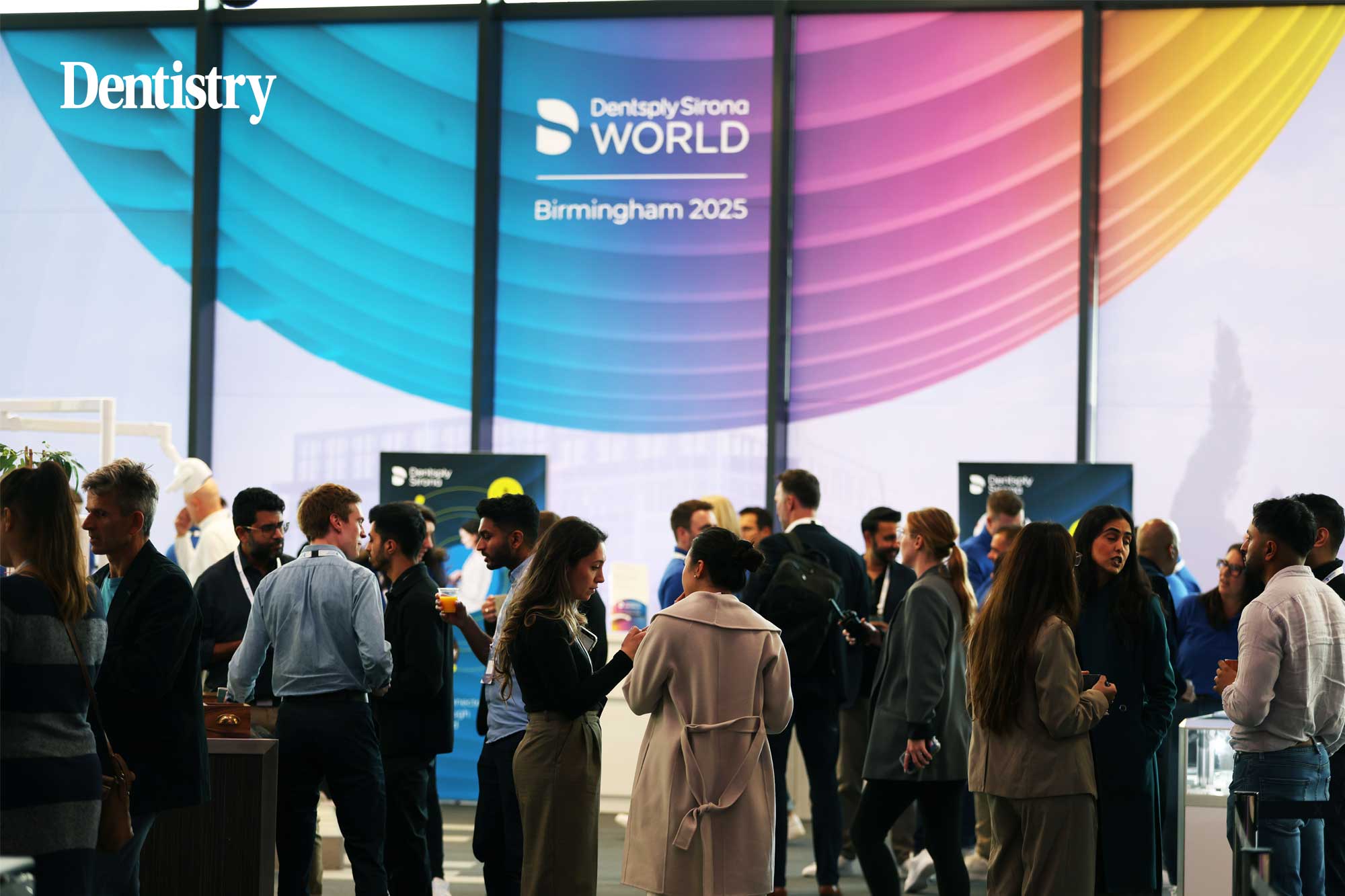
Xavi Carro Fernandez speaks to Guy Hiscott about Dentsply Sirona’s commitment to driving the future of connected dentistry forward.
This year has seen Dentsply Sirona adopting a tagline that talks about experiencing the future of connected dentistry – what does that future look like?
We see ourselves as the leader in this field, so it means a lot to us. The direction of travel in the industry – from products to workflows – has become very obvious over the years, and now it’s becoming even deeper, with those workflows becoming interconnected.
For us, that’s what connected dentistry is all about. We’ve created DS Core – our open, cloud-based platform – and put it at the centre of everything we do to simplify the interaction between workflows and enable an excellent outcome for patients. We’re very focused on what we call the ‘GEO’ concept – growth, efficiency, outcomes – and work to ensure we provide those three things for every single workflow.
First, growth: enabling access and patient conversion to increase high-value treatments. Next is efficiency. Doing things faster than we used to do before, also more precisely and with less repetition: ensuring everything gets done right at the first attempt by standardising high levels of quality. Outcomes refers to patient perception and the medical outcome for the patient regarding the final restoration – it’s about ensuring that the patient has a great experience.
Dentsply Sirona is so closely involved with so many different specialties that it feels as though you’re almost uniquely positioned to bring those together in single platform
Yes, absolutely. Clinical care has traditionally been very fragmented. In the past, dentistry was organised by specialty, rather than around bringing people together. By putting DS Core at the centre, it’s much easier for us to combine every part of a multidisciplinary workflow into a single event and keep the patient at the centre of that. Every clinician gets the same version of the case, regardless of the treatment, region or even business unit that they might be working in.
How important is multidisciplinary collaboration to the DS Core concept – and what are you doing to support it?
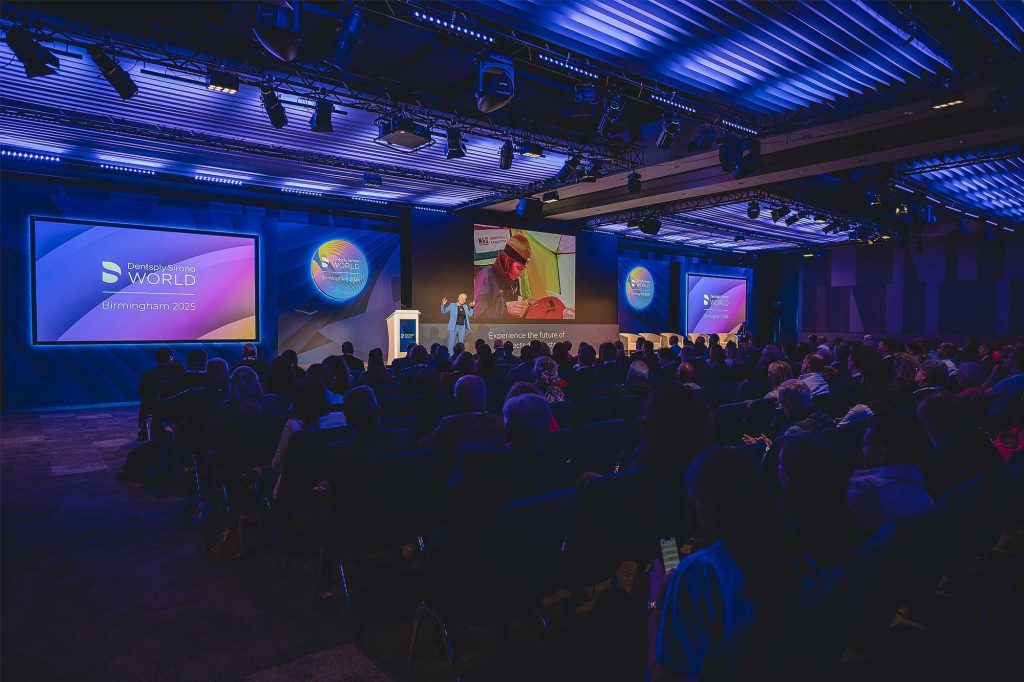
I think that events like DS World are a clear testimony to our commitment to build a community where everybody can feel they are part of a family and receive peer-to-peer training.
We’re a facilitator. We put a lot into building these communities, and DS World is a big part of that. Through these events we’re generating something that offers exactly the same value proposition to visitors, no matter where in the world you attend: a focus on clinical education and interaction, with space for each specialty community to come together but still feel part of something broader and bigger.
That connection is more than a concept, it’s something our community can touch and feel when they come to this event.
There are still some residual barriers to adoption of digital technologies. What are you doing to help drive those barriers down and increase uptake?
I think that there are two main barriers. One is the price of the technology, and the second is adoption of the technology, which is linked to a lack of training.
Some students, I know, are still joining universities where they’re not being taught on the latest equipment: when they join the workforce, they’re encountering more advanced technology than they ever have before.
Our commitment at Dentsply Sirona is to help with that by providing solutions with an intuitive user experience and by preparing events like DS World that offer the proper training in the latest technology, where attendees can learn from the top educators in the world.
When we talk about the cost, our solution is to launch new products that can be part of these workflows, but at lower levels of investment.
Great examples of this are the CEREC Primemill Lite and CEREC Primemill Go – two milling units that are completely different to what’s come before. The price of entry with these is much lower but they’re also filled with excellent features.
So we’re working to reduce both barriers: the price, by launching new products at lower prices, and adoption, by providing the right training to use these tools in new workflows.
The buzz word of the moment is AI – but that has already been working in the background of many dental applications for some time. Are we in the era of refinement, rather than big leaps, when it comes to digital dental workflows?
We’re all a bit surprised about the hype – everyone is talking about AI at pretty much every single congress at the moment.
But remember that 40 years ago CEREC’s original software would make suggestions about how to do certain things, and even 30 years ago we introduced the ‘four click’ proposal for treatment, which was supported by what we would call AI today. So a lot of these solutions have existed in dentistry for a long time – we just called them different things.
When we talk about AI, we think of it in terms of ‘assistive intelligence’: something that supports the skills and knowledge of the dentist.
In the future I genuinely believe these things will be effectively automatic. Very soon we’ll see people interacting with scans or visualising the final solution on tablets without any input needed. The system will suggest the best solution from a clinical perspective based on all the data from cases we’ve done in the past – a unique patient solution offered in an automatic way. Dentists will be empowered to review this and make the final decision, whether it’s to accept or adapt the proposal.
This sort of assistance will help clinicians provide a great solution at a very high standard, based not just on their experience of treating thousands of patients but also on the millions of smiles designed across the globe using CEREC already.
There’s evidently a lot of opportunity – what part of that excites you most?
I think the company does a very good job of generating this culture of disruption. We aren’t leaders in the field by chance: we have always been very focused on innovation.
There are two key elements to this business: strong innovation and strong support in clinical education for customers. Those both come with a lot of responsibility. Everyone is watching what we’re doing, but we see that as a reward, not as a burden. It’s exciting, but what’s more, it helps reinforce our culture of innovation: when you see that people follow what you do, it’s a signal to keep going.
And that’s what we’re doing: we’re going to keep investing in innovation, clinical education and this ecosystem around DS Core, to ensure that it’s at the center of everything clinics want to use in their work in future. We want this platform to be a reference point for the new standard in dentistry.
This article is sponsored by Dentsply Sirona.
