Dr. Sarubin graduated from the University of Maryland School of Dentistry in 1985 and completed his general practice residency at Sinai Hospital of Baltimore. He is currently in private practice at Sarubin Family Dental in Pikesville, MD, and is a second-generation dentist from a family of 12 dentists, all of whom are graduates of the University of Maryland. Dr. Sarubin enjoys all forms dentistry, especially performing sedation and implant dentistry, clear aligner therapy, cosmetic procedures, and sleep apnea treatment. Since the start of his career, he has made it his passion and priority to treat medically and intellectually challenged patients of all ages. He is one of the few general dentists who routinely treats patients under general anesthesia at Sinai Hospital of Baltimore and other area hospitals.
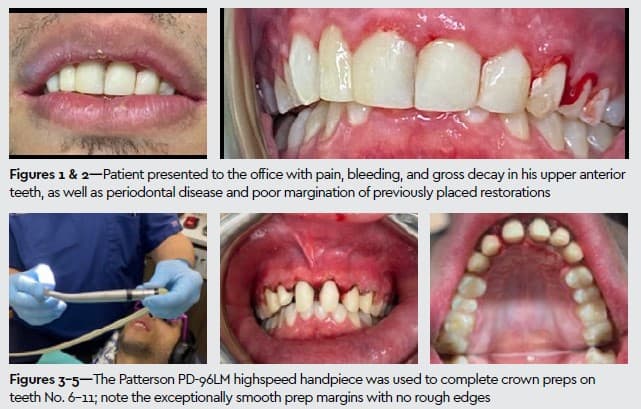
Provisional crowns were made and splinted together for easy placement and removal using a temporary material in shade B1. They were initially shaped and polished with the PD-96LM handpiece using medium- and fine-grit diamond burs, and then with discs and rubber wheels to allow for a healthy, smooth, and shiny appearance. The provisionals were cemented with a non-eugenol cement, the excess cement cleaned away, the teeth flossed, the bite adjusted, and a final polishing was accomplished. The patient was dismissed with home care and postop instructions and given an antiseptic mouthwash, cotton-tipped applicators, and soft picks.
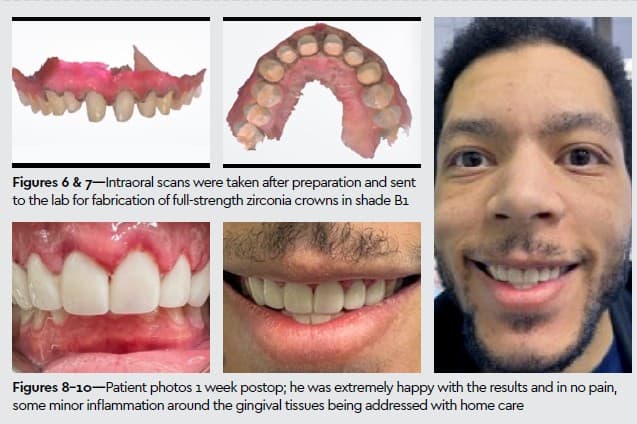
He was brought back 3 weeks later for insertion of the permanent crowns. After sufficient local anesthesia had been obtained, the previously placed provisionals were removed, the teeth and gingiva were cleaned, hemostasis was obtained, and the permanent crowns were tried in. After some adjustments were made using the PD-96LM, the crowns were inserted with a crown-and-bridge cement followed by flossing and bite adjustment. The mouth was irrigated and suctioned dry; the patient was sat upright, and the bite was checked again. At that point, final radiographs were taken to ensure that everything looked great. Once again, home care supplies and instructions were given and reviewed.
The patient returned 1 week later for a postop check. He was extremely happy, feeling great, and in no pain, but still had a little inflammation around the gingival tissues, on which he was diligently working. He will return in 3 months for a recare visit with the hygienist.
A Highspeed Workhorse for Any Job
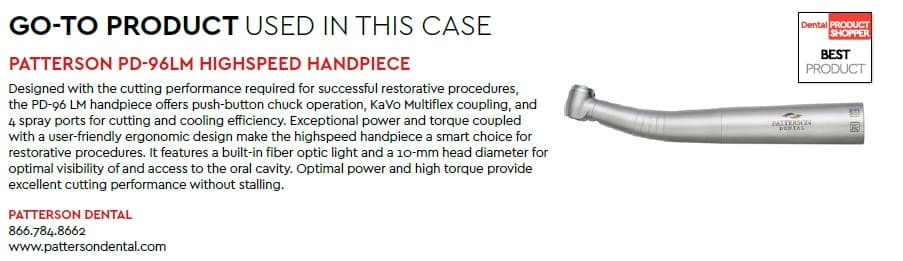
I experienced zero issues when using the PD-96LM handpiece during these preparations, which took some time to complete. The handpiece was quite adept at shaping and polishing the provisionals, as well as adjusting the permanent crowns. The prep margins were perfect and exceptionally smooth with no rough edges. This allowed for a perfect intraoral scan, and the margins were flawless in their fit.
When doing crown and bridge, especially larger cases like this one, it is imperative that you have a great highspeed workhorse that can manage everything from removing old composite and preparing the teeth to making the provisionals and inserting and completing the case. The PD-96LM was all that and then some. I was quite happy with the results, and thankfully, so was my patient!