

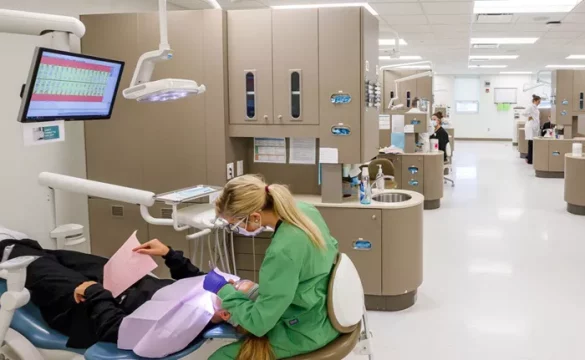
VALPARAISO, IN — HealthLinc, a federally qualified health center in Valparaiso, Indiana, is tackling the region’s dental care staffing crisis with a groundbreaking initiative: its own dental assistant training program. The program is designed to fill critical workforce gaps while expanding access to dental services across Northwest Indiana.
The health center, which operates several dental clinics in the region, has struggled for years with a shortage of dental assistants—key personnel who prepare patients, assist during procedures, manage sterilization, and ensure smooth clinic operations. According to Dr. Isaac Zeckel, HealthLinc’s dental director, the shortage has made it difficult to meet growing patient demand.
“Dental assistants are essential for keeping the clinic running efficiently,” Dr. Zeckel said. “Without them, our capacity to see patients is severely limited.”
The problem predates the COVID-19 pandemic but was exacerbated by a scarcity of qualified assistants. Private dental practices, often able to offer higher wages, further complicated recruitment efforts.
To address the gap, HealthLinc launched a four-month training program in 2021, developed by dental educator Lita Gamez.
The program combines classroom instruction with hands-on clinical experience, preparing participants to become licensed dental assistants.
The program is fully funded by HealthLinc, covering tuition, exams, licensure, and supplies. Participants are also paid while they train. Additional support comes from grants provided by the Delta Dental Foundation and Indiana’s Next Level Jobs initiative.
The program has shown remarkable results. Of the 17 dental assistants currently employed at HealthLinc, 12 were trained in-house. The initiative also provides career advancement opportunities. Three dental assistants have progressed to become expanded function assistants, which allows them to perform tasks such as placing fillings—freeing dentists to focus on more complex procedures.
With increased staffing, HealthLinc dentists can see twice as many patients annually, improving care access across the community.
The success of HealthLinc’s program is now being highlighted as a model for other health centers confronting workforce shortages. Dr. Zeckel noted, “Developing in-house training programs is a practical solution for health systems struggling to meet patient needs. Without this program, we couldn’t serve nearly as many patients.”
HealthLinc’s approach demonstrates how innovative workforce development can sustain and expand dental care access, offering a blueprint for health centers nationwide.
