


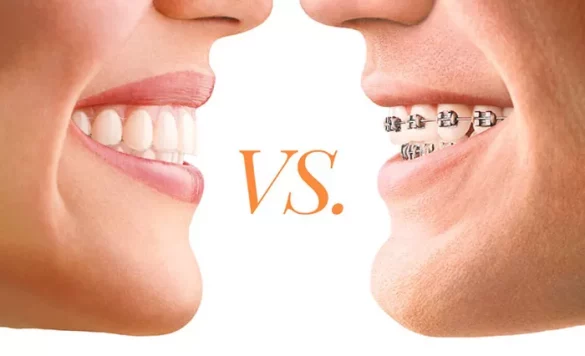
Invisalign is a modern dental solution that uses clear plastic aligners to straighten teeth. These aligners are custom-made for each patient and are nearly invisible. Patients switch to a new set of aligners every one to two weeks, slowly moving their teeth into the correct position.
What Are Traditional Braces?
Traditional braces are metal brackets attached to the teeth and connected by wires and elastic bands. The orthodontist tightens these wires over time to gradually move the teeth. They are visible and often associated with a metallic look.
Appearance and Aesthetic Appeal
Invisalign Offers a Clear Advantage
One of the main reasons patients choose Invisalign is because the aligners are transparent. This makes them barely noticeable, which is ideal for adults and teens who want a subtle treatment option. Invisalign aligners do not affect your smile’s appearance during treatment.
Braces Are More Noticeable
Traditional braces are more visible. Even ceramic braces, which are tooth-colored, can still be noticeable. This can make patients, especially adults, feel self-conscious during social or professional interactions.
Comfort and Daily Experience
Invisalign Aligners Are Smooth and Removable
Invisalign aligners are made of smooth plastic and do not have wires or brackets. This reduces the risk of irritation to the cheeks and gums. The aligners are also removable, allowing patients to eat, drink, and clean their teeth with ease.
Traditional Braces May Cause Discomfort
Braces often cause soreness after adjustments. The brackets and wires can irritate the inside of the mouth, leading to ulcers or cuts. Patients also need to avoid certain foods like sticky candy or hard fruits.
Oral Hygiene and Health Considerations
Invisalign Makes Brushing and Flossing Easier
Since Invisalign aligners are removable, patients can brush and floss normally. This helps maintain better oral hygiene and reduces the risk of cavities and gum disease. Patients with Invisalign generally experience fewer issues with plaque buildup.
Traditional Braces Can Complicate Cleaning
Brushing and flossing around metal brackets can be difficult. Food particles can easily get stuck, increasing the risk of decay and gum disease. Special tools like interdental brushes or floss threaders may be necessary.
Effectiveness in Treating Different Dental Issues
Invisalign Works Well for Mild to Moderate Cases
Invisalign is effective for patients with mild to moderate crowding, spacing, or alignment issues. It can treat overbites, underbites, crossbites, and open bites. However, it may not be the best choice for very complex orthodontic problems.
Braces Are More Powerful for Severe Issues
Traditional braces are highly effective in treating severe malocclusions and complex dental misalignments. They provide better control over tooth movement and are often recommended for children with significant bite problems.
Impact on Speech and Eating
Invisalign Minimizes Speech Difficulties
Most Invisalign users experience minimal impact on speech. Some may have a slight lisp at first, but this usually disappears within a few days. Because aligners are removed during meals, there are no food restrictions.
Braces May Affect Eating and Speaking
With traditional braces, certain foods can damage the brackets or get stuck. Hard and chewy foods are often discouraged. Speech may also be affected temporarily, especially when the braces are first applied.
Cost Comparison and Insurance Coverage
Invisalign May Be More Expensive
The cost of Invisalign typically ranges from $3,000 to $8,000. The price depends on the complexity of the case and the length of treatment. Insurance plans may cover part of the cost, but not all.
Braces Are Often More Affordable
Traditional braces usually cost between $2,000 and $7,000. Many dental insurance plans include partial coverage for braces. This makes them a more budget-friendly option for many families.
Time Commitment and Duration of Treatment
Invisalign May Offer Faster Results
For simple cases, Invisalign may complete treatment in as little as 6 to 12 months. However, this depends on patient compliance. The aligners must be worn for 20 to 22 hours daily for optimal results.
Braces Require Consistent Adjustments
Braces typically require 18 to 36 months to fully correct alignment. They are always working since they cannot be removed, which ensures consistent progress but can be a longer process for some individuals.
Addressing Sensitive Teeth and Discomfort
Invisalign May Be Gentler on Sensitive Teeth
Patients with sensitive teeth often find Invisalign more tolerable. The gradual pressure of aligners is generally less painful than the tightening of braces. There is no metal rubbing against the enamel or gums.
Braces Can Aggravate Sensitivity
Metal brackets and wires can increase discomfort for patients with sensitive teeth. Tooth sensitivity may worsen after adjustments. Cold foods and drinks might become more painful during treatment.
Follow-Up Appointments and Maintenance
Invisalign Requires Fewer Office Visits
Invisalign patients usually visit their orthodontist every 6 to 8 weeks. These check-ups are shorter and simpler. Some providers even offer virtual follow-ups for added convenience.
Braces Need More Frequent Adjustments
Braces require regular adjustments, typically every 4 to 6 weeks. These appointments are essential to ensure the wires are properly guiding the teeth. Missing appointments can delay progress.
Post-Treatment Retainers and Results
Both Require Retainers After Treatment
Regardless of the method, retainers must be worn after treatment to maintain the results. Invisalign often provides a final clear retainer, while traditional braces patients may receive a removable or fixed retainer.
Results Depend on Patient Compliance
Invisalign results greatly rely on wearing the aligners as instructed. Traditional braces remove this variable since they are fixed. Success in either method depends on following the dentist’s guidance.
Which Is Better for Teenagers?
Invisalign Offers Flexibility for Teens
Many teens prefer Invisalign for its discreet appearance and ease of use. Some Invisalign options include blue compliance indicators to help monitor usage. However, responsible wear is essential.
Braces May Be Better for Less Disciplined Teens
For teens who may forget to wear aligners or frequently lose items, braces provide a better solution. Because they are fixed, there is no risk of non-compliance disrupting progress.
Special Considerations for Adults
Invisalign Is Popular Among Adults
Adults often choose Invisalign due to its low visibility and compatibility with work and social life. It also allows for better oral hygiene, which is important for aging teeth and gum disease prevention.
Braces Are Sometimes Necessary for Complex Adult Cases
Some adults require the precise movement only braces can offer. Complex misalignments, bite corrections, or jaw issues may need traditional braces for successful correction.
Conclusion
There is no one-size-fits-all answer to whether Invisalign is better than traditional braces. Invisalign excels in aesthetics, comfort, and ease of cleaning, making it ideal for mild to moderate cases and adults who prioritize appearance and convenience. It is also gentler for those with sensitive teeth or concerns about gum disease.
Traditional braces are often more affordable and more effective for severe or complex orthodontic issues. They may be a better choice for younger patients who need continuous treatment and are less likely to follow removable aligner instructions.
The decision should be made with the guidance of a dental care professional based on your specific oral health condition and lifestyle. Proper dental hygiene and regular dental check-ups are essential during any orthodontic treatment to prevent issues like cavities and gum disease.