

Leading the Charge to Minimally Invasive Endo
/
/
Leading the Charge to Minimally Invasive Endo

Leading the Charge to Minimally Invasive Endo

SS White’s newest rotary file system—when paired with a bioactive, ready-to-use sealer—offers clinicians a streamlined, efficient workflow for more minimally invasive endodontic treatments
 

ximia7jan00.PNG

When SS White introduced Fissurotomy Burs, the world’s first minimally invasive cavity prep burs, more than 2 decades ago, the concept of minimally invasive dentistry was far from having the popularity it occupies today. For many clinicians, the benefits on both sides of the dental chair were still largely unexplored. As a result, the introduction of the now-famous Fissurotomy Burs was literally breaking news and can likely be credited as the beginning of the industry-wide movement to instruments and methods that spare as much natural tooth structure as possible.


Fast-forward to 2025, and minimally invasive treatment is now a proven and popular staple in dental workflows across multiple specialties, from general dentistry to endodontics and periodontics. Clinicians cite a host of benefits, ranging from increased patient comfort and affordability to faster recovery times, reduced complications, improved long-term oral health, less patient anxiety, and higher patient acceptance rates for dental treatment. And judging from the selection of minimally invasive instruments and products available in the dental marketplace today, new treatment applications are likely to increase.


Conserving Tooth Structure


It’s a concept that’s top of mind for Dr. Gregori M. Kurtzman, who believes that dentists today have a better understanding of how important it is to conserve tooth structure and why it’s a critical factor in tooth survival.


“We have developed an understanding that the more tooth structure that is present, especially in the cervical area, the better that tooth can manage loading forces under function,” he shared. “Unfortunately, no dental materials or techniques available today can fully mimic the way a natural tooth handles masticatory forces. With that in mind, minimally invasive techniques have become the standard in dental care.”


Dr. Kurtzman, a dental author, educator, and speaker who practices in Silver Spring, MD, believes it’s critically important for clinicians to choose minimally invasive file systems for their endodontic treatments as well as for general dentistry, and he recalls how endo treatment has evolved over the years, beginning first with the introduction of rotary files.

ximia7jan01.PNG

The First Minimally Invasive File


“Rotary files allowed for easier and more precise instrumentation of the canal system and increased preservation of cervical tooth structure that was not achieved with the old hand files,” Dr. Kurtzman shared. “These files can better follow the canal from the orifice to the apex.”


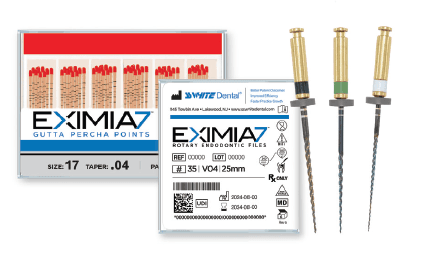
SS White launched the first-ever minimally invasive file in dentistry, V-Taper, which was rebranded to DCTaper in 2019. That popular system was then followed by the launch of the EXACTTaperH DC NiTi file system in 2021. New for 2025 is SS White’s latest contribution to minimally invasive endodontic treatment, the EXIMIA7 rotary file system.


Extreme Flexibility


Offering increased resistance to cyclic fatigue, the cutting-edge EXIMIA7 rotary file system is manufactured with heat-treated NiTi, a feature that increases strength and flexibility, reduces shape memory, preserves canal anatomy during shaping, and allows clinicians to easily follow the canal as they shape.


“EXIMIA7 offers extreme flexibility, reducing shape memory and thus preserving canal anatomy,” said Dr. Kurtzman. “Heat treatment during manufacturing also improves file strength, which decreases the potential for file separation. Additionally, the constant taper and maximum flute diameter of 1 mm allows for minimally invasive preparation, which preserves tooth structure and improves long-term survivability of treated teeth.”
ximia7jan02.PNG

EXIMIA 7: A Complete File System


Offered in both a .04 and .06 constant taper with variable pitch, EXIMIA7 files are also available in 3 lengths—21, 25, and 29 mm—and feature ISO tip sizes from 17 to 45. The files also feature a parabolic cross-section noncutting tip that’s designed to maximize cutting efficiency. A complete file system that includes matching paper and gutta-percha points, EXIMIA7 is a true plug-and-play system, designed to make endo treatments easy and seamless both for general dentists and specialists.


“EXIMIA7’s optimized flute design ensures flexibility, reducing the need for excessive straight-line access and allowing more tooth structure to be preserved,” Dr. Kurtzman added.


PURE-Ca-SEAL: A Bioceramic Seal of Approval


In addition to minimally invasive file systems, the dental industry has also seen a remarkable shift in the development of bioactive sealers, many of which feature properties that do not wash out and decrease the potential for leakage, both factors that play a major role in the success of root canal treatments.


“The benefit of these materials is that they are hydrophilic, and once set, they do not dissolve,” said Dr. Kurtzman. “When placed, the sealer is drawn into the dentinal tubules, providing a better seal of the canal system and its accessory anatomy. These materials also are very biocompatible, so if any sealer is extruded apically, there won’t be an inflammatory reaction.”


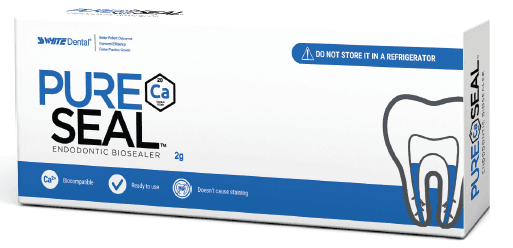
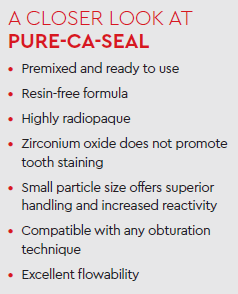
Dr. Kurtzman points specifically to the recent release of PURE-Ca-SEAL. A bio-ceramic root canal sealer that optimizes tissue recovery time, it releases calcium ions to stimulate tissue regeneration, encourage better sealing, and increase integration with surrounding tissues. PURE-Ca-SEAL has a low solubility, which allows it to hermetically seal the root canal system, as well as a high alkaline pH of 12, which encourages bactericidal action.


“Having a premixed sealer ensures that each time it’s used, the same mixture is being placed vs traditional sealers that are mixed from 2 components, sometimes resulting in a situation where each use may not be the exact same mix,” he added.

WhatsApp