

Mastering the Mechanics of Minimally Invasive Dentistry
/
/
Mastering the Mechanics of Minimally Invasive Dentistry

Mastering the Mechanics of Minimally Invasive Dentistry

Using a proven combination of BISCO products helps ensure reliable bonding in a variety of applications—allowing clinicians to provide conservative, long-lasting dental restorations
 

biscodig00.png

You might know how to ride a bicycle, but do you know how it balances on two wheels and propels you forward with every pedal? Similarly, while you may be capable of operating your smartphone, are you well-versed in the ways that the device delivers your text messages and executes your voice commands? In both these scenarios, the majority’s response will likely be a resounding “no.”


However, when it comes to incorporating minimally invasive dentistry (MID) into your routine restorative procedures, Rolando Nuñez, DDS, who is BISCO’s Manager of Clinical Marketing, emphasizes how understanding the mechanics behind the materials used in each case is just as essential to knowing the steps required to get it done.


“If you want to perform MID, you have to learn how dental materials work and understand bonding limitations,” he said. “You not only need to bond to the tooth structure; you also need to bond to the substrate, which could be made out of many different materials. It’s important to understand that you need specific products to bond to each one of those substrates.” 


Luckily, Dr. Nuñez assures clinicians that BISCO offers every possible product that can be used in this unique clinical approach. He said, “Regardless of the type of restoration a doctor chooses, we have a solution that has been proven safe and effective and that provides long-term results.”


biscodig01.png

Preserve Vitality and Structural Integrity


Highlighting the importance of bonding in all MID restorations, as well as being conservative restorations that maintain pulp vitality, Dr. Nuñez explained that MID can help to extend the life of tooth structure through smaller restorations with proper form, function, and esthetics.


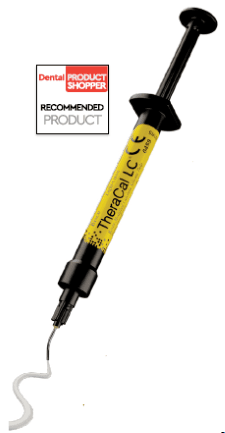
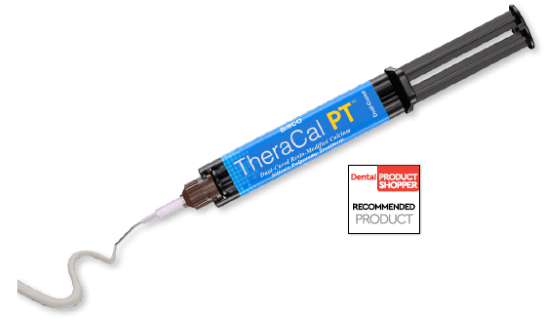
With that, BISCO’s TheraCal LC a resin-modified, calcium silicate material leverages a unique hydrophilic resin matrix that allows for ion exchange and calcium release but is not water-soluble.* TheraCal LC is a light-cured material that can be used for direct/indirect pulp capping and as a base or liner, while TheraCal PT is a dual-cured material designed for pulpotomy treatment. TheraCal PT offers a convenient automix syringe delivery directly into the prep.
biscodig02.png


Versatile, MID-Friendly Materials


Dr. Nuñez also said that there are a few ways MID differs from more traditional restorative methods. “The prep design is different, for example, and you need to be fully trained on bonding to achieve maximum performance of the restoration,” he said. “You’ll also likely need to increase the amount of product you carry. While it can be challenging to implement MID into your practice, it’s rewarding and super fun because it’s a different approach.”


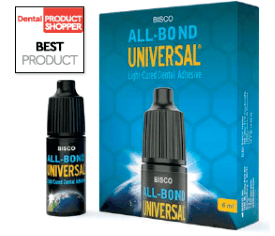
All-Bond Universal effectively simplifies bonding via MID techniques. Its single-bottle delivery system can be used on wet, dry, or moist tooth structure and bond to all substrates, including zirconia. It is applicable across direct and indirect restorations with light, dual, or self-cured materials and all resin cements with no activator required.

biscodig03.png

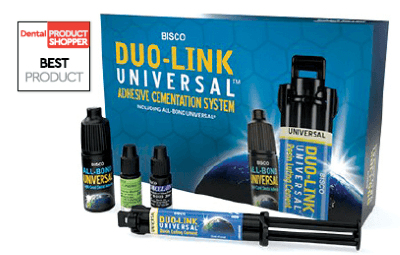
Using this bonding agent in conjunction with Duo-Link Universal, a resin-based, dual-cured cement formulated for luting all indirect restorations, can help clinicians better ensure strong, long-lasting, minimally invasive restorations, too. “It’s a great option when a restoration like an onlay is beyond 1.5 mm thick and there is no way to guarantee a curing light is going to penetrate through it,” Dr. Nuñez said. “This material cures chemically in all areas the light doesn’t reach.”


A Practical, Educational Approach


“Dental schools may still teach more traditional methods, but the MID approach can be more conservative. With proper bonding protocols, great results can be achieved,” Dr. Nuñez concluded. “Everything needs to be bonded, so MID provides a great opportunity to learn about bonding and to use updated techniques and materials.”
biscodig04.png
WhatsApp