

Minimally Invasive Bonding for Maximum Performance
/
/
Minimally Invasive Bonding for Maximum Performance

Minimally Invasive Bonding for Maximum Performance

biscoq1.png

Rolando Nuñez, DDS

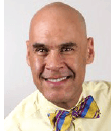
Today’s advanced techniques and products enable clinicians to perform more minimally invasive dentistry (MID), removing the least amount of tooth structure when restoring teeth to proper form, function, and esthetics. While MID isn’t a new concept, the number of materials on the market designed for such techniques is making it easier to accomplish—and that includes bonding products. MID isn’t possible without bonding. Here, Dr. Rolando Nuñez, BISCO’s Manager of Clinical Marketing, talks about why bonding is so critical to the MID approach.
biscoq.png

 Q: Why is bonding so important to minimally invasive dentistry (MID)?


A: One of the biggest, most important things to remember about MID is restorations must be bonded. When removing an old amalgam restoration, most clinicians will think about placing a crown, which is your last resort before extraction and then a bridge or an implant. Now, you can remove the amalgam and do an onlay or an overlay. But for these restorations to last, they have to be bonded. They can’t be luted with traditional glass ionomers or old-school cements. Everything needs to be bonded, so MID provides a great opportunity to learn about bonding and to use updated techniques and materials. 


Q: What are the challenges associated with MID techniques?


A: You need to be somewhat retrained to apply the skills you already have as a dentist. The prep design is different, for example, and you also need to be fully trained on bonding to achieve maximum performance of the restoration. You not only need to bond to the tooth structure, you also need to bond to the substrate, which could be made out of many different materials. If you want to perform MID, you have to learn how dental materials work and understand bonding limitations. You’ll also likely need to increase the amount of product you carry. While it can be challenging to implement MID into your practice, it’s also rewarding and super fun because it’s a different approach. 

biscoq02.png

Q: What do clinicians need to consider when bonding?


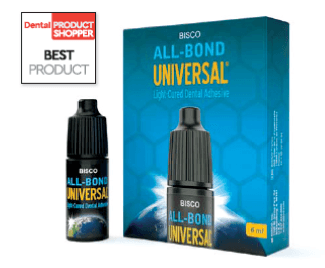
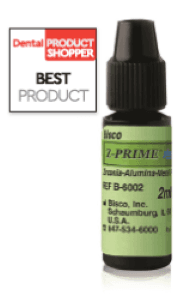
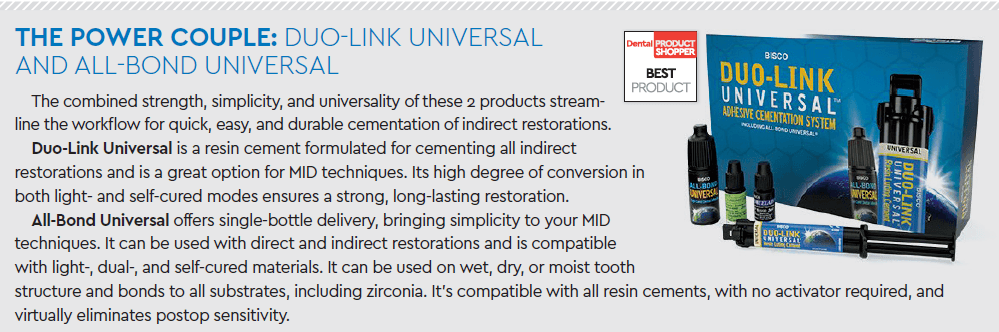
A: Let’s say you want to use lithium disilicate or zirconia—or both—for your restorations. It’s important to understand you need specific products to bond to each one of those substrates. BISCO offers every possible product that can be used in this clinical approach. We have products that can be used in total-etch and self-etch bonding techniques. We have universal bonding agents and dual-cure dental adhesives. BISCO’s 1-bottle All-Bond Universal can be used with any technique, simplifying bonding. We also have primers for specific applications. Z-Prime Plus strengthens bonds to zirconia and metals, for example, while Bis-Silane is perfect for substrates like lithium disilicate and porcelain. ZirClean should be used to clean contaminated zirconia after try-in—a critical step to a successful bond. We also offer dual-cure and light-cure cements. Regardless of the type of restoration a doctor chooses, we have a solution that has been proven safe and effective and that provides long-term results.
biscoq3.png

Q: As a calcium silicate-filled liner, how can TheraCal LC help?


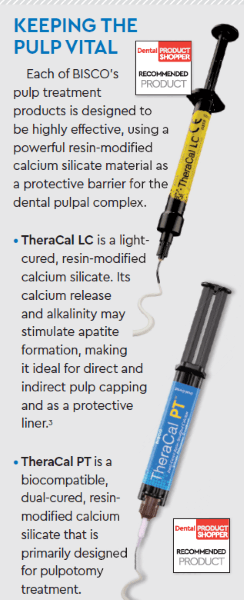
A: When you think about MID, you want to make sure the treatment you apply on the tooth is as conservative as possible, and you want to maintain pulp vitality. TheraCal LC, a light-cured, resin-modified calcium silicate, and TheraCal PT, which was developed for pulpotomy treatment, provide an alkaline pH that promotes pulp health and pulp healing.1,2They generate the right conditions for a successful final outcome. These products keep the pulp vital, and that goes hand in hand with the MID approach.


Q: Where does Duo-Link Universal come into play?


A: Duo-Link Universal is a resin-based, dual-cured cement that should be used in conjunction with a dental bonding agent. It’s a great option when a restoration like an onlay is beyond 1.5-mm thick and there’s no way to guarantee a curing light is going to penetrate through it. This material cures chemically in areas the light doesn’t reach.


Q: Why has MID become such a focus in dentistry?


A: You can extend the life of the tooth by placing restorations that aren’t as large. You don’t have to be as aggressive when prepping the tooth. Dental schools may still teach more traditional methods, but the MID approach can be a more conservative approach. With proper bonding protocols, great results can be achieved.


References

1. ADA definitions for direct and indirect pulp capping: www.ada.org/en/publications/cdt/glossary-of-dental-clinical-and-administrative-ter

2. Okabe T, Sakamoto M, Takeuchi H, Matsushima K. Effects of pH on mineralization ability of human dental pulp cells. J Endod. 2006;32(3):198–201.


3. Gandolfi MG, Siboni F, Taddei P, et al. Apatite-forming ability of theracal pulp-capping material. J Dent Res. 2011;90 (Spec Iss A):abstract number 2520.

biscoq4.png
WhatsApp