


India faces a major public health challenge due to inadequate dental care services, which affects the majority of the country’s population. The majority of Indian citizens live in rural communities, while most dental facilities and professionals are concentrated in urban centers.
Currently, India has a dentist-to-population ratio of 1:10,000, compared to the World Health Organization’s recommended ratio of 1:7,500 clinicians per population, with approximately 80% of Indian dentists practicing in urban areas. A recent report by the Indian Dental Association further highlighted that more than 75% of dental clinics are located in urban or semi-urban areas, serving only about 30% of the population, while the remaining 70% are primarily located in rural areas, with access to less than 25% of the available dental infrastructure.
This rural-urban imbalance, coupled with high poverty rates and low health literacy in rural areas, has resulted in a huge unmet need for oral health care. Studies have shown that these underserved populations have an increasing burden of dental disease, with high rates of caries and periodontal disease. India is known as the “oral cancer capital” of the world due to widespread tobacco use. However, treatment is often not available to people in remote areas or low-income groups; for example, one rural outreach program found that more than 93% of patients had never received any dental care before.
Barriers to dental care in India include remoteness, poor transportation, financial constraints, and social factors. Rural residents may have to travel long distances to reach a dentist, which is made difficult by inadequate public transportation and difficult terrain. The cost of dental treatment in private clinics is prohibitive for people of lower socioeconomic status, causing many to delay or avoid treatment until the problem becomes severe.
Government dental facilities are limited and can only serve a small fraction of patients, while most patients must rely on private practitioners. As a result, untreated dental problems can progress to advanced disease, leading to pain, tooth loss, and even systemic health complications. Innovative strategies are needed to provide oral care to populations that cannot access traditional clinics.
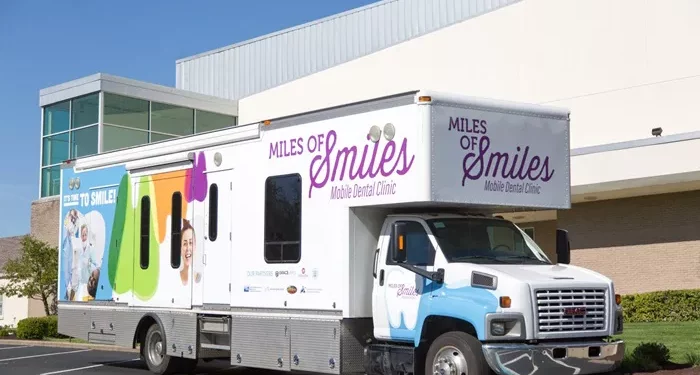
Mobile dental clinics, also known as “mobile dental vans” and “mobile dental units” (MDUs), are an effective way to provide oral care services to underserved areas. These mobile dental clinics provide on-site dental services using specially built trailers, trucks and buses equipped with dental chairs, diagnostic tools and patient care materials.
This mobility enables dental providers to reach patients in remote villages, urban slums, educational institutions and community sites. Mobile dental services overcome physical distance and transportation-related barriers, making healthcare more accessible and cost-effective. These outreach-based interventions are increasingly being implemented not only in India but also globally and are considered a promising solution to address healthcare inequalities.
The concept of mobile dental services is being strongly promoted by the Indian health department and dental institutions. Community dental projects and dental camps are supported by mobile clinics operated by dental colleges, which not only serve residents in remote areas but also provide training platforms for undergraduate students.
The Dental Council of India requires dental colleges to maintain outreach mobile dental units (MDUs) as part of their public health responsibilities. In addition, various government and non-governmental organizations use mobile dental units (MDUs) to provide free oral health care services in poor urban and rural areas. These efforts are in line with India’s broader goal of “universal health coverage” to provide essential oral health care services to marginalized and geographically remote populations.
This narrative review aims to critically explore the role of mobile dental units in bridging the oral healthcare gap in India. The main objectives are as follows: (1) to evaluate the operational effectiveness of mobile dental units (MDUs) in serving underserved populations; (2) to analyze their cost-effectiveness and service coverage compared with traditional clinics; (3) to examine the integration of mobile dental services into existing public health and policy frameworks; and (4) to identify implementation challenges and opportunities for technical and strategic improvements. By integrating existing literature and government program data, this review aims to provide practical insights to guide policymakers, public health planners, and dental institutions in scaling up mobile dental services in an evidence-based and equitable manner.