

A Florida hygienist explains why Enamelast is her top choice for easy and effective fluoride treatments
A registered dental hygienist for over a dozen years, Jessica Raymond-Allbritten, BASDH, CRDH, has sampled hundreds of dental materials over the course of her career, and has seen just about everything when it comes to fluoride varnishes. But no matter how many she’s tried, the Dunedin, FL, hygienist always comes back to Enamelast.
“I like to try new products because research changes and materials improve, but I would say that compared to the new generation of fluoride varnishes that are coming out, Enamelast is superior for many reasons,” she shared. “Even though I’ve tried many others, I keep coming back to this one.”
A Winner for Fluoride Uptake
One key reason Raymond-Allbritten sticks with Enamelast is its high fluoride uptake. In fact, in recent third-party laboratory testing, Enamelast achieved the greatest uptake at both 4 and 12 hours after application compared to leading fluoride varnishes.¹,²
“I’ve tried some newer varnishes, and while patients’ teeth stay slick, I’m not sure if the varnish really stays on, and I worry about fluoride uptake,” she said. “I think Enamelast adheres to the teeth better than any other product.”
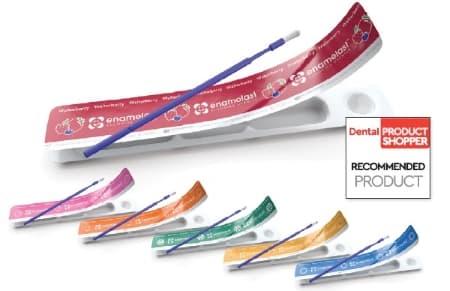
A xylitol-sweetened, 5% sodium fluoride varnish in a resin carrier, Enamelast features a patented adhesion-promoting agent for enhanced retention. With a non gritty texture and nearly invisible appearance, the varnish is dye-, gluten-, and nut-free. It’s available in Cool Mint, Caramel, Orange Cream, Bubble Gum, and Walterberry flavors, as well as a flavor-free option.
No Grit, Clump-Free
“I use the blister pack more often, but the syringe is great for pediatric patients,” Raymond-Allbritten said. “The package is easy to open, even with gloves on, and there’s no grit to it—you can’t see it because it’s clump-free, and it feels smooth on your teeth. I’ve never had an issue with it getting clumpy with saliva, which is another reason why I keep coming back to this product.”
The hygienist treats a high volume of geriatric patients and has seen an uptick in fluoride treatment requests, particularly since her state removed it from drinking water.
“As a proactive, root-cause, preventive practice focused on the oral-systemic link, 90% of our patients are prescribed some form of fluoride,” she noted.
References:
1. McClure H. Fluoride uptake into sound enamel substrate provided by fluoride varnishes and resultant surface microhardness effects via a combination in vitro flow model & pH cycling treatment regimen study Number 24–562. Therametric Technologies, Inc. Dental Product Testing Division; 2025.
2. McClure H. Fluoride uptake into sound enamel substrate provided by fluoride varnishes and resultant surface microhardness effects via a combination in vitro flow model & pH cycling treatment regimen study Number 24–522. Therametric Technologies, Inc. Dental Product Testing Division; 2024.
