


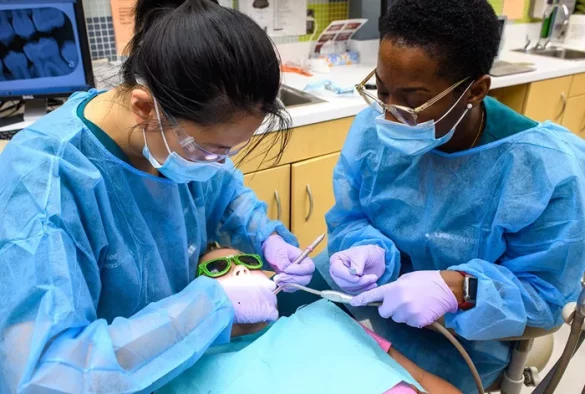
A new state-of-the-art dental clinic, the first of its kind in Nevada, is set to open this summer on the UNLV Shadow Lane campus. Specifically designed to serve patients with intellectual, developmental, and complex physical disabilities, the facility aims to address a critical gap in the state’s healthcare system.
The clinic will also reinstate services for children born with cleft palate and other craniofacial conditions—an essential form of care that disappeared during the COVID-19 pandemic due to funding cuts.
Built for Accessibility and Specialized Care
Unlike traditional dental clinics, the new facility is fully accessible for patients who use wheelchairs or gurneys and cannot transfer to a standard dental chair. The building features wide corridors and doorways, and the treatment rooms are equipped to safely administer anesthesia—vital for patients with sensory sensitivities or severe developmental disorders.
“These are basic barriers to dental care that have existed in Nevada for years,” said Dr. James Mah, dean of the UNLV School of Dental Medicine. “But this clinic is going to change that.”
According to Dr. Mah, thousands of Southern Nevadans require wheelchair or gurney access, and until now, many have been unable to receive adequate dental care because of physical limitations and sensory challenges.
A Learning Ground for Future Dentists
Beyond providing care, the clinic will also serve as an advanced training ground for dental students and residents. Many dental schools offer minimal training in treating patients with complex medical, behavioral, or developmental needs. This often leaves dentists unprepared—or unwilling—to take on these cases.
At UNLV, students will now receive hands-on experience with specialized equipment and patient care techniques, helping to grow a workforce more capable of treating underserved populations.
“We’re training students to deal with real-world complexity,” Mah said. “And by doing that, we’re improving the overall standard of dental care in Nevada.”
Restoring Vital Services for Children with Cleft Palate
The clinic also marks the return of critical services for infants born with cleft palates and craniofacial anomalies. Previously available at UNLV, these services were discontinued during the pandemic when the state withdrew financial support.
As a result, families had to travel out of state—often to Los Angeles—for care. Many struggled to afford the high costs and some even resorted to sleeping in their cars outside hospitals.
“These are among the most vulnerable patients in Nevada,” said Mah. “About one in every 500 babies—roughly 57 each year—is born with these conditions. Treating each child can cost more than $100,000, which most families simply cannot afford.”
Nevada and Alaska are currently the only two U.S. states without a formal cleft palate and craniofacial care team. Dr. Mah recently addressed the Nevada Senate Finance Committee, urging lawmakers to restore funding for this essential service.