Surface technology is currently heating up the implant space, but significant improvements also have been made in both implant planning and guided placement techniques. Here, we offer a glimpse at the latest implant surfaces, tools to streamline the implant planning process, and the exciting future of guided implant placement., ,While implants may seem like a new and sophisticated treatment in dentistry, the concept of implant dentistry dates back to ancient times, when everything from bamboo pegs to animal teeth to seashells were used to restore smiles and, in some cases, were actually successful in fusing to jawbone. Now, it’s clear that an implant’s surface plays a key role in the overall success of implant treatment when it comes to osseointegration, healing time, and long-term survival rate.,As the only part of the implant exposed to the oral environment, the implant surface should be treated well. Mechanical treatments that involve sandblasting or acid etching to create rough or smooth implant surfaces are common. By removing parts of the implant material, this process creates small irregularities and a roughened surface that encourages faster osseointegration. Chemical treatments such as anodization also roughen the implant surface while increasing the thickness of the natural oxide layer to improve osteoconductivity.,Regardless of the implant surface treatment used, the primary goal for the clinician or surgeon placing an implant is the same: long-term success. While it may seem like we’ve come a long way since Per-Ingvar Brånemark’s initial studies into the phenomenon of osseointegration nearly 4 decades ago, leaders in the dental implant space feel that when it comes to the next level of implant innovation, we’ve only scratched the surface.,“One misconception about implant surface technology is that people seem to feel that we know everything there is to know about implant surfaces, but that couldn’t be further from the truth,” said Dr. John Brunski, a Senior Research Engineer in the Division of Plastic and Reconstructive Surgery at Stanford University.,“There is extensive literature on the role of implant surface composition and topography, such as roughness, in regulating events in the osseous region. There are also new data now emerging when it comes to the mucogingival region that will guide the next generation of abutment surfaces.”, ,“One misconception about implant surface technology is that people seem to feel that we know everything there is to know about implant surfaces.”,-Dr. John Brunski , ,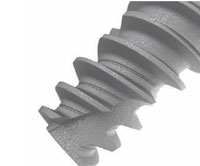 Here are some of the latest innovations in surface technology that use varying treatments to advance osseointegration and improve treatment outcomes.,Nobel Biocare’s groundbreaking TiUltra implant surface is anodized with a specifi c electrolytic solution to enhance the chemical composition of the oxide layer. It features a gradual change in topography—becoming moderately rough and porous toward the implant apex.,“Ideal tissue integration isn’t just about surface roughness, but also about surface chemistry,” said Dr. Peter Wöhrle, whose private practice in Newport Beach, CA, is dedicated to implant dentistry and prosthodontics. “The TiUltra collar features a nanostructured, nonporous, and minimally rough topography that, together with its surface chemistry, promotes early osseointegration and is designed to support long-term bone stability.”,Although not an implant surface in the traditional sense, Zimmer Biomet’s innovative Trabecular Metal Technology is a unique, highly porous biomaterial made from elemental tantalum that has structural, functional, and physiological properties similar to bone. The 100% open and interconnected pore structure of the material supports bony in-growth and vascularization. Before its debut in the dental implant market, Trabecular Metal Material had been successfully used in orthopedic applications for over 2 decades.,Hiossen’s ETIII NH Surface is enhanced with a nanolayer of bioresorbable apatite that gives it super-hydrophilic properties. It immediately attracts blood and flushes the implant surface with essential proteins and bone-building factors needed for faster osseointegration and improved treatment outcomes.,
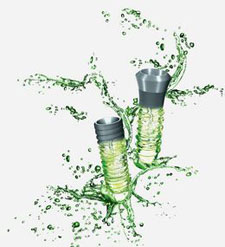 Straumann’s classic SLA surface, introduced over 2 decades ago, is based on a large-grit sandblasting technique that generates a macroroughness on the titanium surface, followed by acid-etching that superposes a micro-roughness. Offering an ideal structure for cell attachment, studies show that implants with SLA surfaces have a very low prevalence of peri-implantitis.,Building on SLA’s long-term performance and reliability, SLActive is a high-performance surface with extensive healing potential, accelerated osseointegration, and enhanced bone regeneration even at compromised sites. It reduces the healing period from 6 to 8 weeks down to 3 to 4 weeks in all indications, and has an implant survival rate in immediate loading of 98.2% after 10 years.,Treatment with an implant restoration is two-fold: restoring patients to both function and esthetics. And, in today’s increasingly image-laden culture, esthetics are becoming less of a “nice to have” and more of a necessity when it comes to meeting patient needs. Manufacturers have responded with implant systems that are ideal for patients with poor bone volume, anatomical challenges, or for placement in esthetic regions.,Dentsply Sirona’s Astra Tech Implant System BioManagement Complex has been well documented for its long-term marginal bone maintenance and esthetic results. The system combines function, beauty, and biology through 4 key components:,• OsseoSpeed is a chemically modified titanium surface with a unique nanoscale topography that stimulates early bone healing and speeds up the healing process.,• MicroThread creates minute threads on the implant neck to offer optimal load distribution and stress values.,• Conical Seal Design seals off the interior of the implant from surrounding tissues—minimizing micromovements and microleakage.,• Connective Contour, created when the abutment is connected to the implant, increases the soft-tissue contact zone and volume.,Precision is a key factor in implant esthetics. Available with long or short shanks for easy access, Dentatus’ CePo needlepoint bone drills initiate osteotomies for all sizes and types of implants and offer sharp, chatter-free drilling that ensures accuracy of position, angle, and depth. Two different systems are offered for precise drilling in bone level procedures and flapless placement.,Dentatus’ ANEW is a narrowbody implant with a screw-retained prosthetic system that can be placed in interdental spaces as narrow as 3.5mm. The implant is ideal for long-term use in cases where patients are unable to receive conventional implants due to age, systemic disease, or inadequate bone volume.,The Straumann Bone Level Implant Line, ideal for placement in the esthetic region, offers a cylindrical, parallel outer contour that allows for flexible, coronal-apical implant placement. A proprietary Bone Control Design allows maximized crestal bone preservation and microgap control, while Consistent Emergence Profiles simplify the soft-tissue management process. Implants feature Straumann’s specially designed Roxolid alloy, which offers higher strength than pure titanium.,
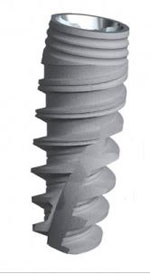 If you’re facing a case with soft bone or extraction sockets, or an implant placement in the esthetic zone, Nobel Biocare’s NobelActive implant system offers high primary stability through an expanding tapered implant body that condenses bone gradually, while an apex with drilling blades allows for a smaller osteotomy. NobelActive 3.0 is ideal for narrow space situations, while a Wide Platform implant is specifically designed to create a natural-looking emergence profile in posterior cases requiring a wider base.,While it may seem like guided implant surgery through the use of 3D-printed surgical templates is only starting to pick up speed, there’s a new technology knocking on your door: computer guided navigation. In a nutshell, this futuristic technology allows clinicians to virtually position implants in real-time using imaging tools on a monitor. With this comes a give and take—the addition of a new learning curve, but the subtraction of a surgical guide.,It’s important to remember that even the most cutting-edge placement technology depends on careful implant planning through the use of digital scans and patient imaging data. This, combined with intuitive implant planning software, allows you to predetermine an implant’s path of insertion, placement of screw chambers, componentry space, and presurgical fabrication of abutments before implant surgery even begins., ,What are the benefits of working with smaller dental implants? By using a narrow-diameter implant or one that is shorter in length, you can use less invasive techniques to adapt to challenging clinical situations. This includes patients with anatomical limitations or insufficient bone, for example, who may require an implant outside of the standard diameter and length range.,For these unique cases, consider manufacturers that offer the shortest and narrowest implant designs.,The ANEW Narrow Body implant system from Dentatus offers both fixed and removable prosthetic options, including various platforms for screw-retained single or multiunit prosthetics. Specially designed for limited spaces and for long-term, transitional, and temporary use, the implants come in diameters of 1.8, 2.2, and 2.4mm. ANEW implants are ideal for patients with limited interdental spaces or insufficient bone level that would require lengthy bone augmentation procedures.,A key feature of the Bicon SHORT Implant design is its ability to be placed in,edentulous sites where there is minimal bone height—avoiding the cost and morbidity of bone grafting procedures. Bicon introduced its first 8.0-mm implant in 1985, which at that time, was considered to be short. Since then, implant designs have shrunk in size and expanded in capabilities. The currently available 5.0-mm and 6.0-mm SHORT implants expand the possibilities of implant placement.,SATURNO Narrow Diameter Implant from Zest comes in diameters of 2.0, 2.4, or 2.9mm and lengths of 10, 12, or 14mm. A one-piece design with a pivoting O-Ball connection provides resiliency while maintaining a minimal profile. The implants are available in a straight or 20° angle for easier placement in the maxillary ridge.


