

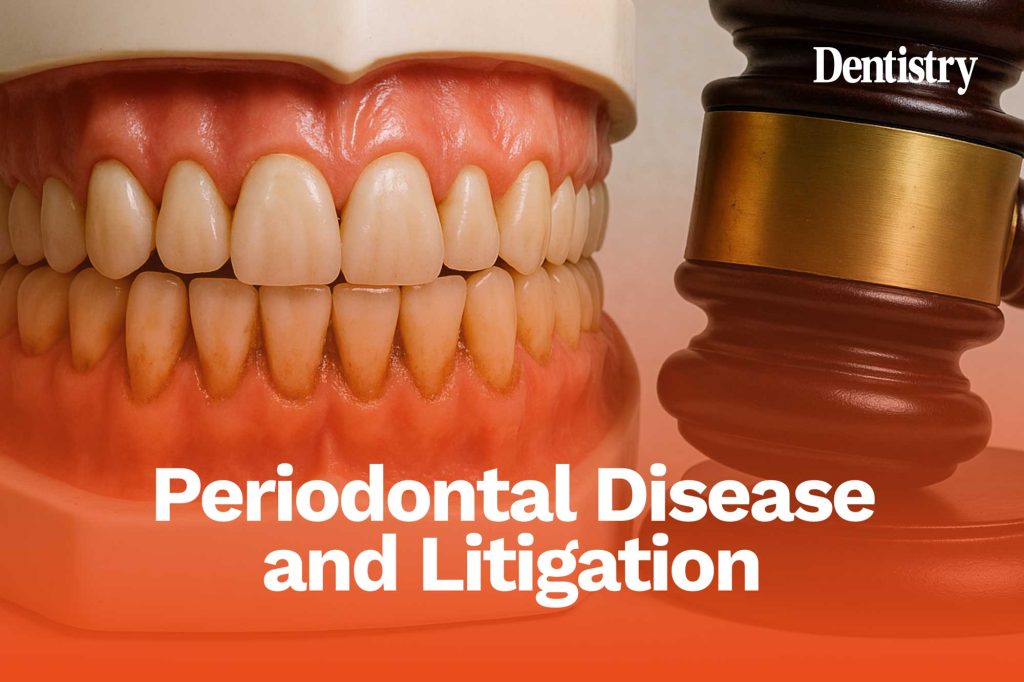
Julian Perry explores the true causes of gum disease and how to communicate this to patients to avoid unnecessary litigation.
It’s easy to assume gum disease is caused by poor brushing. But in practice, I’ve seen something different.
Some patients with immaculate oral hygiene still develop periodontal disease. Others with average habits don’t. So, what’s really going on?
The three real causes of gum disease
For periodontal tissue destruction to occur, three factors must be present:
1. Dysbiotic bacteria
These are harmful bacteria that don’t belong in the mouth. They’re the culprits that trigger inflammation.
2. Biofilm beneath the gum line
This sticky protein layer clings to the roots of teeth, creating the perfect environment for those harmful bacteria to thrive.
3. Your immune response (T-cell mediated)
Ironically, it’s your body’s immune system trying to fight the infection that causes the gum and bone damage.
Remove any one of these three, and gum disease cannot occur. So, it’s not about brushing harder. It’s about tackling what’s happening beneath the surface.
Why brushing and flossing aren’t enough
Brushing and flossing matter. But they only clean the areas you can see.
Periodontal disease starts below the gum line. That’s why management (not cure) is key. And that management lies with the patient.
Yes, dentists can carry out cleaning, root planing, and other interventions. But once the patient walks out of the clinic, their gum health is in their own hands.
So why the litigation?
Here’s the problem: patients believe their dentist ’caused’ their gum disease. And lawyers run with that myth.
The result? Sky-high negligence payouts often occur because the myth goes unchallenged.
Here’s the truth: dentists don’t give patients periodontal disease. But poor documentation can make it look like they did.
Protect yourself with one simple habit
If you remember one thing from this, let it be this: write clear, comprehensive notes.
So many cases are indefensible simply because the records are incomplete. No BPE score noted. No record of a conversation about periodontal status. And if it’s not written down, in the eyes of the law, it didn’t happen.
It’s simple: good notes protect you.
At Densura, we were founded by dentists, for dentists. That means our insurance package is built on real-world understanding of the clinical risks you face.
We respond fast, typically within two hours of your first call, and we focus on early investigation, robust defence when no fault exists, and early resolution where liability is clear.
Because claims shouldn’t be career-defining. And they don’t have to be stressful.
This article is sponsored by Densura.
