


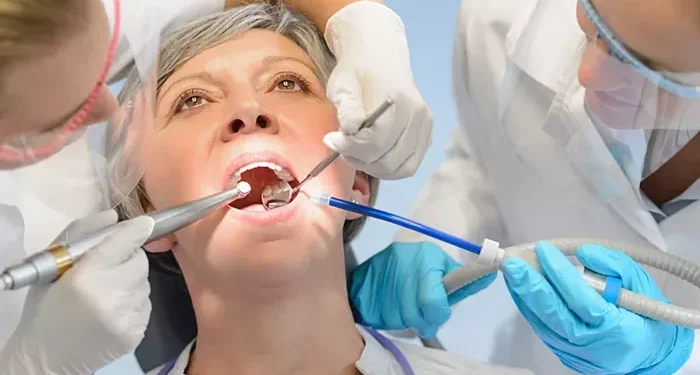
A recent study suggests that dentists should play a role in diagnosing diabetes.
The research indicates that offering a “chairside” test for patients at risk—such as those with gum disease, high body mass index (BMI), or advanced age—could help identify undiagnosed diabetes during regular dental visits.
Undo
In the UK alone, an estimated 1.3 million people have type 2 diabetes but are unaware of it. Additionally, over six million people are believed to have prediabetes, where blood sugar levels are elevated, but many don’t know they are at risk.
Undo
The HbA1c test, a simple finger-prick blood test, only takes six minutes to perform. Researchers analyzed data from 911 participants in the Oral, Dental and Craniofacial Biobank study, all seen at Guy’s Dental Hospital in London. Of those, 83% had gum disease. After excluding those already diagnosed with diabetes, 35% were found to have either diabetes or prediabetes without knowing it.
Undo
Published in the British Journal of Surgery, the researchers concluded that dental visits could serve as a key opportunity for detecting undiagnosed hyperglycemia (high blood sugar). They recommend using chairside screening in dental clinics to identify patients who may have diabetes or be at risk.
While the study took place in a hospital setting, the authors believe that this quick and easy test could also be applied in community dental clinics. Senior author Luigi Nibali, an honorary consultant at Guy’s and St Thomas’ NHS Foundation Trust and professor of periodontology at King’s College London, explained that gum disease has long been linked to systemic conditions, particularly diabetes. He added that many cases of diabetes go undiagnosed for long periods, and patients are not always prompted to get tested.
Nibali said the team was struck by the high percentage of participants who had undiagnosed diabetes or prediabetes. If high blood sugar levels are detected, dentists could advise patients to seek further evaluation from their GP.
“The dental practice could be a vital point of contact for diagnosing diabetes,” Nibali noted, adding that identifying prediabetes is crucial, as it is a stage where interventions can prevent the development of full-blown diabetes.
Co-author Dr. Giuseppe Mainas, a specialist periodontist and research associate at King’s College London, emphasized that dental visits could be particularly beneficial for older patients, those with higher BMI, and individuals suffering from gum disease, all of whom are at higher risk of diabetes.
Mark Ide, first author and professor of periodontology at King’s College London, explained that once elevated HbA1c levels are detected, patients can be referred to their GP for further investigation. “Most patients in our study were surprised to learn they had elevated HbA1c levels and didn’t realize they might have prediabetes or diabetes,” he said.
This research highlights a promising opportunity to integrate diabetes screening into routine dental care, potentially helping millions who may otherwise remain undiagnosed.
Related Topics:
Undo
- Local Dentists Face Financial Strain as Public Health Sudbury Calls for Increased Funding for HSO Program
- Dental Insurance Market to Grow by 2.62% Annually, Reaching $126.5 Billion by 2035
- Dental Insurance Coverage Expansion for Adults in Medicaid Still Falls Short Despite State Efforts
Tags: dental careDental Insurancedisease